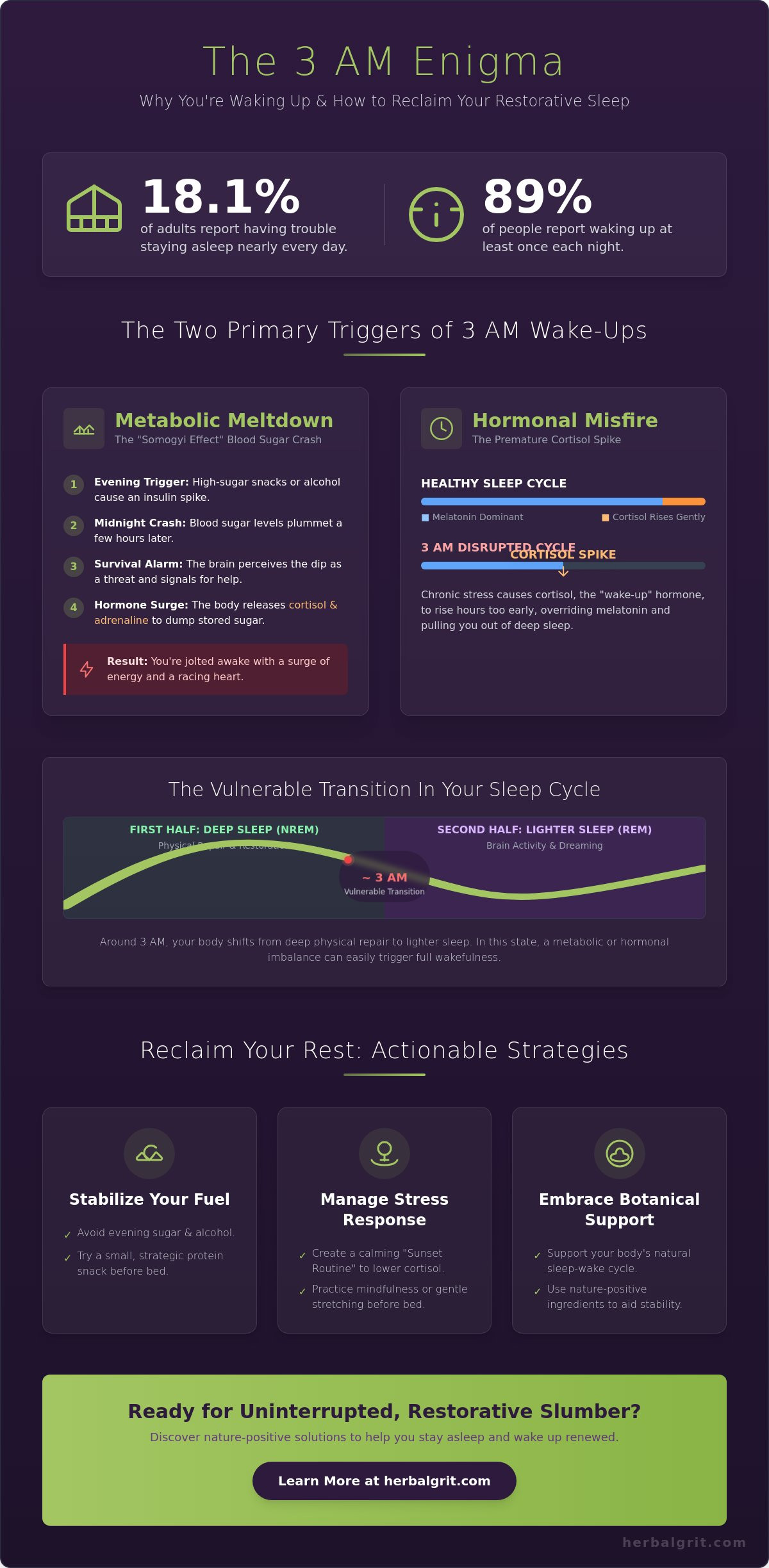
Did you know that 18.1% of adults now report having trouble staying asleep nearly every day? If you’re one of them, you know the specific, quiet frustration of checking the clock only to see those glowing digits: 3:00 AM. It feels like a personal glitch, but the causes of waking up at 3am every night are actually rooted in a complex metabolic and hormonal feedback loop. Your body isn’t trying to fail you. It’s simply reacting to internal signals that have drifted out of their natural, restorative rhythm.
It’s exhausting to carry the weight of mid-afternoon fatigue and the anxiety of racing thoughts that only seem to surface in the dark. You deserve a rest that feels as grounded as the earth itself. In this guide, you’ll discover the physiological triggers behind these wake-ups and learn how to restore a full night of tranquil sleep. We’ll explore the latest 2025 research on cortisol rhythms and provide actionable, botanical-focused steps to help you stay asleep naturally and wake up feeling truly renewed.
Key Takeaways
- Understand why the 3 AM window is the specific “witching hour” for your circadian rhythm and what it means for your sleep architecture.
- Explore the metabolic triggers and the Somogyi Effect as primary causes of waking up at 3am every night, including how your liver responds to blood sugar dips.
- Learn about the delicate balance between melatonin and cortisol, and why a premature stress response can pull you out of deep rest.
- Discover practical “Sunset Routine” adjustments and dietary shifts, like strategic protein snacks, to help stabilize your system before bed.
- Find out how nature-positive botanical supports like YU SLEEP can provide the steadfastness needed for a full night of tranquil, restorative slumber.
The 3 AM Phenomenon: Understanding Sleep Maintenance Insomnia
Waking up in the middle of the night can feel like a lonely experience, yet it is a documented physiological state shared by millions. Clinically known as Sleep Maintenance Insomnia, this condition describes the struggle to stay asleep rather than the difficulty of falling asleep. When we look at the specific causes of waking up at 3am every night, we find that this timing is rarely a coincidence. It marks a significant shift in your internal biology. This is the point where your body moves from the heavy, restorative stages of Non-Rapid Eye Movement (NREM) sleep into the lighter, more active stages of Rapid Eye Movement (REM) sleep.
During the first half of the night, your brain prioritizes deep physical repair. By roughly 3 AM, most of that “deep work” is done. Your sleep becomes shallower, and your brain becomes more responsive to the environment. In this lighter phase, tiny “micro-arousals” occur. These are brief flickers of wakefulness that usually go unnoticed. However, if your system is under stress or metabolically unbalanced, these flickers can ignite into full-blown alertness, leaving you staring at the ceiling. Data from a 2024 SingleCare survey indicates that 89% of people report waking up at least once each night, yet the 3 AM window remains the most disruptive because of how it breaks this delicate cycle.
The Biological Clock and Your Internal Alarm
Inside your brain, a cluster of cells called the suprachiasmatic nucleus (SCN) acts as your master timekeeper. This biological clock coordinates everything from hormone release to body temperature. Around 3 AM, your core temperature begins its most significant dip of the night. While this cooling is meant to keep you asleep, a body that is already on high alert may interpret this thermal shift as a signal to wake up. From an evolutionary standpoint, our ancestors needed to remain slightly vigilant during the coldest, darkest hours to ensure their safety. Today, that ancient survival mechanism often misfires, turning a natural dip in temperature into a stressful alarm for the modern sleeper.
Is This a Medical Issue or a Lifestyle Glitch?
It’s helpful to distinguish between a temporary disruption and a chronic pattern. Occasional wakefulness might stem from a late-night meal or a particularly stressful week. However, when the causes of waking up at 3am every night become a consistent part of your life, it suggests a deeper imbalance in your HPA axis or metabolic rhythm. While conditions like sleep apnea or restless leg syndrome require professional clinical attention, many people find that their restlessness is a “lifestyle glitch” that responds beautifully to nature-positive support. By addressing the underlying triggers with botanical wisdom and products like YU SLEEP, you can guide your body back to its intended state of tranquil, uninterrupted rest.
Metabolic Spikes and Blood Sugar: The Somogyi Effect Explained
Your body’s internal engine doesn’t stop when you close your eyes; it simply shifts gears. One of the most overlooked causes of waking up at 3am every night is a hidden metabolic struggle. While you rest, your brain remains a hungry organ, consuming a steady stream of glucose to manage cellular repair and memory consolidation. If your blood sugar levels drop too low during the night, your brain perceives this as a survival threat. It doesn’t just gently nudge you; it sounds a biological alarm.
This alarm is known as the Somogyi Effect. When your glucose levels dip, your liver is called into action to “save” the brain by releasing stored sugar back into the bloodstream. This process isn’t subtle. To trigger this release, your body secretes a jolt of counter-regulatory hormones like adrenaline and cortisol. Instead of a smooth transition between sleep cycles, you experience a sudden surge of energy. This is why you don’t just wake up; you often find yourself wide awake, heart racing, and unable to settle back into a tranquil state.
Dietary habits in the evening often act as the primary metabolic saboteurs. Consuming high-sugar snacks or refined carbohydrates shortly before bed leads to a rapid insulin spike, which inevitably causes a “crash” a few hours later. Alcohol is equally disruptive. While it might help you fall asleep initially, the way your body metabolizes ethanol often leads to a significant blood sugar drop in the middle of the night. To support a more stable internal environment, many find that incorporating a specialized metabolic support like BioVanish helps maintain the steady energy levels required for uninterrupted rest.
Hypoglycemia: The Hidden Nighttime Stressor
Nighttime hypoglycemia occurs when the brain’s fuel supply runs dangerously low. Because the brain cannot store its own glucose, it relies on the rest of the body to maintain a precise balance. The Somogyi Effect is a metabolic survival mechanism where a nighttime drop in blood glucose triggers a rebound surge of stress hormones and glucose. If you’ve eaten a carb-heavy meal at 7 PM, your body may be hitting that critical low right around the 3 AM mark, forcing your system into a state of emergency alertness.
The Dawn Phenomenon vs. 3 AM Waking
It’s vital to distinguish this middle-of-the-night crash from the “dawn phenomenon.” While both involve rising blood sugar, the dawn phenomenon is a natural, healthy increase in glucose that occurs between 6 AM and 8 AM to prepare your body for the day. In contrast, the 3 AM wake-up is a reactive rescue mission. Understanding your own metabolic support needs is the first step in determining whether your late-night waking is a result of when or what you last ate.
Cortisol and the Witching Hour: Why Stress Peaks Before Dawn
While the metabolic shifts we explored previously provide one explanation, the hormonal see-saw between melatonin and cortisol offers another vital perspective on the causes of waking up at 3am every night. In a balanced system, melatonin, your hormone of tranquility, dominates the night to keep you in a state of deep repair. Cortisol, the hormone of action, should remain low until just before dawn. However, for those living under the weight of modern stress, this rhythm often fractures. Instead of a gradual rise at 6 AM, your body may initiate a “cortisol awakening response” hours too early, pulling you out of sleep with a start.
This premature surge acts like a biological alarm clock that has been set incorrectly. When your adrenal glands are overstimulated during the day, they become hypersensitive at night. This state of hyperarousal means that even the slightest transition between sleep cycles can trigger a full stress response. Your brain receives a signal that it’s time to be vigilant, even though the world outside is still quiet. It’s a physiological misfire that transforms a moment of light sleep into a period of total alertness.
The Adrenal-Sleep Connection
Chronic daytime stress creates a “tired but wired” phenomenon that is difficult to break. When your evening cortisol levels remain high, your body struggles to enter the deep, restorative stages of NREM sleep. This lack of depth makes you more susceptible to those 3 AM wake-ups. Supporting your system’s natural ability to manage these spikes is essential. For instance, some find that BioVanish may support a more resilient metabolic-cortisol balance, allowing the body to maintain its intended nightly rhythm without the sudden jolt of stress hormones.
Taming the 3 AM Racing Brain
If you find yourself catastrophizing about work or family at 3 AM, realize that this is often a result of cortisol, not just psychological anxiety. High cortisol levels at this hour specifically target the brain’s emotional centers while the logical prefrontal cortex is still partially offline. This is why problems feel magnified and unsolvable in the dark. Understanding that these “racing thoughts” are a physical symptom of a hormonal spike can help you detach from the narrative. Learning how to fall back asleep after waking up involves techniques that actively lower this stress response, guiding your nervous system back toward the safety of rest.
Practical Strategies to Reclaim Your Restorative Slumber
Restoring a broken sleep cycle requires more than just willpower; it necessitates a structured environment that supports your biology. Since we know the primary causes of waking up at 3am every night involve metabolic dips and cortisol spikes, our focus must shift to stabilization. A “Sunset Routine” should begin three hours before you intend to sleep. This isn’t just about relaxation. It’s about signaling to your suprachiasmatic nucleus that the day’s demands have ended. Dimming your lights to mimic the dusk and lowering your thermostat to roughly 67 degrees Fahrenheit helps initiate the body’s natural cooling process.
Dietary choices in the evening are equally pivotal. To prevent the 3 AM glucose crash we discussed earlier, consider a small, protein-rich snack thirty minutes before bed. A few walnuts or a spoonful of almond butter can provide the sustained fuel your brain needs to stay “quiet” through the night. This prevents the liver from sounding the adrenaline alarm. Additionally, digital hygiene in 2026 has become a necessity. The dopamine loops found in social media feeds act as a stimulant, keeping your brain in a state of high-alert vigilance that makes you more susceptible to middle-of-the-night waking.
The Power of Botanical Support
Nature offers a boutique of gentle, non-habit-forming solutions that support the nervous system without the fog of synthetic alternatives. While many turn to pharmaceutical options, it’s vital to understand the side effects of long-term sleep aid use, which can include grogginess and dependency. Choosing pure, sustainably sourced botanicals ensures you’re working with your body rather than overriding its natural signals. To help bridge the gap between daytime stress and nighttime peace, you might try BioVanish to stabilize your metabolic rhythm and support deeper rest.
Grounding Techniques for the Middle of the Night
If you do find yourself awake, your first priority is to stay out of your own head. Looking at the clock is the most common mistake. Once you see the time, your brain begins a stressful calculation of how many hours of rest you have left, which triggers more cortisol. Instead, utilize the 4-7-8 breathing method: inhale for four seconds, hold for seven, and exhale for eight. This physically slows your heart rate. You can also try “cognitive shuffling,” which involves imagining random, unrelated objects to bypass the “racing thoughts” loop. For a deeper look at these methods, explore our guide on how to fall back asleep after waking up.
Beyond Sleep Hygiene: Nature-Positive Support for Deep Rest
Standard sleep hygiene advice often stops at the bedroom door. While dimming lights and cooling the air are essential foundations, they don’t always address the internal biological alarms we have explored. The complex causes of waking up at 3am every night usually require a deeper, more holistic intervention that speaks the language of your metabolic and hormonal systems. Moving beyond generic tips means embracing a specialized approach that bridges the gap between raw botanical power and the modern need for sustained, restorative health.
This is where a nature-positive strategy becomes your most resilient ally. Instead of overriding your body’s signals with heavy-handed sedatives, the goal is to nurture the system back into its natural rhythm. By addressing the specific triggers of the “witching hour,” you can move from a state of nighttime vigilance to one of profound tranquility. This transition requires a level of intentionality and purity that generic e-commerce solutions often lack, favoring instead a curated path to wellness that respects your body’s inherent wisdom.
Why YU SLEEP is Different
Most sleep aids focus solely on the initial act of falling asleep, leaving the “maintenance” phase entirely unsupported. YU SLEEP is specifically designed for the individual who has no trouble drifting off but finds themselves alert in the early hours. New insights from the March 2026 release highlight its efficacy in supporting the delicate balance required to stay asleep. This formula doesn’t seek to sedate your nervous system. Instead, it provides a nurturing environment that helps stabilize the metabolic and cortisol fluctuations that lead to mid-night restlessness. It is a choice for those who value high-quality, sustainable ingredients over the “hammer” of pharmaceutical interventions.
Your Journey to Uninterrupted Rest
Reclaiming your sleep is a journey of understanding the “why” behind the wake-up. By combining the metabolic awareness of balanced evening nutrition with the botanical steadfastness of a dedicated routine, you can finally silence the 3 AM alarm. You don’t have to accept broken sleep as a permanent fixture of your life. The causes of waking up at 3am every night are manageable when you provide your body with the right cues and the correct natural support. It’s time to return to the quiet, uninterrupted rest your body was designed for. Experience the YU SLEEP difference today and rediscover the tranquility of a full night’s slumber.
Step Into Your Most Restorative Rest Yet
Waking in the early hours doesn’t have to be your permanent reality. We’ve explored how the causes of waking up at 3am every night are often tied to metabolic dips and premature cortisol surges rather than just a busy mind. By shifting your approach from simple sleep hygiene to a holistic, nature-positive routine, you can bridge the gap between restless vigilance and deep, tranquil slumber. You now have the tools to stabilize your blood sugar and quiet your adrenal response through mindful nutrition and botanical support.
To truly anchor these changes, consider a solution designed for the specific needs of sleep maintenance. Our formula focuses on the delicate phase of staying asleep, providing the steadfastness your body needs to remain in a restorative state until dawn. Discover the #1 Sleep Solution for Deep, Uninterrupted Rest and see how our nature-positive botanical formula helps you reclaim your nights. You deserve to wake up feeling resilient and renewed. Embrace the quiet strength of nature to restore the restful, uninterrupted nights you’ve been missing.
Frequently Asked Questions
Why do I wake up at 3 AM specifically and not 1 AM or 5 AM?
3 AM is the “witching hour” because it marks the transition point from deep, physical repair sleep into lighter, dream-heavy REM sleep. Your core temperature reaches its lowest point at this time, and your brain becomes more sensitive to internal signals. If your metabolic or hormonal systems are slightly out of balance, this natural shift becomes a biological alarm rather than a smooth transition.
Is waking up at 3 AM a sign of a liver problem?
While Western medicine views this through the lens of glucose regulation, traditional wisdom often links this time to liver health. The liver works hard at night to process toxins and manage glycogen stores. If it struggles to maintain steady blood sugar, it may release stress hormones that pull you out of sleep. This metabolic rescue mission is one of the common causes of waking up at 3am every night.
Can high cortisol levels cause me to wake up in the middle of the night?
Yes. High cortisol is a primary driver of nighttime restlessness. When your HPA axis is overstimulated by daytime stress, your body may initiate a “fight or flight” response hours before dawn. This premature surge of alertness makes your thoughts race and your body feel too “wired” for rest, even if you felt exhausted when you first went to bed.
Should I eat something if I wake up at 3 AM and can’t fall back asleep?
A small, protein-focused snack can help if a blood sugar crash is the culprit. A few walnuts or a spoonful of almond butter can stabilize your levels without spiking insulin. Avoid sugary snacks or heavy meals. These will only further disrupt your metabolic rhythm and make returning to a state of tranquility more difficult for your system.
How does alcohol impact 3 AM wake-ups?
Alcohol acts as a metabolic saboteur. While it helps you drift off quickly, its processing by the liver causes a “rebound effect” several hours later. This process drops your blood sugar and increases your heart rate. It’s a common reason why people find themselves wide awake, heart racing, and slightly dehydrated in the middle of the night.
Is it better to stay in bed or get up if I wake up at 3 AM?
It’s usually best to stay in bed if you feel calm and relaxed. However, if you’ve been awake for more than 20 minutes and feel frustrated, get up and move to another room. Keep the lights low and engage in a quiet, screen-free activity like reading a physical book until you feel the heavy pull of sleepiness return.
Can menopause cause 3 AM waking even if I don’t have hot flashes?
Yes, hormonal shifts play a significant role in sleep maintenance. Progesterone, which has a natural calming effect on the brain, declines during menopause. Even without hot flashes, this drop can leave your nervous system more vulnerable to interruptions. Shifts in estrogen also influence your internal biological clock, making middle of the night wake-ups more frequent.
What are the best natural supplements for staying asleep through the night?
Look for nature-positive botanical formulas that prioritize sleep maintenance over simple sedation. Ingredients that support the nervous system without causing morning grogginess are ideal. Solutions like YU SLEEP provide a nurturing approach to staying asleep, helping to bridge the gap between traditional herbal wisdom and your body’s modern need for deep, uninterrupted rest.