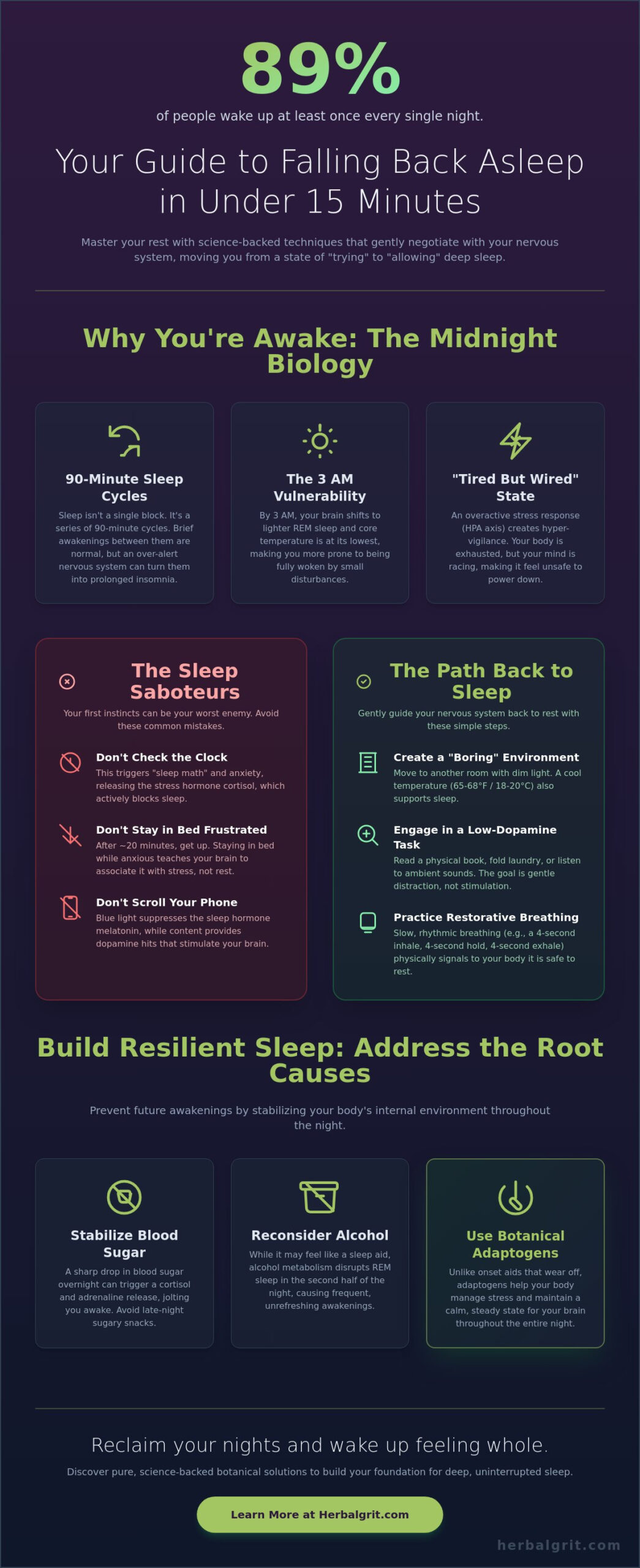
89% of people report waking up at least once every single night, according to 2024 data from SingleCare. While this is a nearly universal experience, it doesn’t make the 3:00 AM ceiling stare any less frustrating when you’re searching for how to fall back asleep after waking up. You’re likely lying there right now, watching the minutes tick by and worrying about how you’ll function at work tomorrow. It’s a heavy burden when your mind starts racing just as your body needs to rest. You aren’t alone in this struggle, and your frustration is a natural response to a disrupted biological rhythm.
Mastering your rest isn’t about forcing your brain into submission; it’s about a gentle negotiation with your nervous system. This guide will help you move from a state of “trying” to a state of “allowing” by using physiological and botanical techniques rooted in tranquility and science. You’ll discover how to quiet the mental noise and reset your internal clock so you can return to deep sleep in under 15 minutes. We’ll explore the root causes of these midnight interruptions and provide a clear, restorative path to waking up feeling truly refreshed and whole.
Key Takeaways
- Understand the rhythm of your natural 90-minute sleep cycles to remove the fear and frustration of midnight awakenings.
- Discover how to fall back asleep after waking up by instantly breaking the clock-watching habit and applying the 20-minute rule to quiet your mind.
- Practice cognitive shuffling and specific breathing patterns that physically signal your nervous system to transition from alertness to deep rest.
- Identify the metabolic disruptors, including late-night blood sugar shifts and alcohol, that trigger your body’s survival response and pull you from slumber.
- Learn why traditional onset aids often fail and how botanical adaptogens can help maintain a steady, calm environment for your brain throughout the night.
Understanding the Mechanics of Sleep Maintenance Insomnia
Waking up in the middle of the night isn’t just a nuisance; it’s a physiological event often categorized as sleep maintenance insomnia. This condition refers to the struggle to stay asleep for a full seven to nine hours. Understanding Sleep Maintenance Insomnia requires looking at our natural biological architecture. We don’t sleep in one long, solid block. Instead, we move through 90-minute cycles that transition from light sleep to deep restorative stages. Between these cycles, your brain enters a brief period of semi-wakefulness. For most, this is a momentary stir followed by a quick return to rest. However, if your autonomic nervous system is stuck in a “high alert” mode, that tiny window becomes a wide-open door to full consciousness.
Why Your Brain Wakes Up at 3 AM
By 3:00 AM, your body has usually completed the bulk of its deep, non-rapid eye movement (NREM) sleep. This is when the brain shifts toward longer periods of REM sleep, which is much lighter and more prone to interruption. During this transition, your core body temperature hits its lowest point and your circadian rhythm is in a state of flux. If you are a sensitive sleeper, even a subtle drop in room temperature or a distant sound can trigger a full alert state. You can learn more about these specific triggers in our guide on The Real Causes of Waking Up at 3 AM Every Night. Once you are fully awake, the challenge of how to fall back asleep after waking up begins as the brain starts scanning for potential threats or tomorrow’s to-do list.
The “Tired but Wired” State
Many people experience the “tired but wired” paradox, where the body feels like lead but the mind is spinning like a top. This happens when your HPA axis, the control center for your stress response, becomes overactive. It keeps your brain in a state of hyper-vigilance, essentially telling you that it’s unsafe to sleep. When you try to “force” yourself to drift off, you actually increase your heart rate and body temperature. This performance anxiety creates a feedback loop that keeps you awake longer. Learning how to fall back asleep after waking up isn’t about effort; it’s about signaling to your HPA axis that the environment is secure and your body is safe to surrender to the night once again. Understanding the causes of waking up at 3am every night — from metabolic shifts to hormonal feedback loops — can help you address the root of this hyper-vigilance rather than just its symptoms.
Immediate Steps to Quiet Your Nervous System
When you open your eyes and realize the world is still dark, your first instinct is often to check the time. Resist this urge. Checking the clock is the fastest way to derail your efforts of how to fall back asleep after waking up. It shifts your brain from a resting state into a calculating state. You begin doing “sleep math,” figuring out exactly how many hours remain before your alarm. This mental calculation triggers a cortisol spike, the biological opposite of the melatonin you need. By removing the pressure of time, you allow your nervous system to remain in a parasympathetic state, which is essential for restoration.
The ‘No-Clock’ Policy
Math-based anxiety is the enemy of tranquility. To protect your sleep drive, turn your phone face down or move your alarm clock so the glowing numbers aren’t visible. If you use your phone as an alarm, keep it across the room. This physical distance prevents the temptation to scroll, which introduces blue light and further suppresses sleep hormones. Focus instead on your environment. A room that is too warm can often be the culprit for mid-night waking. Aim for a cool 65 to 68 degrees Fahrenheit to support the body’s natural cooling process during sleep.
Creating a ‘Boring’ Secondary Environment
If you find yourself still awake after what feels like 20 minutes, it’s time to change your surroundings. This is a core tenet of Cognitive Behavioral Therapy for Insomnia (CBT-I). Staying in bed while frustrated teaches your brain to associate your mattress with anxiety rather than rest. Move to a different room with dim lighting. Engaging in low-dopamine tasks can help bridge the gap back to sleepiness. Consider these options:
- Reading a physical book under a soft lamp
- Folding a small basket of laundry in the dark
- Listening to low-volume, ambient nature sounds
Avoid turning on overhead lights. Bright light signals your internal clock that the day has begun. This “waiting room” approach reduces the pressure to perform sleep, allowing your body to naturally drift back toward a state of surrender. When you feel that familiar heavy-lidded sensation return, gently move back to your bed. For those seeking a deeper layer of support during these transitions, exploring a restorative sleep ritual can help anchor your evening routine and minimize the frequency of these midnight interruptions. Learning how to fall back asleep after waking up is ultimately about patience and creating a space where sleep feels welcome rather than forced.
Advanced Cognitive and Physical Relaxation Techniques
Once you’ve adjusted your environment, the focus shifts to internal regulation. When your mind is racing, standard meditation often feels like trying to stop a freight train with a silk ribbon. You need techniques that bypass the logical brain and tap into the physiological mechanisms of sleep onset. These advanced methods help you master how to fall back asleep after waking up by gently guiding your nervous system from alert vigilance to quiet surrender. By mimicking the natural transitions of the brain, you can bridge the gap between wakefulness and restorative rest.
How to Perform Cognitive Shuffling
Cognitive shuffling is a powerful tool because it mimics the nonsensical, micro-dream imagery that occurs right as we drift off. Your brain is naturally designed to stop logical, linear processing before sleep. If you’re stuck in “problem-solving” mode, you’re essentially telling your brain it’s too dangerous to rest. To perform this, pick a neutral word like “BEDTIME.” Visualize an object starting with ‘B’, like a bear, then another like a bicycle. Move to ‘E’ and visualize an elephant, then an envelope. Continue this pattern until you feel your thoughts becoming hazy and non-linear. This technique tricks the brain into believing you’ve already begun the sleep transition, effectively silencing the internal monologue.
The Physiological Sigh
While 4-7-8 breathing is excellent for lowering the heart rate, the physiological sigh is a rapid-response tool for offloading carbon dioxide and stress. It involves a deep inhale through the nose, followed by a second, shorter “top-off” inhale to fully inflate the lungs, and then a very long, slow exhale through the mouth. This specific pattern triggers the vagus nerve, which acts as the brake for your nervous system. It physically lowers your heart rate and signals the “rest and digest” system to take over. Integrating these rhythmic patterns with The Brain Song can create long-term mental harmony, making it easier to maintain tranquility even when your rest is interrupted.
Releasing Physical Guarding
Sometimes the mind is quiet, but the body remains braced for action. Progressive Muscle Relaxation (PMR) involves tensing and then releasing each muscle group, starting from your toes and moving up to your jaw. As you release each tension point, visualize the stress draining into the mattress. This is a key component of the ‘Military Method,’ which focuses heavily on total facial relaxation. By softening the muscles around your eyes and tongue, you send a direct signal to your brain that the “threat” has passed. When you combine physical release with cognitive shuffling, you create a comprehensive strategy for how to fall back asleep after waking up without the need for intense effort or frustration.
Avoiding the Cortisol Trap and Metabolic Disruptors
Waking up in the small hours isn’t always a matter of a busy mind. Often, it’s a physiological survival signal triggered by your internal chemistry. When your blood sugar levels dip significantly during the night, your brain perceives a crisis. To protect itself, it triggers a release of cortisol and adrenaline to prompt the liver to release stored glucose. This sudden chemical surge acts as a biological alarm clock, leaving you alert and wondering how to fall back asleep after waking up. Understanding this metabolic trigger is the first step toward silencing the alarm. For a deeper look at how these hormonal and metabolic forces combine to create the specific pattern of causes of waking up at 3am every night, the science behind nighttime restlessness reveals just how interconnected these systems truly are.
Alcohol is a frequent culprit in this metabolic cycle. While a nightcap might help you drift off, it suppresses REM sleep in the first half of the night. As the sedative effects wear off, your body experiences a “rebound effect,” characterized by shallow sleep and frequent awakenings. This metabolic turbulence, combined with the natural rise in core body temperature during the later stages of the night, creates a perfect storm for wakefulness. When your body is working hard to process toxins or balance sugar, it can’t remain in the deep, restorative state it requires.
Metabolic Support for Uninterrupted Sleep
Your liver acts as a reservoir of energy, and its ability to maintain steady glycogen levels is vital for staying asleep. If this reservoir is low, your body enters a state of mild stress. Supporting your metabolic health through nutrients can help buffer these nighttime spikes. Products like BioVanish are designed to support healthy fat metabolism and energy balance, which may contribute to a more stable internal environment. Additionally, a small, protein-rich snack before bed, such as a spoonful of almond butter, can provide the slow-burning fuel your system needs to remain in a state of rest without a midnight cortisol crash.
The Role of Prostate Health in Night Waking
For men over 50, the challenge of how to fall back asleep after waking up is often complicated by physical discomfort. Nocturia, or the frequent need to urinate at night, is a common trigger that pulls the body out of deep sleep cycles. It’s important to differentiate between a brain that is simply awake and a body that has a physical requirement to move. Addressing the underlying health of the prostate with targeted botanical support, such as ProstaVive, can help reduce these physical interruptions. Reducing the number of times you have to leave your bed naturally increases your chances of maintaining a resilient sleep architecture.
Buffering your body against these internal disruptors is a foundational step in reclaiming your nights. By managing your metabolic health and reducing physical discomfort, you create a sanctuary where deep rest can flourish. For a comprehensive approach to quieting the nervous system and supporting your natural sleep architecture, consider integrating a specialized sleep support solution into your nightly wellness routine to ensure you stay asleep until morning.
Building a Resilient Sleep Architecture with Botanical Support
Long-term sleep health isn’t about finding a “knockout” pill that overrides your biology. While many people reach for melatonin, that hormone primarily signals the body that it’s time to start the sleep process. It doesn’t necessarily help with the maintenance required to stay asleep through the 90-minute cycles we discussed in earlier sections. When you’re learning how to fall back asleep after waking up, you need to buffer your nervous system against the cortisol spikes that happen in the early hours. Adaptogens and botanical blends offer a more sustainable way to encourage the body’s natural GABA production, providing a steady floor of calm rather than a temporary sedative ceiling.
YU SLEEP is specifically formulated as a maintenance support system to help bridge those gaps between sleep stages. By using raw, nature-positive ingredients, it helps regulate the HPA axis response and buffers the “tired but wired” state. Consistency is the key to botanical wellness. Unlike synthetic options that often lose their efficacy over time, natural solutions work in harmony with your biology to build long-term resilience. This makes it significantly easier to return to rest without the frustration of the ticking clock or the fear of tomorrow’s exhaustion.
Natural Alternatives to Pharmaceutical Aids
Traditional sleep medications often carry a heavy cost, including the risk of dependency and a groggy “hangover” effect the next morning. These synthetic interventions can disrupt your natural sleep architecture, making it harder to reach the deep REM stages required for cognitive repair. You can read more about these challenges in our detailed guide on The Hidden Toll: Side Effects of Long-Term Sleep Aid Use. Botanical support focuses on nurturing the brain’s internal chemistry rather than forcing it into a state of unconsciousness. This gentle approach ensures that your cognitive function remains intact while your body gets the deep rest it deserves.
The 2026 Holistic Sleep Protocol
Mastering how to fall back asleep after waking up requires a multi-layered approach that addresses both the mind and the body. Combine the “Wait and Relax” method with a targeted nightly ritual to signal safety to your nervous system. If you find that a restless night leaves you feeling foggy or slow, integrating Synaptigen into your morning routine can help clear the mental cobwebs and restore clarity. To ensure your bedroom remains a sanctuary for deep rest, follow this final checklist:
- Use blackout curtains to eliminate external light pollution that can disrupt REM cycles.
- Maintain a consistent room temperature between 65 and 68 degrees to support core cooling.
- Keep all time-keeping devices out of your direct line of sight to prevent “sleep math” anxiety.
- Reserve your bed for sleep and intimacy only to strengthen the mental association with rest.
By shifting your focus from “trying to sleep” to “creating the conditions for sleep,” you reclaim your power over the night. True rest is a gift from a balanced nervous system and a well-nourished body. Through the use of physiological techniques and intentional botanical support, you can transform your midnight awakenings from a source of stress into a brief, peaceful pause in a night of deep, restorative slumber.
Reclaiming Your Natural Rhythm
Your journey back to restorative rest is a gentle return to your body’s innate wisdom. By recognizing that midnight awakenings are often natural transitions between sleep cycles, you can release the performance anxiety that keeps you alert. The secret of how to fall back asleep after waking up lies in physiological regulation rather than sheer willpower. Whether you’re using cognitive shuffling to quiet a racing mind or stabilizing your metabolism to avoid cortisol spikes, you’re building a foundation for long-term sleep resilience.
True tranquility comes from supporting your nervous system throughout the entire night. While most aids only focus on the initial drift, our non-habit forming botanical formula is designed specifically for sleep maintenance. This approach ensures you stay in those deep, healing stages without the morning grogginess associated with synthetic options. Ready to reclaim your nights? Discover how YU SLEEP supports deep, uninterrupted rest naturally through our specialized 2026 protocol. You deserve to greet every sunrise feeling whole, refreshed, and ready for the day ahead.
Frequently Asked Questions
Is it better to stay in bed or get up if I can’t sleep?
If you find yourself tossing and turning for more than 20 minutes, it’s best to leave the bed. Staying in bed while frustrated creates a mental link between your mattress and stress. Move to a dim, comfortable chair in another room and engage in a low-stimulus activity like reading a physical book. This helps break the cycle of anxiety so you can return to bed only when sleepiness naturally returns.
Can I look at my phone if I use a blue light filter?
It’s best to avoid your phone entirely, even with a blue light filter active. While filters reduce the intensity of sleep-disrupting light, the content you consume is often mentally stimulating. Scrolling through news or social media triggers dopamine, which acts as a chemical wake-up call to your brain. To master how to fall back asleep after waking up, keep all screens out of reach until the morning sun rises.
What is the best thing to drink to fall back asleep?
A small glass of warm water or a caffeine-free herbal infusion like chamomile or valerian root is the best choice. These traditional botanical solutions provide a sense of tranquility without introducing metabolic disruptors. Avoid sugary drinks or anything with caffeine, as these will trigger a blood sugar spike and subsequent crash. A spoonful of almond butter can also help stabilize your glucose levels, preventing the survival response that leads to midnight awakenings.
How long should I wait before trying a relaxation technique?
You should begin a relaxation technique immediately upon realizing you’re awake. Don’t wait for frustration to set in, as this allows your heart rate to climb. Starting a physiological sigh or cognitive shuffling right away signals your nervous system to stay in a “rest and digest” state. By intervening early, you increase your chances of how to fall back asleep after waking up before your brain has a chance to start its morning to-do list.
Why do I always wake up at exactly 3 AM?
Waking up at 3 AM is usually caused by the natural transition from deep NREM sleep into lighter REM sleep. During this window, your core body temperature is at its lowest and your circadian rhythm is shifting. If your baseline stress is high, this transition becomes a full awakening. It’s a common biological milestone, and understanding this rhythm can help you stay calm rather than feeling like something is wrong with your health.
Can certain supplements help me stay asleep through the night?
Yes, botanical supplements designed for sleep maintenance can be very effective. Unlike onset aids that only help you drift off, blends containing adaptogens help buffer your body against cortisol spikes during the night. Solutions like YU SLEEP support the body’s natural GABA production to help you stay in a restorative state. These non-habit forming options work with your biology to create a more resilient sleep architecture without the grogginess of traditional pharmaceutical aids.
What happens if I can’t fall back asleep at all before my alarm?
If sleep doesn’t return before your alarm, focus on “quiet wakefulness” rather than panic. Lying still with your eyes closed still provides your body with a degree of physical recovery. Don’t force the process, as this only increases your stress levels. If you feel sluggish once you get up, using a formula like Synaptigen can help clear morning brain fog and restore mental clarity so you can function effectively throughout the coming day.
How does stress during the day affect my ability to fall back asleep at night?
Stress during the day keeps your HPA axis in a state of hyper-vigilance, making it harder to stay asleep at night. When your baseline cortisol is elevated, your body remains on high alert even during rest. This means that when you hit a light sleep stage, your brain is more likely to interpret a small sound or temperature change as a threat. Managing your daytime stress is essential for creating a peaceful internal environment for the night.