
Did you know that the global nootropics market has surged to nearly $7 billion in 2026, yet many formulas still hide unapproved pharmaceutical drugs behind complex labels? It’s a startling reality that makes identifying the specific brain supplement ingredients to avoid more critical than ever for your long-term neurological health. You want to sharpen your focus, not gamble with synthetic compounds that could lead to “brain crashes” or silent toxicity.
It’s completely natural to feel overwhelmed by a sea of chemical names and bold marketing claims. You deserve to know that what you’re putting into your body is as pure as the cognitive clarity you’re seeking. We’re here to help you bridge that gap between modern science and the raw power of nature. You shouldn’t have to be a chemist to choose a supplement that respects your body’s delicate balance.
This guide provides a clear 2026 safety checklist to help you spot toxic additives and high-dose hazards instantly. We’ll explore the latest FDA enforcement trends, the “no-go” list of synthetic stimulants like piracetam and phenibut, and how to choose transparent, botanical solutions that truly support your mind. By the end, you’ll have the confidence to filter out the noise and select only the cleanest ingredients for your cognitive journey.
Key Takeaways
- Understand why the modern nootropics market demands a disciplined approach to ingredient filtering to ensure your mental clarity remains unclouded.
- Recognize the common brain supplement ingredients to avoid, such as synthetic dyes and flow agents that can inadvertently disrupt focus or inhibit nutrient uptake.
- Learn to identify the “caffeine ceiling” and the risks of high-dose vitamin stressors that can lead to unintended neurological fatigue.
- Implement a reliable 2026 label-reading protocol that prioritizes the “Other Ingredients” section and verifies essential third-party purity seals.
- Discover how to transition to a cleaner wellness routine using science-backed, botanical solutions designed for cognitive harmony and performance.
Why the Brain Booster Market Requires Ruthless Ingredient Filtering
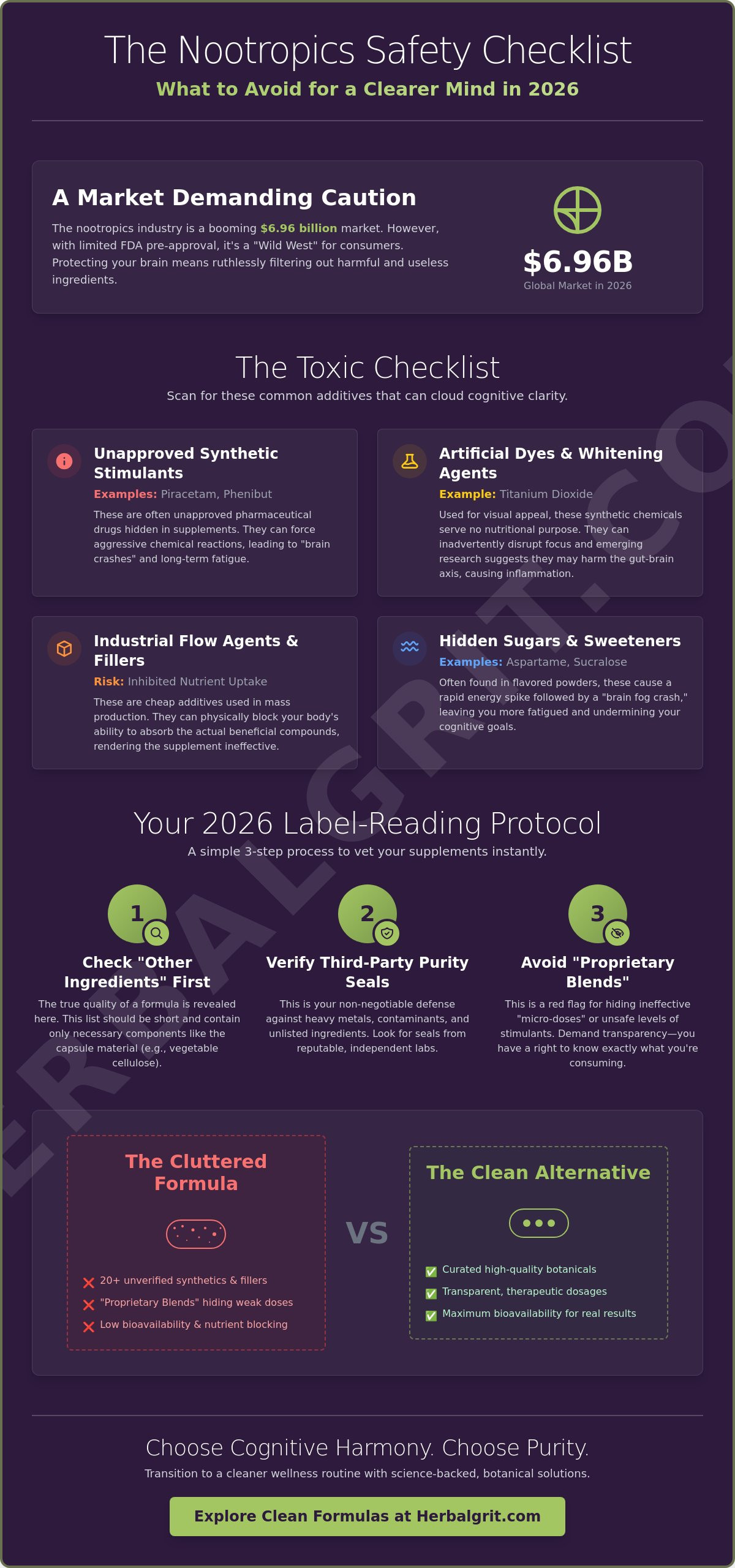
The 2026 nootropics market is a $6.96 billion industry, but it remains a “Wild West” for the unwary consumer. Because the FDA doesn’t approve these products before they hit the shelves, the responsibility of safety falls entirely on you. Identifying specific brain supplement ingredients to avoid isn’t just about saving money; it’s about protecting your most vital organ from long-term neurological stress. Many products rely on “label dressing,” which is the practice of including a tiny micro-dose of a popular herb just to list it on the package. These amounts are far below therapeutic levels, providing no benefit while leaving room for cheaper, potentially toxic fillers that serve no purpose for your health.
True cognitive support requires high bioavailability, which is the body’s ability to actually absorb and use a nutrient. Poorly chosen additives can physically block your brain’s uptake of beneficial compounds, rendering even the best ingredients useless. We advocate for a “Clean Mind” philosophy where less is often more. A curated blend of three high-quality, transparently sourced botanicals is always superior to a cluttered formula of twenty unverified synthetics. When you clear away the chemical noise, your brain can finally tap into its natural resilience and strength.
The 2026 Nootropic Landscape
As “smart drugs” have moved into the mainstream, regulatory gaps have widened, allowing unverified products to flood the market. Your brain is uniquely sensitive to toxins because of its high metabolic rate and delicate chemical balance. Unlike other organs, the brain doesn’t have a simple way to “flush” out heavy metals or synthetic dyes once they take hold. This is why verifying third-party testing for supplements has become the gold standard for safety in 2026. It serves as your first line of defense against the hidden contaminants that often plague mass-produced formulas.
The Risk of Synthetic Cognitive Enhancers
There’s a profound difference between a sun-grown botanical and a lab-created stimulant. Many synthetic enhancers are designed to force a chemical reaction, often crossing the blood-brain barrier with aggressive speed. This can lead to the “brain crashes” many users fear, followed by long-term fatigue. Research into Nootropic safety and regulation shows that unapproved pharmaceutical drugs are still surfacing in over-the-counter products. Brands often hide these risks within “proprietary blends.” These blends mask the exact dosages of each component, making it impossible to know if you’re consuming a safe amount or a high-dose hazard. Knowing which brain supplement ingredients to avoid helps you reclaim control over your mental environment.
The Toxic Checklist: Additives and Fillers That Cloud Cognitive Clarity
When you turn over a bottle of nootropics, your eyes likely jump to the active compounds like Bacopa or Lion’s Mane. However, the real story of a product’s quality lives in the “Other Ingredients” section. Many mass-marketed formulas are packed with industrial additives that do more than just take up space; they can actively hinder your performance. Some experts even suggest there is no solid proof any of them work when the active nutrients are buried under layers of synthetic junk. Identifying these specific brain supplement ingredients to avoid is the first step toward a truly clear mind.
Beyond technical fillers, watch out for hidden sugars and artificial sweeteners like aspartame or sucralose. These are often added to flavored powders to mask the natural bitterness of botanical extracts. While they might make a drink taste better, they frequently trigger a rapid spike and subsequent “brain fog crash” that leaves you more fatigued than before you took the supplement. Similarly, whitening agents like Titanium Dioxide are used to give capsules a pristine, pearly appearance, but emerging research suggests these particles may disrupt the delicate gut-brain axis, leading to systemic inflammation.
Synthetic Dyes and Cognitive Disruption
Artificial colorings like Red 40 and Yellow 6 serve no functional purpose in a brain health formula. Manufacturers use them primarily to mask the natural degradation or color inconsistencies of raw herbs. For sensitive individuals, these dyes are linked to increased irritability and reduced attention spans, which is the exact opposite of the focus you’re trying to achieve. If a capsule is neon-colored, it’s a red flag. Seek out brands that use nature’s own palette, such as beet root, turmeric, or chlorophyll, to provide color without the neurological cost.
The Truth About Fillers and Flow Agents
Magnesium Stearate and Silicon Dioxide are the workhorses of cheap supplement manufacturing. These “flow agents” prevent ingredients from sticking to machinery during high-speed production. While they make manufacturing easier, they create a “bioavailability tax” for the consumer. These substances can coat the active nutrients in a waxy layer, significantly slowing down or even blocking their absorption in the digestive tract. You might be paying for premium herbs, but your body is only receiving a fraction of the benefit because of these industrial lubricants.
A clean label is one that contains fewer than three non-active ingredients. If you’re looking for a formula that respects this standard of purity, choosing a science-backed solution like Synaptigen can help you avoid the hidden pitfalls of industrial fillers while supporting your cognitive goals through authentic, raw ingredients.
High-Dose Hazards: When Good Nutrients Turn Into Brain Stressors
Sometimes the most significant risks don’t come from industrial fillers, but from essential nutrients pushed to an unnatural extreme. In the pursuit of peak performance, many manufacturers include “megadoses” that far exceed what the human body can safely process. This creates a state of metabolic friction where your system must work overtime to filter out the excess, often leading to the very fatigue you’re trying to escape. Understanding these brain supplement ingredients to avoid in high concentrations is vital for maintaining a balanced, resilient nervous system.
The danger of over-supplementation is compounded by a lack of rigorous oversight. As noted by Harvard Health on brain supplement effectiveness, many products on the market lack solid proof of efficacy, especially when dosages are skewed toward marketing claims rather than biological needs. When a label boasts 5,000 percent of your daily value, it’s often a sign of a formula designed for “shelf appeal” rather than cognitive harmony.
The Vitamin B6 and E Paradox
Vitamin B6 is essential for neurotransmitter synthesis, but it has a strict safety profile. In 2026, the Recommended Dietary Allowance (RDA) for most adults remains between 1.3 and 1.7 mg. Many nootropics pack 50 mg or even 100 mg into a single capsule. This chronic overexposure can lead to peripheral neuropathy, a type of nerve damage that causes tingling or numbness. If you see high doses of B6, look for the “P-5-P” (Pyridoxal-5-Phosphate) form. This is the bioactive version that the body uses more efficiently, reducing the risk of toxic buildup. Similarly, excessive Vitamin E can flip from a protective antioxidant to a pro-oxidant, increasing oxidative stress and interfering with the brain’s natural restorative cycles.
Stimulant Overload and the Cortisol Spike
The “Caffeine Ceiling” is a critical concept for anyone seeking sustainable focus. While a small amount of caffeine can be a helpful bridge to alertness, doses exceeding 200 mg in a single supplement often trigger a massive cortisol spike. This puts your body into a “fight or flight” state, leading to adrenal fatigue and a subsequent crash that leaves your mind in a dense fog. Stimulant abuse masks exhaustion rather than resolving it. For those looking to nourish their mind without the jitters, exploring herbal supplements for focus and memory provides a more grounded, restorative path to clarity.
Other hazards to watch for include:
- Ginkgo Biloba: While beneficial for circulation, it acts as a mild blood thinner and can be dangerous if you’re already taking anticoagulant medications.
- Excessive Omega-6: Many cheap brain oils are high in Omega-6 fatty acids. Without a proper balance of Omega-3s, this can trigger neuro-inflammation, which is a silent thief of cognitive speed.
- Synthetic Choline: High doses of certain synthetic choline sources can cause headaches and “brain pressure” in sensitive individuals.
How to Vet Your Nootropics: The 2026 Label-Reading Protocol
When you hold a bottle of nootropics, look at the bottom first. Marketers spend millions to catch your eye with bold claims on the front of the packaging, but the truth lives in the fine print at the back. Identifying brain supplement ingredients to avoid requires a shift in how you look at a bottle. We’ve developed a disciplined protocol to help you bridge the gap between marketing noise and genuine cognitive support.
- Step 1: Scan the “Other Ingredients” section before looking at the active ones. This is where the hidden fillers and dyes discussed earlier often reside.
- Step 2: Verify the presence of a third-party seal. Look for NSF, USP, or Informed Choice logos, which confirm that an independent lab has verified the bottle’s contents.
- Step 3: Treat “Proprietary Blends” with skepticism. If a brand won’t disclose the exact milligram count of each ingredient, you can’t cross-reference them against known safe dosages.
- Step 4: Check the “Best By” date. Botanical extracts and delicate oils can turn rancid over time, ensuring the potency hasn’t faded or turned into an oxidative stressor.
- Step 5: Research the manufacturer’s reputation. Look for a history of transparency and watch for red flags for supplement scams that target vulnerable consumers.
Spotting the Red Flags on the Back of the Bottle
Hidden stimulants are a common pitfall in the nootropics industry. Ingredients like Guarana or Yerba Mate are often used to provide a cheap caffeine kick without listing the specific milligram count. This can push you past your “caffeine ceiling” without you even realizing it. You should also be wary of the term “all-natural.” It’s a marketing phrase rather than a legal standard; many toxic elements are technically natural but have no place in your brain. Be cautious of “pay-to-play” certifications or a sudden influx of suspiciously perfect reviews that lack specific details about the user’s experience.
The Importance of Sourcing and Purity
The soil where a botanical is grown dictates its final quality. Wild-crafted or organic sourcing is the gold standard because it ensures the plant hasn’t been saturated with synthetic pesticides that can cross the blood-brain barrier. High-quality brands will provide proof of heavy metal testing to ensure their extracts are free from Lead and Mercury. Choosing supplements manufactured in the United States within a GMP-certified facility is the absolute baseline for ensuring basic safety and quality control in 2026.
If you’re ready to bypass the confusion and invest in a formula that meets these rigorous standards, you can find cognitive harmony with Synaptigen’s clean, botanical blend.
Choosing Cognitive Harmony: The Herbalgrit.com Standard for Purity
Achieving mental clarity shouldn’t feel like a hazardous journey through a laboratory. By understanding the specific brain supplement ingredients to avoid, you’ve already taken the most important step toward protecting your long-term neurological health. At Herbalgrit.com, we view ourselves as a bridge between the raw, inherent strength of nature and your modern need for cognitive support. Our “Modern Apothecary” philosophy ensures that every selection is filtered for both rugged endurance and botanical softness, providing a path to wellness that feels as grounded as it is effective.
True cognitive harmony isn’t just about what you take; it’s about the intentionality behind your choices. While the market is often crowded with synthetic “quick fixes,” we advocate for a holistic approach that respects your body’s natural rhythms. This means pairing pure, high-quality supplementation with a lifestyle that nourishes your mind. Learning how to feel sharper at work involves more than just a pill; it requires a commitment to sustained mental clarity through clean living and disciplined routines.
Synaptigen: Purity Meets Performance
We created Synaptigen to serve as the benchmark for what a clean, science-backed nootropic should be. Unlike the mass-produced formulas we’ve discussed, Synaptigen is entirely free from synthetic fillers, industrial flow agents, and artificial dyes. We rely on standardized botanical extracts to ensure that every dose is consistent, safe, and effective. This transparency eliminates the guesswork and the fear of “dirty” nootropic stacks that cause more harm than good. It’s a solution designed for those who refuse to compromise their health for a temporary boost in focus.
The Non-Ingestible Alternative: The Brain Song
If you’re looking for a way to sharpen your mind without adding anything to your digestive system, audio-visual brainwave activation offers a unique, zero-additive solution. This method bypasses the gut entirely, using specific frequencies to encourage the brain into states of deep focus or restorative calm. These 12-minute sessions are a safe, non-invasive way to tune your cognitive performance without the risk of metabolic friction or “brain crashes.”
We invite you to explore The Brain Song as a gentle yet steadfast addition to your wellness routine. Whether you choose the purity of Synaptigen or the frequency-based support of our audio programs, your journey toward mental clarity should always be rooted in safety and integrity. By choosing clean solutions, you ensure that your performance today doesn’t come at the cost of your health tomorrow.
Mastering Your Cognitive Future
You now possess the discerning eye needed to navigate the complex supplement landscape of 2026. True mental clarity begins with the discipline to look past bold marketing and focus on the fine print. By mastering the list of brain supplement ingredients to avoid, you’re reclaiming your long-term neurological health from industrial fillers and synthetic shortcuts that offer little more than metabolic friction. Your mind deserves a sanctuary of purity, not a crowded shelf of unverified chemicals.
Ready for a cleaner mental edge? Experience the purity of Synaptigen today. Our formula is built on a steadfast foundation of integrity, featuring GMP-certified manufacturing and rigorous third-party purity testing. You won’t find any synthetic dyes or toxic fillers in our selections; we prioritize the raw power of nature refined for your modern needs. Trust your cognitive journey to a guide that values transparency as much as you value performance. Your path to sustained focus is clear and within reach.
Frequently Asked Questions
Is it safe to take brain supplements every day?
Clean, botanical-based supplements are often designed for daily use to build cumulative benefits over time. However, products with high-dose stimulants or synthetic additives can lead to tolerance or adrenal fatigue if used without breaks. You should always check the label for “cycling” instructions to maintain your body’s natural balance. Prioritizing formulas with raw, earth-grown nutrients ensures your routine remains restorative rather than taxing to your nervous system.
Can brain supplements cause long-term side effects?
Yes, certain formulations can cause long-term issues if they contain heavy metals or unapproved synthetics. Chronic use of high-dose Vitamin B6, for example, is linked to peripheral nerve damage in sensitive individuals. This is why identifying the specific brain supplement ingredients to avoid is vital for protecting your neurological health over decades. Choosing transparent, third-party tested brands helps ensure your cognitive journey remains safe and supportive for the long haul.
What is the most dangerous ingredient in common nootropics?
Unapproved pharmaceutical drugs like phenibut or piracetam are among the most hazardous findings in the 2026 market. These substances can cross the blood-brain barrier aggressively and cause significant withdrawal or mood disruptions when stopped. Other risks include “hidden” high-dose caffeine and synthetic dyes that trigger systemic inflammation. These industrial shortcuts compromise the delicate chemical balance your brain requires for peak performance and emotional resilience.
How can I tell if a brain supplement is third-party tested?
Look for specific certification seals from independent organizations like NSF International, USP, or Informed Choice directly on the bottle. A reputable manufacturer will also provide a Certificate of Analysis upon request to prove their purity standards. This document confirms that a third-party lab has verified the product is free from contaminants and matches the label’s claims. Transparency is the cornerstone of a trustworthy wellness brand in the modern apothecary space.
Does the FDA regulate brain supplements for safety?
The FDA regulates supplements as food rather than drugs, meaning they don’t approve them for safety or efficacy before they reach consumers. Instead, the agency monitors the market and takes action against misbranded or adulterated products after they are already being sold. This regulatory framework places the burden of research on you to find transparent brands. You must act as your own advocate by vetting every label for integrity and purity.
Can I take brain supplements if I am on prescription medication?
You should always consult your healthcare provider before combining supplements with prescription drugs to avoid unintended interactions. Some botanicals, like Ginkgo Biloba, act as mild blood thinners and can be dangerous if paired with anticoagulant medications. A professional can help you navigate these contraindications to ensure your wellness routine remains safe. Your safety depends on a disciplined approach that respects the complexity of your body’s unique chemistry.
What are the signs of a “brain supplement scam” in 2026?
Scams often feature “proprietary blends” that hide dosages, lack third-party testing, or make aggressive, “limitless” marketing claims. You might also notice a sudden influx of generic, glowing reviews or a missing “Best By” date on the packaging. Authentic brands focus on botanical purity and provide clear, science-backed information. They invite you to learn about their sourcing rather than relying on high-pressure sales tactics or obscure chemical names.
Are “proprietary blends” always something to avoid?
Yes, you should generally avoid proprietary blends because they prevent you from knowing the exact amount of each ingredient you’re ingesting. Without this transparency, it’s impossible to verify if you’re receiving a therapeutic dose or if you’re consuming brain supplement ingredients to avoid in high concentrations. Clear, honest labeling is the hallmark of a brand that respects your health. You deserve to know exactly what is fueling your mind and body.