What if that persistent 2 p.m. mental fog isn’t an inevitable sign of aging, but a signal that your brain’s internal irrigation system needs a gentle, intentional nudge? It’s exhausting to feel your concentration slip during complex tasks, especially when you’re striving to maintain your edge. You likely already sense that your heart health and mental clarity are deeply intertwined, yet finding a sustainable way to bridge that gap can feel overwhelming. Understanding how to improve blood flow to the brain is the first step toward reclaiming the vibrant, steady energy you deserve without relying on temporary caffeine spikes.
In this 2026 guide, we’ll explore science-backed lifestyle shifts and the restorative power of botanical supports that nourish your cerebral circulation. You will discover how the latest clinical guidelines from March 2026 emphasize an integrated approach to brain and heart health, treating your mind with the same care as your cardiovascular system. We’ll preview practical daily habits, sensory techniques, and holistic insights to help you cultivate a resilient, sharp mind for years to come.
Key Takeaways
- Understand the vital role of your carotid and vertebral arteries in delivering oxygen and glucose to your neurons.
- Learn how to improve blood flow to the brain through targeted aerobic movement and posture shifts that release physical restrictions.
- Discover why the quality of your “metabolic cargo” matters just as much as the speed of your circulation for preventing mental fatigue.
- Explore how specific sensory inputs like sound and light can help transition your brain into a state of alpha wave harmony.
- Establish a sustainable daily protocol that prioritizes consistent, gentle habits to support long-term cognitive vitality.
Understanding Cerebral Circulation: Why Your Brain Needs a “Flow” State
Your brain doesn’t just sit quietly in your skull; it thrives in a state of constant, rhythmic motion. This movement is known as Cerebral circulation, the complex network that ensures every neuron receives a steady stream of life-sustaining resources. When this flow is optimal, you feel sharp, present, and capable. When it’s restricted, the mental landscape becomes hazy and slow. This isn’t just about speed; it’s about the steady pressure required to keep your cognitive lights on.
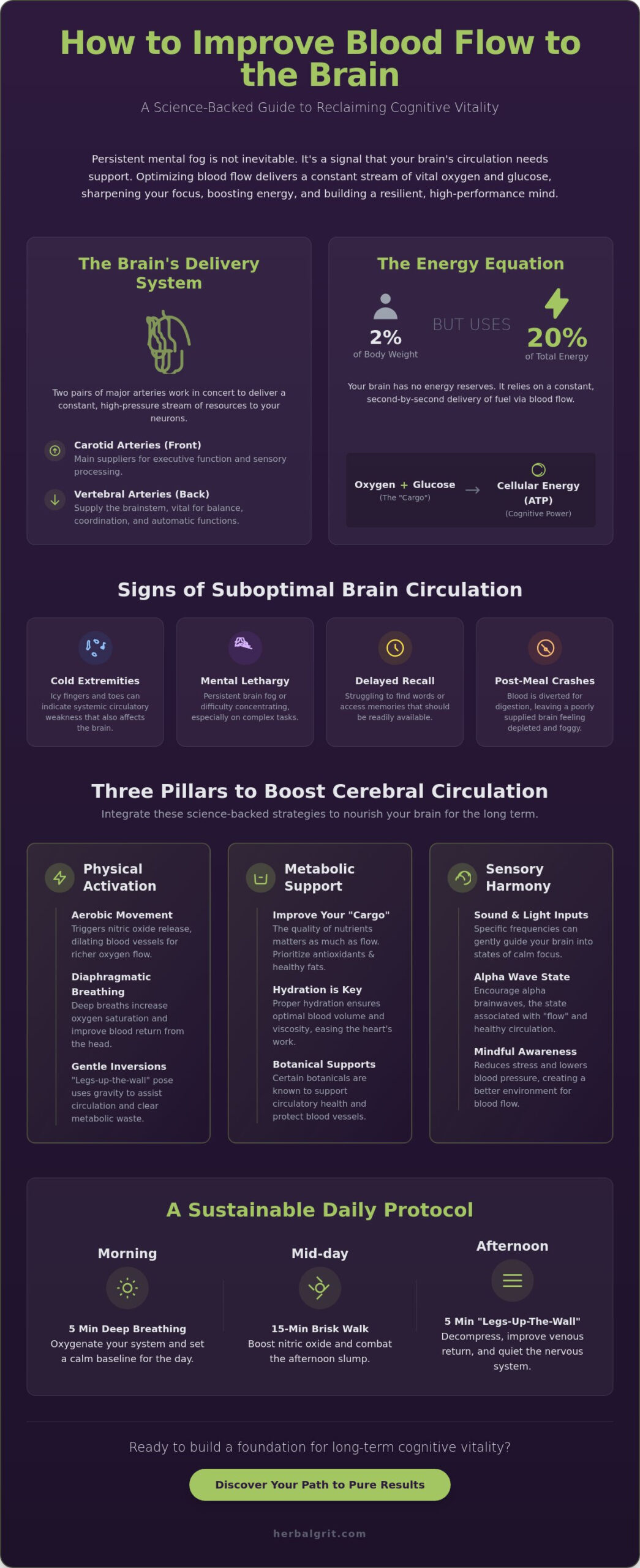
Two main pairs of arteries handle this heavy lifting. The carotid arteries, located in the front of your neck, and the vertebral arteries at the back work together to maintain a delicate, high-pressure environment. They ensure that even if your body is resting, your brain remains saturated with nutrients. This is the physiological foundation for anyone wondering how to improve blood flow to the brain; it starts with keeping these primary pathways clear and resilient through intentional living.
A fascinating process called neurovascular coupling allows your brain to be incredibly efficient. It doesn’t just dump blood everywhere at once. Instead, it directs more flow to the specific regions currently in use. If you’re solving a complex puzzle, your prefrontal cortex gets the priority. If you’re listening to music, the temporal lobes receive the surge. It’s a sophisticated “on-demand” system that keeps your cognitive machinery running smoothly without wasting energy.
The Oxygen-Glucose Connection
Despite accounting for only about 2% of your total body weight, your brain is a metabolic powerhouse that consumes 20% of your total energy. It has no way to store its own fuel, so it relies entirely on the second-by-second delivery of oxygen and glucose. Inside your brain cells, mitochondria use this oxygen to produce ATP, the primary energy currency for every thought and memory. Without this constant replenishment, your mental endurance withers. Cerebral blood flow is the lifeblood of cognitive endurance, providing the raw materials for every spark of insight.
Signs of Suboptimal Brain Circulation
You might notice subtle signs when your circulation isn’t quite reaching its peak. Cold extremities, like icy fingers or toes, often pair with mental lethargy and delayed recall. If your blood is struggling to reach your hands, it might also be struggling to maintain the pressure needed for deep focus. Post-meal energy crashes are another common indicator. When your body diverts blood to the digestive system, it can leave the brain feeling momentarily depleted. This is why understanding brain fog after carbs is so important for those looking for how to improve blood flow to the brain. By recognizing these patterns, you can begin to shift your daily habits to support a more consistent, vibrant flow state.
Physical Strategies to Boost Cerebral Oxygenation
Optimizing your mental landscape requires more than just passive thought; it demands a physical commitment to your body’s circulatory health. When you engage in purposeful movement, your blood vessels release nitric oxide. This natural molecule acts as a gentle signal for your arteries to dilate, allowing a richer stream of oxygenated blood to reach your neurons. Understanding how to improve blood flow to the brain through physical habits is about creating a reliable “pump” that keeps your cognitive energy consistent from dawn until dusk.
Research confirms that physical activity is one of our most potent tools for neuroprotection. For example, clinical studies at UT Southwestern have demonstrated that exercise boosts blood flow specifically to the hippocampus, the region responsible for memory and learning. Beyond traditional exercise, simple shifts in your breathing can change your internal chemistry. Deep diaphragmatic breathing increases oxygen saturation and helps regulate the pressure within your chest, which indirectly assists the venous return of blood from the head. For a restorative reset, try “legs-up-the-wall” pose for five minutes; this gentle inversion uses gravity to encourage blood back toward the heart and upper body, clearing metabolic waste more efficiently.
Aerobic Intervals for Mental Clarity
While a long walk is beneficial, short bursts of higher intensity are often more effective for immediate focus. These intervals trigger the release of Brain-Derived Neurotrophic Factor (BDNF), a protein that supports the survival of existing neurons and encourages the growth of new ones. To lift the afternoon fog, try a 12-minute “brain-boost” walking protocol: walk briskly for two minutes, then move at a comfortable pace for one minute. Repeat this cycle four times. This rhythmic shift in heart rate creates a metabolic demand that forces the vascular system to adapt and strengthen, providing a natural alternative to your third cup of coffee.
Posture and the “Vascular Highway”
Modern life often forces us into a “Tech Neck” position, where the head protrudes forward and the shoulders round. This misalignment physically compresses the vertebral arteries, which travel through the bones of your neck to supply the back of your brain. To keep this vascular highway open, practice these three desk-friendly stretches:
- Chin Tucks: Gently draw your chin straight back without tilting your head down to align the cervical spine.
- Doorway Chest Openers: Rest your forearms on a door frame and lean forward to stretch the tight muscles that pull your shoulders forward.
- Seated Side Tilts: Slowly drop your ear toward your shoulder to release tension in the scalene muscles of the neck.
Hydration is equally vital for maintaining the proper viscosity of your blood. When you are dehydrated, your blood becomes thicker and harder to move through small capillaries. Keeping your fluid levels steady ensures that your circulation remains fluid and effortless. To further support your cognitive endurance, consider how botanical supports can complement these physical shifts by nourishing the delicate tissues of your vascular system.
Metabolic Support: Improving the “Cargo” in Your Blood
While opening your physical pathways is essential, the quality of what your blood carries determines the actual nourishment your neurons receive. Think of your circulatory system as a delivery network; even the fastest route is ineffective if the cargo is insufficient or toxic. If your blood is saturated with excess glucose or inflammatory markers, the benefits of increased circulation are diminished. Understanding how to improve blood flow to the brain requires a shift in focus from the speed of the flow to the purity of the metabolic cargo it transports.
Erratic blood sugar levels are often the hidden culprit behind sudden cognitive “crashes.” When glucose levels spike and then plunge, your brain experiences a metabolic shock that disrupts the steady delivery of energy. This instability forces your vascular system to work harder to maintain balance, often leading to mental fatigue. Healthy fats, particularly those found in raw seeds and cold-water fish, act as structural support for the blood-brain barrier. This barrier is a selective gatekeeper, ensuring that only the most vital nutrients reach the delicate neural tissue while keeping systemic toxins at bay. Being mindful of foods that cause brain fog is an essential part of purifying this metabolic cargo and protecting your cognitive energy throughout the day.
The Gut-Brain Circulation Link
Your digestive tract serves as a major hub for systemic inflammation. When the gut lining is compromised, inflammatory signals travel through the bloodstream and can eventually affect the permeability of the blood-brain barrier. This often leads to “leaky brain” symptoms, characterized by a persistent sense of being unplugged or distant. To combat this, a diet rich in polyphenols acts as a soothing balm for your entire vascular system. You can explore more about the link between gut health and brain fog to understand how your microbiome dictates your mental clarity.
Nootropic Foods for Blood Vessel Health
Nature provides a curated selection of foods that improve cognitive function by supporting endothelial health, the inner lining of your blood vessels. Beets are particularly powerful because they are rich in dietary nitrates that the body converts into nitric oxide, helping the vessels remain flexible and open. Dark cocoa contains high concentrations of flavanols that improve arterial elasticity, making it easier for your heart to pump blood upward against gravity. Integrating these raw ingredients is a foundational step in learning how to improve blood flow to the brain through nutrition. For those seeking a more structured approach to wellness, creating a daily supplement routine ensures your metabolic cargo remains high-quality and consistent every single day.
Sensory Activation and Brainwave Harmony
Your brain is an organ of perception, responding constantly to the symphony of light and sound surrounding you. While we have already discussed the importance of physical movement and metabolic quality, sensory activation offers a unique, non-invasive path to cognitive vitality. Specific sensory inputs can actually trigger regional increases in blood flow as the brain prioritizes resources for active processing centers. Learning how to improve blood flow to the brain through these environmental cues allows you to fine-tune your mental state with precision and grace.
Mental sluggishness often stems from a mismatch in brainwave activity. When your brain remains stuck in slow-wave patterns during the workday, your vascular system doesn’t receive the energetic signals it needs to increase nutrient delivery. Moving into an “alpha” state, the sweet spot of relaxed focus, encourages a more efficient and rhythmic flow. This synchronization creates a harmonious environment where neurons and blood vessels work in tandem to support your most complex tasks.
Sound as a Catalyst for Cognitive Flow
Sound serves as a powerful catalyst for this neural harmony. Specific audio frequencies can support neural synchronization, helping different regions of the brain communicate with less friction. A simple “12-minute rule” can be transformative; dedicating just twelve minutes to targeted audio can reset your mental focus and encourage a fresh surge of oxygenated blood. For a specialized experience, The Brain Song provides a curated audio tool designed to activate these healthy patterns and reclaim your mental clarity.
Managing the Cortisol Constriction
Chronic stress is a physical barrier to healthy circulation. When cortisol floods your system, it triggers a survival response that causes significant vasoconstriction. This process starves the prefrontal cortex of resources, making logic and decision-making nearly impossible. To break this cycle, use a quick grounding technique: press your feet firmly into the earth and name three textures you can feel. These small shifts signal safety to your nervous system, allowing your arteries to relax and reopen. During particularly demanding seasons, many find that Synaptigen provides the gentle support needed to maintain mental clarity when the pressure rises.
To deepen your commitment to this holistic journey, you can discover restorative botanical solutions that support your brain’s natural resilience and long-term health.
Building Your 2026 Brain Health Protocol
Your brain possesses an incredible capacity for renewal and resilience. It doesn’t require a radical overhaul of your life to see results; it simply needs the right environment to flourish. Throughout this guide, we’ve explored the physical pathways, the metabolic quality of your blood, and the sensory inputs that dictate your mental state. Now, the goal is to weave these elements into a seamless daily rhythm. Understanding how to improve blood flow to the brain is a journey toward reclaiming your mental sovereignty through small, intentional choices that honor your body’s natural wisdom.
Adopting a “modern apothecary” approach means you don’t have to choose between traditional botanical wisdom and 2026 technology. You can enjoy the grounding effects of a morning walk while using advanced audio tools to sharpen your focus in the afternoon. This holistic blend ensures that your circulatory system is supported from every angle. Consistency is far more valuable than intensity. A five-minute stretch performed every day will do more for your vertebral arteries than a two-hour workout done once a month. Trust that your system will respond quickly to these gentle, restorative shifts.
The Daily Circulation Checklist
To make these concepts actionable, consider this simple daily flow designed to keep your cerebral energy steady:
- Morning: Begin with five minutes of gentle movement, like a sun salutation or a brisk walk, followed by a large glass of mineral-rich water to optimize blood viscosity.
- Midday: Prioritize a nutrient-dense lunch rich in healthy fats and polyphenols. Keeping carbohydrates low during the day helps prevent the metabolic crashes that starve the brain of steady energy.
- Afternoon: When the 2 p.m. fog rolls in, engage in a twelve-minute sensory activation session. This is the perfect time for audio entrainment to transition your brainwaves into a productive alpha state.
Long-term Cognitive Longevity
The cumulative effect of these habits is profound. By mastering how to improve blood flow to the brain today, you are essentially investing in a more vibrant future self. Each moment of deep breathing, each postural correction, and each mindful meal adds a layer of protection against age-related decline. This proactive stance is the cornerstone of preventive neurology in 2026. For a deeper dive into sustaining this clarity over the decades, explore our Cognitive Longevity Checklist. If you’re ready to experience the next level of mental sharpness right now, discover how The Brain Song can act as the final piece in your daily vitality protocol.
Nourish Your Mind for the Seasons Ahead
Your journey toward cognitive vitality is rooted in the steady application of the wisdom we’ve shared. By aligning your physical posture, purifying your metabolic cargo, and embracing the harmony of sensory activation, you’ve laid a foundation for a resilient mind. Understanding how to improve blood flow to the brain is more than a simple health goal; it’s a commitment to your long-term clarity and presence. These intentional shifts create a sanctuary where focus and energy can thrive naturally.
Building on the science of neurovascular coupling, you can now integrate a non-invasive 12-minute daily protocol into your routine. This simple practice offers nurturing support for cognitive longevity, helping you bridge the gap between traditional wisdom and modern wellness. Activate your brainwaves for peak clarity with The Brain Song and reclaim the vibrant mental energy you deserve. Trust in your brain’s inherent strength and its capacity to respond beautifully to the care you provide today. Your mind is a garden. With consistent care, it will remain vibrant and sharp for all the years to come.
Frequently Asked Questions
How can I tell if I have poor blood flow to my brain?
You may notice subtle physical and mental signals when your cerebral circulation is suboptimal. Common indicators include persistent mental fatigue in the afternoon, cold hands and feet, and a frequent sense of “brain fog” that makes complex tasks feel insurmountable. Some individuals also experience a slight delay in word recall or a heavy feeling in the head when sitting for long periods without movement.
Can certain herbs like Ginkgo Biloba really improve cerebral circulation?
While Ginkgo Biloba has a long history in traditional wellness, recent scientific analyses from 2025 and 2026 have questioned its consistent efficacy for healthy adults. Research suggests that relying on a single botanical may be less effective than a holistic approach. Instead, focusing on a curated routine that supports your entire vascular system often provides more reliable results for those seeking long-term cognitive vitality.
Does drinking coffee help or hurt brain blood flow in the long run?
Caffeine provides a temporary sense of alertness, but it actually acts as a vasoconstrictor, which can briefly reduce the diameter of your blood vessels. Relying on heavy doses often leads to energy crashes that leave the brain feeling depleted. For steady mental energy, it’s better to choose natural alternatives or botanical supports that nourish the blood-brain barrier without causing the sharp spikes and dips associated with stimulants.
How long does it take to see improvements in mental clarity after changing my routine?
Many people report feeling a subtle shift in presence almost immediately after practicing deep breathing or sensory activation. However, more significant changes in how to improve blood flow to the brain typically emerge after two to four weeks of consistent habit shifts. This window allows your vascular system to adapt to new movement patterns and your metabolic “cargo” to stabilize through improved nutrition.
Is there a specific way to breathe that increases brain oxygen?
Deep diaphragmatic breathing, specifically through the nose, is the most effective way to oxygenate your system. Nasal breathing encourages the release of nitric oxide, a molecule that helps your blood vessels relax and open. Try a slow four-count inhale through the nose followed by a six-count exhale to signal your nervous system to move out of a constricted “fight or flight” state and into a flow state.
Can high blood pressure actually reduce effective blood flow to the brain?
Yes, high blood pressure can damage the delicate small vessels in the brain over time, making them less efficient at delivering nutrients. New clinical guidelines published on March 30, 2026, emphasize that managing blood pressure is vital for reducing the risk of cognitive impairment. Solutions like Bazopril can be part of a grounded routine to support heart health, which is the foundational pump for all cerebral circulation.
What is the “Brain Song” and how does audio affect my circulation?
The Brain Song is a specialized audio tool designed to support neural synchronization through specific frequencies. These sounds act as a sensory catalyst, triggering regional increases in blood flow as your brain processes the rhythmic input. It’s a non-invasive way to transition your mind from a sluggish state into a productive alpha wave pattern, helping you reclaim clarity without the need for additional caffeine.
Are there any quick exercises I can do at my desk to boost focus?
You can quickly boost your focus by performing gentle neck releases and ankle pumps right at your desk. Slowly tilting your ear toward your shoulder helps release the muscles surrounding your vertebral arteries, while ankle pumps encourage blood to move from your lower extremities back toward your heart. These micro-movements ensure that your “vascular highway” remains open and active even during long periods of seated work.