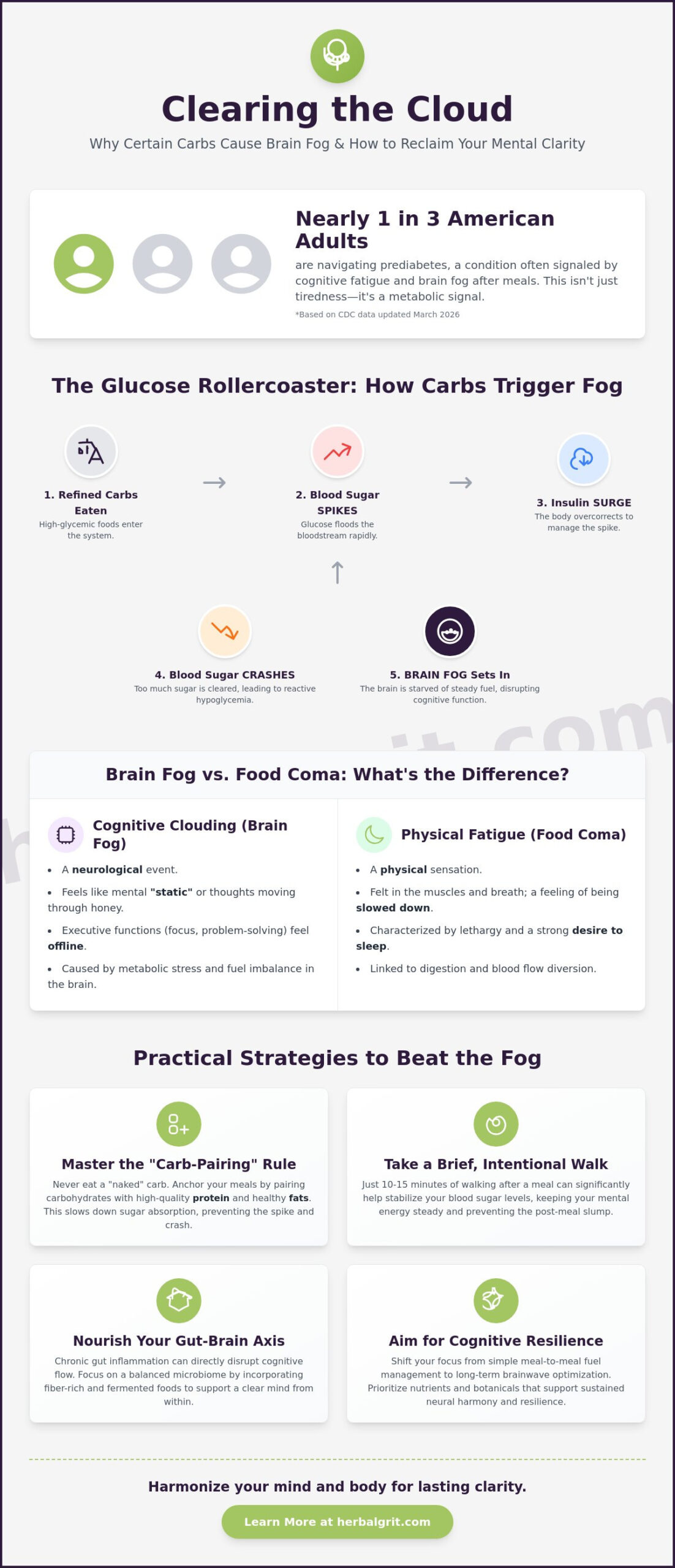
Did you know that nearly 1 in 3 American adults are now navigating the quiet challenges of prediabetes? According to CDC data updated in March 2026, this metabolic shift often reveals itself through a persistent, heavy pressure behind the eyes. You likely recognize the sensation of brain fog after eating carbs, especially when that post-lunch slump turns a productive afternoon into a struggle for focus. It’s frustrating to lose your train of thought during a conversation or feel your mental sharpness vanish just when you need it most. This feeling of cognitive fatigue isn’t just in your head; it’s a signal from your body asking for a more restorative approach to nourishment.
We believe that true wellness is found when we bridge the raw power of nature with our modern need for clarity. You deserve to feel vibrant and present throughout your entire day. We’ll explore why certain carbohydrates trigger this mental cloud and provide you with science-backed, natural strategies to reclaim your focus. By understanding the latest 2025-2030 Dietary Guidelines and the importance of prioritizing high-quality protein, you’ll learn how to harmonize your meals for sustained energy. We’ll guide you through identifying your specific triggers and finding botanical pathways to clear the fog quickly and gently.
Key Takeaways
- Identify the difference between simple physical tiredness and the specific mental confusion caused by the “glucose rollercoaster” and insulin overcorrection.
- Explore the restorative connection between your microbiome and your mind to understand how gut inflammation disrupts your cognitive flow.
- Master the “Carb-Pairing” rule to prevent brain fog after eating carbs by anchoring your meals with healthy fats and proteins.
- Learn how a brief, intentional walk after eating can stabilize your internal environment and keep your mental energy steady.
- Shift your focus from simple fuel management to long-term brainwave optimization for a sharper, more resilient cognitive state.
The Post-Carb Fog: Defining the Mental Cloud
Many of us have experienced that heavy, drifting sensation shortly after a hearty lunch. While society often jokes about the need for a nap, experiencing brain fog after eating carbs is a specific physiological event. It is best defined as a transient state of cognitive impairment. This isn’t just a lack of willpower or simple tiredness. It’s a temporary disruption in how your brain processes information, usually following the intake of high-glycemic foods that spike your blood sugar rapidly. When this happens, the mental clarity you rely on for work and connection begins to dissolve into a thick, restorative-seeking mist.
It is helpful to distinguish this feeling from Postprandial somnolence (food coma). While a food coma is characterized by physical lethargy and a desire to sleep, brain fog is distinctly neurological. You might find yourself staring at a computer screen, unable to grasp the meaning of a simple email. Common symptoms include:
- Difficulty finding the right words during a conversation.
- A “spaced out” feeling where you lose your place in a task.
- Reduced processing speed and a sense of mental “heaviness.”
- Short-term memory lapses, such as forgetting why you walked into a room.
Your brain is a glucose-hungry organ, consuming about 20 percent of your body’s total energy. It thrives on a steady, gentle flow of fuel. However, when you flood the system with refined carbohydrates, the resulting spike causes a chaotic internal environment. Instead of being nourished, the brain reacts negatively to the sudden surge and the subsequent inevitable crash. This turbulence disrupts the delicate balance required for sharp thinking and emotional stability.
The Difference Between Fatigue and Cognitive Clouding
Physical fatigue lives in the muscles and the breath; it’s the feeling of your body slowing down. In contrast, cognitive clouding is a neurological event that creates a sense of mental “static.” It feels as though your thoughts are moving through honey. You might have the physical energy to walk or talk, but the executive center of your brain feels offline. Cognitive clouding is the disruption of executive function due to metabolic stress. This distinction is vital because it helps us move away from self-blame and toward understanding our body’s unique botanical and metabolic needs.
The 2026 Perspective on Nutritional Neuro-Science
As we move through 2026, we are beginning to recognize that modern, highly processed diets often exceed our ancestral metabolic capacity. Our biology was designed for the slow release of energy found in nature, not the rapid-fire delivery of modern refined grains. We now view food as a complex signal rather than just calories. Achieving “neural harmony” requires us to listen to these signals and choose ingredients that support a steady rhythm. Learning how to balance these inputs is a key part of knowing how to stay mentally sharp as you age. By treating our meals as a form of gentle support for our nervous system, we can maintain clarity and resilience throughout the day.
The Biological Mechanics: Why Carbs Disrupt Your Clarity
To understand why brain fog after eating carbs occurs, we must look at the delicate dance of hormones and energy within your cells. When you consume refined carbohydrates, your blood sugar levels rise with unnatural speed. In response, your body releases a surge of insulin to manage this influx. This often leads to an “insulin overcorrection,” where the hormone works so aggressively that it clears too much sugar from your bloodstream. This creates a state known as reactive hypoglycemia, essentially starving your brain of the steady glucose it requires for cognitive tasks. Without a consistent energy supply, your mental processes slow down, leading to that familiar sense of confusion.
Beyond the simple rise and fall of sugar, high levels of glucose can trigger a more complex neurological response involving glutamate. This neurotransmitter is essential for learning and memory, but in excess, it can lead to excitotoxicity. This means your brain cells become overstimulated and stressed. Recent studies on Nutritional Approaches to Managing Brain Fog suggest that this metabolic turbulence also affects the permeability of the blood-brain barrier. When this protective shield is compromised, inflammatory markers can more easily reach sensitive neural tissues, further clouding your concentration.
The relationship between your blood sugar and your brain’s protective barrier is a cornerstone of cognitive health. When glucose levels fluctuate wildly, the tight junctions of this barrier can weaken. This allows substances that don’t belong in the brain to slip through, sparking a low-level immune response. This internal “static” is what you feel when you can’t quite focus on the task at hand or find the right words in a meeting. It’s your body’s way of signaling that its internal environment is out of rhythm.
Insulin Resistance and the Brain
We often think of insulin resistance as a physical health issue, but it has profound effects on the mind. Some researchers now refer to chronic cognitive decline as “Type 3 Diabetes.” This happens when your brain cells become resistant to insulin, meaning they can’t effectively absorb the sugar present in your blood. Even if your blood sugar is high, your brain feels like it’s starving because the fuel can’t get inside the cells. Prioritizing metabolic support is essential for revitalizing this cellular communication and ensuring your mind remains sharp and responsive. Supporting your body’s ability to process fuel efficiently is a kind, restorative act for your long-term wellness.
The Mitochondrial Connection
Your mitochondria act as the microscopic power plants within every cell, converting nutrients into the energy that fuels your thoughts. When you flood these tiny structures with excessive glucose from refined carbs, they can become “clogged” and inefficient. This metabolic overwhelm produces Reactive Oxygen Species (ROS), which are unstable molecules that cause oxidative stress and damage cellular components. Mitochondria are the primary gatekeepers of your mental stamina. If you’re looking for a way to gently support your body’s natural fat-burning rhythm and ease the burden on your metabolism, exploring solutions like BioVanish can help restore that vital internal balance.
Beyond the Sugar Crash: Inflammation and the Gut-Brain Axis
While the rise and fall of glucose is a significant factor, the true root of brain fog after eating carbs often lies deeper within your digestive system. Your gut and brain are in constant communication through an intricate pathway known as the gut-brain axis. When you consume refined carbohydrates, you aren’t just shifting your blood sugar; you’re also influencing your internal microbial landscape. These processed foods can trigger the release of inflammatory cytokines in the gut. These small proteins act as messengers, traveling through your system and eventually reaching the brain, where they can disrupt the tranquility required for focused thought.
This process is often exacerbated by microbiome dysbiosis. Certain species of bacteria and yeast, such as Candida, thrive on a steady supply of sugar. When these populations overgrow, they release metabolic byproducts and toxins that cloud your mental clarity. Scientific reviews on how carbohydrates impact cognitive function highlight that this isn’t just about energy. It’s about how these foods alter the delicate balance of your microbiome, creating a state of systemic inflammation that lowers your threshold for mental endurance. When your body is busy fighting these internal irritants, it has fewer resources available for complex cognitive tasks. Understanding the link between gut health and brain fog reveals how deeply your digestive ecosystem shapes your daily mental performance.
Leaky Gut, Leaky Brain
There’s a powerful correlation between the integrity of your intestinal lining and the health of your blood-brain barrier. When the gut becomes permeable, a condition often called “leaky gut,” undigested food particles and endotoxins like lipopolysaccharides (LPS) can escape into the bloodstream. These intruders spark an immune response that can lead to neuro-inflammation. Understanding the link between gut health and brain fog is vital for anyone seeking a more resilient mind. By supporting your gut’s natural defense systems, you protect the very barrier that keeps your thoughts clear and your cognitive processing sharp.
Neuro-Inflammation and BDNF
Chronic inflammation doesn’t just make you feel sluggish; it actively suppresses Brain-Derived Neurotrophic Factor (BDNF). Think of BDNF as a restorative tonic for your neurons, essential for neuroplasticity and the growth of new brain cells. High-carb diets that drive inflammation can “muffle” your neurons, making it harder for them to communicate effectively. This leads to that characteristic feeling of brain fog after eating carbs, where your mental gears simply won’t turn. To restore neural harmony, we must look toward protective botanical guidance and dietary choices that nourish rather than irritate our internal environment. Cultivating a state of low inflammation is the steadfast foundation of long-term mental stamina.
Restoring Mental Stamina: Practical Strategies to Beat the Fog
Reclaiming your mental clarity is a journey of small, intentional shifts in how you nourish your body. If you struggle with brain fog after eating carbs, the first step is to stop eating “naked” carbohydrates. When you pair a starch or sugar with healthy fats and proteins, you slow down the absorption of glucose into your bloodstream. This creates a gentle slope rather than a sharp peak. For example, adding a spoonful of almond butter to an apple or olive oil to a sweet potato provides the metabolic anchor your brain needs to stay steady and focused.
Movement is another powerful tool in your restorative toolkit. A simple 10 minute walk after your meal can significantly stabilize your blood sugar. During physical activity, your muscles act like a sponge, soaking up excess glucose without requiring a massive surge of insulin. This prevents the “overcorrection” that leads to a cognitive crash. Additionally, ensure you’re replenishing essential minerals. Magnesium and potassium are vital cofactors for carbohydrate metabolism. Without them, your cells can’t efficiently convert sugar into the energy your neurons crave for daily tasks.
Giving your brain a scheduled break from glucose through strategic fasting can also help restore insulin sensitivity. When you extend the time between your last meal of the day and your first meal the next morning, you allow your insulin levels to drop to a baseline state. This practice encourages your system to become more resilient and less reactive to future carbohydrate intake. It’s a way of allowing your internal environment to find its natural equilibrium once again.
The Modern Apothecary’s Kitchen
Your kitchen can become a sanctuary for cognitive health. Incorporating specific “Brain-Shielding” ingredients can flatten your glucose curve naturally. Consider these additions to your daily rhythm:
- Apple cider vinegar: A tablespoon in water before meals improves insulin sensitivity and slows digestion.
- Cinnamon: This warm, botanical spice helps your cells respond more effectively to glucose.
- Soluble fiber: Adding chia seeds or flax to your meals creates a protective gel in the gut that buffers sugar absorption.
The sequence in which you eat also matters. Aim to consume fiber-rich vegetables first, followed by proteins and fats, and save the carbohydrates for the end of the meal. This simple “order of eating” is your best defense against brain fog after eating carbs during a busy workday. For deeper support, you can explore our guide on herbal supplements for focus and memory to find traditional botanical solutions that enhance your daily clarity. Pairing these botanical choices with a structured approach to how to create a daily supplement routine ensures that your cognitive and metabolic support is both purposeful and consistent.
Immediate Fog-Clearing Techniques
If you find yourself already caught in a mental cloud, there are ways to reset your nervous system quickly. Splashing cold water on your face or taking a few minutes for deep, rhythmic breathing can shift your body from a stressed state to a restorative one. You might also consider using MCT oils, which provide the brain with ketones as an alternative fuel source when glucose levels are fluctuating. Metabolic flexibility is the ability to switch fuel sources without a mental crash. To support this metabolic transition and help your body access cleaner fuel sources, consider exploring BioVanish as part of your daily routine.
Harmonizing Your Mind: Long-term Support for Cognitive Resilience
While managing your glucose is an essential foundation, true cognitive resilience requires us to look beyond simple fuel management. We must consider the frequency at which our mind operates. When we experience brain fog after eating carbs, it is often because our internal rhythm has been disrupted by metabolic turbulence. Nutritional purity provides the necessary groundwork, but brainwave optimization allows us to maintain mental stamina even during the natural afternoon dip. By aligning our mental frequency with the restorative power of nature, we create a synergetic environment where focus becomes a steady constant rather than a fleeting state.
Positioning your memory and focus as a holistic practice is a kind of “Brain Song.” It is a delicate melody that requires the right nutrients, the right environment, and the right mental signals to remain in tune. This approach represents the bridge between the raw power of your biology and the modern need for health support. Instead of viewing your mind as a machine that simply needs fuel, we invite you to see it as a living, breathing ecosystem that thrives on tranquility and intentionality. When we nourish this ecosystem, we move from merely surviving the post-meal crash to thriving with sustained mental energy. Building this ecosystem also means knowing how to create a daily supplement routine for peak physiological support, so that every capsule and botanical you take works in concert with your dietary choices.
Activating Neural Clarity
Neuro-acoustic support is a modern extension of the apothecary’s ancient wisdom. Just as botanical elements soothe the physical body, targeted audio can stimulate the specific brainwaves needed for peak recall and deep clarity. This is particularly helpful when the body is fatigued and the mind feels heavy. Spending just 12 minutes with specialized audio can help override the temporary cognitive fatigue caused by metabolic stress. This gentle intervention encourages your neurons to fire in harmony, clearing the mental static that often follows a high-carb meal. We encourage you to explore The Brain Song to begin harmonizing your mental state and reclaiming your sharpest self.
The 2026 Vision for Cognitive Longevity
As we look toward the future of wellness, we see a shift toward a more grounded and nurturing approach to brain health. We no longer have to tolerate the heavy, clouded feeling of brain fog after eating carbs as an inevitable part of our day. We have the tools to protect our neural pathways and maintain our cognitive longevity through every stage of life. This is about building a steadfast foundation of health that supports your wisdom and vitality for years to come. It’s time to stop settling for a clouded mind and start embracing your full potential. You have the power to nourish your mind and restore your internal harmony. Experience the clarity of The Brain Song today.
Reclaiming Your Cognitive Harmony
You’ve explored how the delicate dance between your metabolism and your mind dictates your daily clarity. By choosing to pair carbohydrates with restorative fats and addressing the inflammation within your gut-brain axis, you lay the groundwork for a more resilient cognitive state. You don’t have to accept brain fog after eating carbs as a permanent shadow over your afternoons. Instead, you can choose to nourish your system and harmonize your mental frequency.
True mental stamina is about more than just what you eat; it’s about the signals you send to your brain. You can now support your focus using neuroscience-backed audio technology designed to activate healthy brainwave patterns for memory and recall. This gentle, 12-minute daily practice acts as a restorative tonic for your thoughts, helping you stay sharp even when metabolic challenges arise. Unlock peak mental clarity and activate your brainwaves with The Brain Song.
Embrace this journey toward long-term cognitive health with patience and intentionality. You have the inherent strength to clear the mist and live with vibrant, unwavering presence.
Frequently Asked Questions
How long does brain fog after eating carbs usually last?
Brain fog after eating carbs typically lasts between one and four hours, depending on how quickly your body processes the glucose. It often peaks about sixty to ninety minutes after a meal when insulin levels are at their highest. If your metabolism is particularly sensitive, you might feel a lingering heaviness until your next balanced meal or a period of physical activity helps stabilize your blood sugar.
Can certain types of carbohydrates cause more brain fog than others?
Refined carbohydrates and liquid sugars are the primary triggers for cognitive clouding. Foods like white flour, sugary cereals, and processed snacks cause a rapid spike in blood glucose that the brain struggles to manage. In contrast, complex carbohydrates found in leafy greens and fibrous vegetables release energy slowly. This steady flow supports neural harmony rather than the chaotic highs and lows associated with processed goods.
Is brain fog after eating a sign of diabetes or pre-diabetes?
While post-meal fatigue is common, frequent mental clouding can be an early indicator of insulin resistance or metabolic disharmony. It suggests that your cells are struggling to efficiently transport and use the energy from your food. If you find this happening regularly, it’s a wise step to consult a healthcare provider for a metabolic screening. Understanding your body’s unique response to sugar is the first step toward restorative health.
Does gluten sensitivity contribute to post-meal brain fog?
Gluten sensitivity can certainly intensify the feeling of a mental cloud. For individuals with a sensitivity, the protein found in wheat can trigger an inflammatory response in the gut that quickly impacts the brain. This isn’t just about glucose; it’s about how your immune system reacts to specific ingredients. Choosing ancient grains or naturally gluten-free botanical sources can often provide a clearer, more tranquil mental state after eating.
Can I clear brain fog instantly after eating the wrong thing?
There isn’t a way to instantly erase the fog, but you can accelerate the clearing process. A brisk walk or a few minutes of deep, rhythmic breathing can help your muscles use up the excess glucose. Drinking a large glass of water with a pinch of sea salt also supports the electrical signals in your brain. These gentle actions encourage your system to return to a state of equilibrium faster than simply waiting it out.
Are there specific supplements that help with carb-induced mental fatigue?
Natural solutions can provide excellent support for metabolic efficiency. Botanical ingredients that encourage healthy fat metabolism and cellular energy can help your body switch fuel sources more smoothly. For those looking to support their body’s natural fat-burning processes without the stress of a restrictive diet, options like BioVanish offer a restorative way to maintain clarity. These supplements work in harmony with your biology to preserve your mental stamina.
What is the “Brain Song” and how does it help with mental clarity?
The Brain Song is a specialized neuro-acoustic technology designed to harmonize your mental frequency. It uses targeted audio patterns to stimulate the specific brainwaves required for focus, memory, and deep recall. By spending just twelve minutes a day with these restorative sounds, you can help your mind override the metabolic dips that lead to confusion. It’s a gentle, science-backed way to activate your cognitive potential and maintain a sharp, vibrant presence.
Should I switch to a zero-carb diet to avoid brain fog?
You don’t need to eliminate carbohydrates entirely to enjoy a clear mind. The goal is to focus on carbohydrate quality and the pairing rule. By choosing whole, nature-grown sources and always including healthy fats and proteins, you can enjoy the energy carbs provide without the brain fog after eating carbs. A balanced, inclusive approach is often more sustainable and nurturing for your long-term wellness than extreme restriction.