You wake up at 3:14 AM, and before you can even adjust your pillow, your mind is already halfway through tomorrow’s staff meeting. It’s a familiar, frustrating cycle where physical tension meets a racing heart, leaving you wondering if you’ll ever find your way back to rest. Following a refined sleep hygiene checklist is about more than just dimming the lights; it’s about understanding how to signal to your nervous system that it’s safe to let go of the day’s burdens. You aren’t alone in this experience, as many people find themselves trapped in a state where they feel both exhausted and alert.
This guide will show you how to master specific physiological resets and leverage gentle botanical support to quiet a racing mind, helping you return to deep sleep within fifteen minutes. We’ll explore the common reasons behind midnight wakefulness, including how to manage physical tension and frequent bathroom trips. This approach ensures you wake up feeling restored, clear-headed, and ready for the day ahead without the lingering weight of morning grogginess. By bridging the gap between natural rhythms and modern stress, you can reclaim the restorative rest your body requires.
Key Takeaways
- Learn to identify the biological shifts in sleep pressure that trigger midnight wakefulness to replace frustration with a sense of calm authority.
- Master the 15-minute rule and cognitive shuffling to break the cycle of racing thoughts and prevent your brain from associating the bed with stress.
- Utilize a targeted sleep hygiene checklist focused on sensory cues like temperature and light to signal your nervous system that it is time for deep rest.
- Discover how gentle botanical solutions provide a restorative bridge back to sleep, specifically addressing physical interruptions like nocturnal urinary needs.
- Understand the vital connection between morning light exposure and your body’s ability to maintain a steady, uninterrupted sleep rhythm throughout the night.
Understanding the 3 AM Wake-Up: Why Your Brain Won’t Shut Down
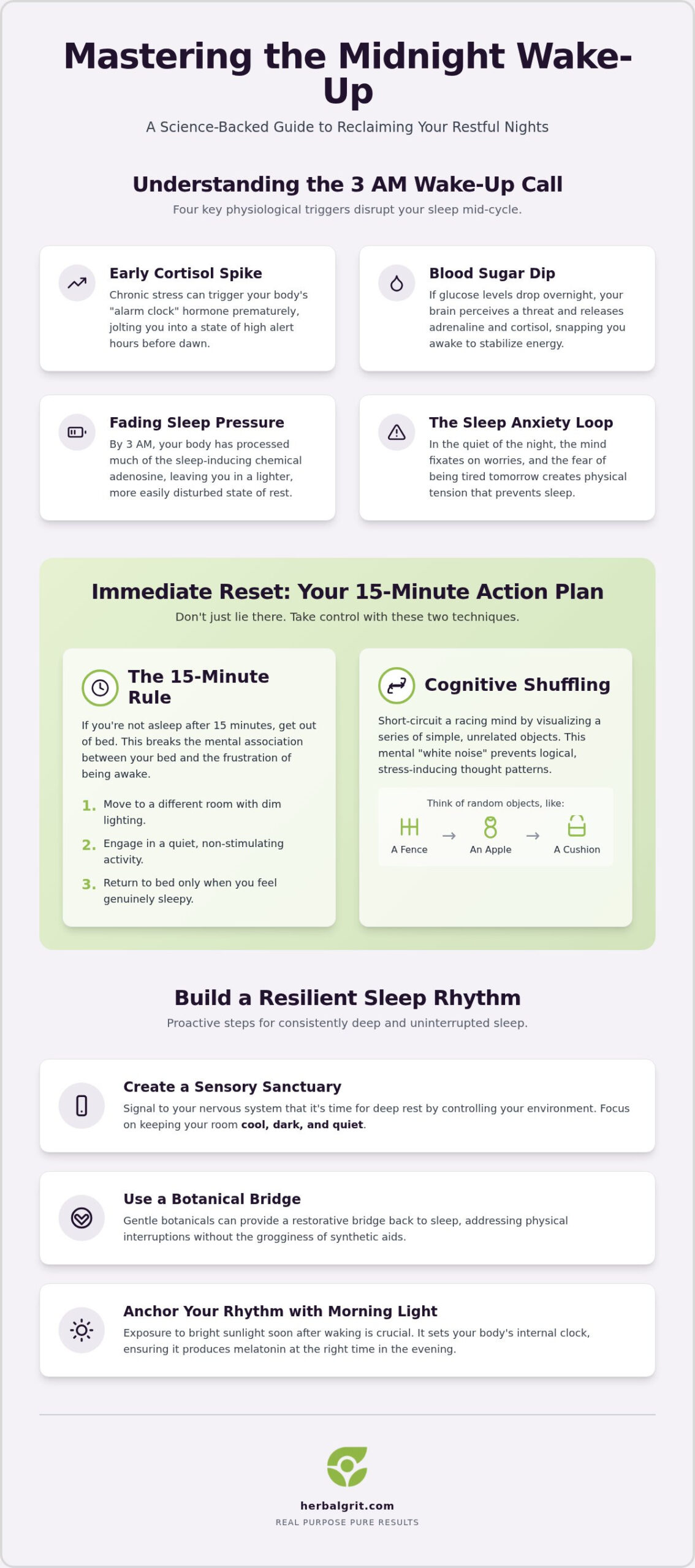
Waking up in the dead of night isn’t just a minor annoyance; it’s a specific physiological event known as sleep-maintenance insomnia. While many people struggle to fall asleep initially, the inability to stay asleep through the night involves a different set of biological triggers. During your waking hours, a chemical called adenosine builds up in your brain, creating what scientists call sleep pressure. By the time 3 AM rolls around, your body has already processed a significant portion of this pressure. This natural dip in sleep drive means your system is in a lighter state of rest, making you vulnerable to even the slightest internal or external disruptions. To navigate this, understanding What is Sleep Hygiene? becomes essential for anyone looking to bridge the gap between a midnight wake-up and sustained, restorative rest.
A primary culprit for this unwanted alertness is the “Early Cortisol Spike.” Cortisol is your body’s natural alarm clock, typically designed to rise steadily in the hours before dawn to prepare you for the day. However, when you’re managing chronic stress or physical tension, this hormonal surge can happen prematurely. Instead of a gentle awakening at 7 AM, you experience a sharp jolt of alertness in the middle of the night. It’s a frustrating experience that often leaves you staring at the ceiling, feeling isolated in the dark. Validating this emotional struggle is vital; your body is simply responding to a perceived need for vigilance, even if that timing is misplaced. Utilizing a consistent sleep hygiene checklist helps recalibrate these internal signals, providing a grounded path back to tranquility.
The Metabolic Link: Blood Sugar and Night Waking
Your brain is an incredibly active organ that requires a steady supply of energy, even while you sleep. If your blood sugar levels drop too low during the night, a state called nocturnal hypoglycemia occurs. Your brain perceives this as a survival threat and triggers a rescue response, releasing adrenaline and cortisol to stabilize your glucose levels. This chemical reaction provides the energy your brain needs but simultaneously snaps you into a state of high arousal. Addressing your systemic balance through metabolic support is a crucial step in preventing these survival-based wake-ups. When your cellular energy is stable, your body doesn’t feel the need to sound the alarm at 3 AM.
The Psychology of Sleep Anxiety
In the quiet, low-arousal environment of the night, the brain often loses its daytime filters. Without the distractions of work or social interaction, your mind naturally gravitates toward unresolved worries or future stressors. This creates a “fear of being tired tomorrow” loop, where the anxiety about the consequences of lost rest fuels the very physical tension that keeps you awake. It’s helpful to remember that sleep anxiety is a physiological state of the nervous system, not a character flaw or a lack of discipline. By following a structured sleep hygiene checklist, you can lower this psychological resistance and signal to your mind that it’s safe to return to a deep, botanical-like softness of rest.
Immediate Reset Techniques: The 15-Minute Rule and Cognitive Shuffling
When you wake up and the minutes start to crawl, your natural impulse is to stay in bed and try harder to sleep. However, following a modern sleep hygiene checklist requires a different approach called the 15-Minute Rule. If you aren’t back to sleep within roughly fifteen minutes, your bed begins to feel like a place of frustration rather than a sanctuary. This conditions your brain to associate the mattress with wakeful anxiety. By getting up and moving to a different space, you break that association and preserve your bed for rest alone. It is a simple but powerful way to protect the sanctity of your sleeping environment.
Interrupting the mental noise is equally vital for a quick return to rest. Cognitive shuffling is a technique that uses boring, non-sequential imagery to scramble the brain’s attempt at logical problem-solving. Instead of rehashing work emails or tomorrow’s schedule, imagine a series of unrelated objects: a red apple, a wooden fence, a velvet cushion. This mental “white noise” creates a gentle descent back into slumber by mimicking the fragmented thoughts that occur just before we drift off. To support this transition, you must commit to a “No-Clock” policy. Checking the time is the fastest way to trigger the cortisol spike and anxiety loop discussed earlier, as it forces your brain to calculate exactly how much rest you are losing.
Physical tension often mirrors a racing mind. Progressive Muscle Relaxation (PMR) helps release the rugged physical tension that accumulates during a stressful day. Start at your toes and move upward, tensing each muscle group for five seconds before fully releasing it. This physical grounding mirrors the stability found in the NIH Guide to Healthy Sleep Habits, which emphasizes the connection between physical relaxation and sleep quality. For those who need an extra layer of support during these midnight hours, optimizing your internal sleep signals can help ensure your return to deep sleep is swift and sustained.
Breaking the Bed-Anxiety Association
If you leave your bed after the fifteen-minute mark, keep your environment dim and tranquil. Move to a comfortable chair in a different room and use a small amber book light rather than bright overhead LED fixtures. These modern lights can suppress melatonin production and signal to your brain that it’s time to be awake. Engaging in a non-stimulating activity, like reading a physical book or listening to soft nature sounds, allows your nervous system to reset without the blue-light interference of digital screens.
Breathing for Parasympathetic Activation
Breathing is the most direct way to signal safety to your nervous system. The 4-7-8 technique acts with a botanical-like softness to slow your heart rate and lower blood pressure. Inhale quietly through your nose for four seconds, hold the breath for seven, and exhale forcefully through your mouth for eight. For those recovering from a nightmare or sudden jolt of adrenaline, box breathing provides a steady, disciplined rhythm to stabilize the heart. Focusing on the softness of the breath helps counter daily stress, acting as a natural bridge back to a restorative state.
Sensory Sanctuary Checklist: Cues for Immediate Slumber
A true sensory sanctuary goes beyond simply turning off the television. It involves a deliberate curation of your environment to signal to your nervous system that the day’s rugged demands have ended. Creating this space is a vital part of your sleep hygiene checklist, as your body relies on external cues to begin its internal restorative processes. When these cues are consistent, your brain transitions more easily from the alertness of the day into the softness of a deep, botanical-like rest. By optimizing your surroundings, you remove the friction that often prevents a swift return to sleep after a midnight wake-up.
Temperature regulation is perhaps the most influential sensory cue for melatonin production. The gold standard for most adults is a cool 65°F (18°C). Your core body temperature must drop slightly to initiate and maintain deep sleep cycles. If your room is too warm, your metabolic rate stays elevated, which can trigger the early cortisol spikes mentioned earlier. Alongside temperature, light hygiene is paramount. Melatonin is a sensitive compound, and even a brief flash of blue light from a smartphone can suppress its release for several hours. Protecting your melatonin stores means eliminating all ‘vampire’ lights, such as the small LEDs on chargers or appliances, which can pierce through closed eyelids and disrupt your circadian rhythm.
Sound also plays a critical role in sleep maintenance. While absolute silence is ideal for some, others find that sudden external noises, like a passing car or a settling house, snap them out of REM sleep. Using pink or brown noise provides a consistent, earthy frequency that masks these disruptions. Unlike the higher pitch of white noise, pink and brown noise mimic the natural rhythms of wind or rainfall, offering a more grounded auditory experience that supports sustained tranquility throughout the night.
Managing Nocturnal Urinary Needs
For men over 50, the ‘prostate factor’ is a common source of physical interruption. Nocturia, or the frequent need to use the bathroom at night, can fragment sleep and make it difficult to reach the deeper, more restorative stages of rest. Supporting your urinary health is a key component of maintaining a steady sleep rhythm. Natural solutions like ProstaVive offer a gentle way to address these physical needs, reducing the frequency of nighttime trips. If you are already utilizing botanical support, you can track your progress by looking for specific signs your prostate supplement is working, which often includes longer stretches of uninterrupted slumber.
The Ideal Sleep Environment Checklist
- Blackout Curtains: Ensure your room is a total void of light to maximize natural melatonin production.
- Weighted Blankets: The gentle pressure helps calm a restless nervous system by mimicking a reassuring embrace.
- Sensory Anchors: Use natural scents like lavender or cedarwood to create a Pavlovian response that signals immediate rest.
- Breathable Fabrics: Choose natural cotton or linen bedding to help your body maintain that 65°F gold standard.
The Botanical Bridge: Moving Beyond Synthetic Sleep Aids
Many people reaching for a pharmaceutical solution find that while they fall asleep quickly, they wake up feeling heavy and disconnected. This “Hangover Effect” is a common side effect of synthetic sedatives and over-the-counter antihistamines, which often bypass the body’s natural sleep architecture. Instead of a gentle descent into restorative REM cycles, these substances can leave you struggling with morning grogginess that persists long after your first cup of coffee. Moving beyond these rugged chemicals is a critical step in a holistic sleep hygiene checklist, as it allows your brain to maintain its delicate chemical balance while you rest.
Botanical solutions act as a bridge, supporting the body’s innate rhythms rather than forcing them into submission. Ingredients like Magnesium and L-Theanine work by calming the nervous system and promoting the production of neurotransmitters that signal relaxation. Valerian Root has been used for centuries in traditional apothecary practices to reduce the time it takes to fall back asleep after a disruption. Additionally, adaptogens play a vital role in managing the mid-night cortisol spikes discussed in earlier sections. By dampening the stress response, these herbs help you remain in a state of tranquility even when internal or external triggers arise. This approach ensures that your return to sleep is both soft and sustainable.
YU SLEEP: The Modern Apothecary’s Answer to Insomnia
For those seeking a more curated approach to rest, YU SLEEP targets the root causes of sleep maintenance issues without the risk of next-day fog. The updated 2026 YU SLEEP formula focuses on metabolic support and nervous system regulation, ensuring that your body doesn’t feel the need to sound the alarm at 3 AM. When comparing different options, such as Roman Sleep Support vs YU SLEEP, the emphasis on botanical synergy over synthetic fillers becomes clear. You can experience the restorative power of YU SLEEP to reclaim your nights and wake up feeling truly refreshed.
Non-Melatonin Alternatives for Sustained Rest
While melatonin is a popular choice for jet lag, high doses can often backfire for daily use by causing vivid, unsettling dreams and even contributing to mid-night waking. Shifting toward non-melatonin alternatives allows your body to produce its own sleep hormones naturally. Herbal solutions promote the production of GABA, a neurotransmitter that acts like a “brake” on a racing mind, providing the softness needed for deep slumber. Always ensure your supplements are third-party tested to guarantee purity and ecological integrity, reinforcing the steadfastness of your wellness routine. Adding these natural supports to your sleep hygiene checklist creates a resilient foundation for long-term health.
Restoring Your Natural Rhythm with Herbalgrit.com
True restoration isn’t found in a single night of deep rest but in the steadfastness of a disciplined wellness routine. Your body thrives on predictability, and integrating the habits we’ve discussed into a daily sleep hygiene checklist provides the structural support your nervous system craves. When you approach your health with a sense of calm authority, you stop fighting against your biology and start working with it. This long-term commitment to your rhythm ensures that your internal clock remains resilient, even when life introduces
Reclaiming Your Nights with Natural Intentionality
Mastering the quiet hours of the night requires a shift from frustration to focused action. By implementing a modern sleep hygiene checklist, you transition from the rugged struggle of wakefulness to a state of botanical softness where rest feels natural and inevitable. You now possess the tools to manage midnight cortisol spikes through cognitive shuffling and physiological resets. You also understand how to curate a sensory sanctuary that respects your body’s need for darkness and a cool environment. These steps are the bridge between modern stress and the raw, restorative power of nature.
True sleep maintenance is about more than just behavior; it’s about providing your nervous system with a grounded foundation. The NEW March 2026 VSL formula in YU SLEEP offers a non-melatonin natural pathway designed specifically for sustained rest without the morning fog. This targeted botanical support for sleep maintenance helps you stay asleep longer and wake up with a clear, calm mind. It’s a gentle but steadfast way to ensure your wellness routine remains undisturbed and your energy stays resilient.
Experience Deep, Uninterrupted Rest with YU SLEEP
Rest is your natural birthright. With a steady rhythm and the right botanical allies, you can return to the deep, restorative slumber your body was designed to enjoy.
Frequently Asked Questions
Why do I wake up at 3 am every night like clockwork?
Waking up at 3 AM is often caused by a premature surge in cortisol or a slight drop in blood sugar that triggers a survival response. By this time, your body has already processed much of its initial sleep pressure, making your nervous system more sensitive to internal shifts. Addressing these metabolic needs is a core part of a comprehensive sleep hygiene checklist designed for long term rest.
Is it okay to look at the time if I wake up in the middle of the night?
You should avoid looking at the clock because it immediately triggers mental calculations and performance anxiety about the day ahead. Knowing it is 3:14 AM often sparks a stress response that increases your heart rate and makes re-entry into sleep much harder. Keep your phone and alarm clocks turned away from your line of sight to maintain a sense of tranquility and ease.
Should I drink water or eat something when I wake up at night?
A small sip of water is fine if your mouth is dry, but avoid drinking large amounts that might cause another bathroom trip. Unless you are experiencing a blood sugar crash, eating in the middle of the night can restart your digestive system and keep you alert. If you must eat, choose a very small, protein rich snack to stabilize your levels without overstimulating your metabolism.
How long should I wait before getting out of bed if I can’t sleep?
You should get out of bed if you haven’t fallen back asleep within approximately fifteen to twenty minutes. Staying in bed while frustrated conditions your brain to associate your mattress with wakefulness and anxiety rather than rest. Moving to a dim chair in another room to read or listen to soft sounds helps reset your internal signals before you try to sleep again.
What are the best natural herbs for falling back asleep fast?
Valerian root, magnesium, and L-theanine are among the most effective botanical allies for returning to sleep after a disruption. These ingredients work with a botanical softness to calm the nervous system and support natural GABA production. Unlike synthetic sedatives, these herbs help you transition into deep REM cycles without the rugged weight of a morning hangover or persistent daytime grogginess.
Can blue light from my phone really keep me awake for hours?
Blue light from your phone can suppress melatonin production for several hours, even after you put the device away. This specific wavelength of light signals to your brain that it is daytime, effectively shutting down your natural sleep wake cycle. A resilient sleep hygiene checklist always prioritizes keeping digital screens out of the sanctuary of the bedroom to protect your restorative hormonal balance.
What is the ‘Cognitive Shuffle’ and how does it help with sleep?
The Cognitive Shuffle is a mental exercise where you imagine a series of unrelated, neutral objects to interrupt logical, anxious thinking. By visualizing items like a “green leaf” or a “wooden bucket,” you scramble the brain’s attempt to solve work problems or rehash worries. This fragmented imagery mimics the natural state of drifting off, signaling to your mind that it is safe to let go.
Are there side effects to using natural sleep aids like YU SLEEP?
YU SLEEP is formulated to provide a gentle descent into rest without the typical grogginess associated with pharmaceutical aids or high dose melatonin. Because it uses a botanical based pathway, it supports your body’s natural architecture rather than overriding it. Most users report waking up feeling clear headed and restored, as the formula focuses on metabolic and nervous system harmony for peak physiological support.