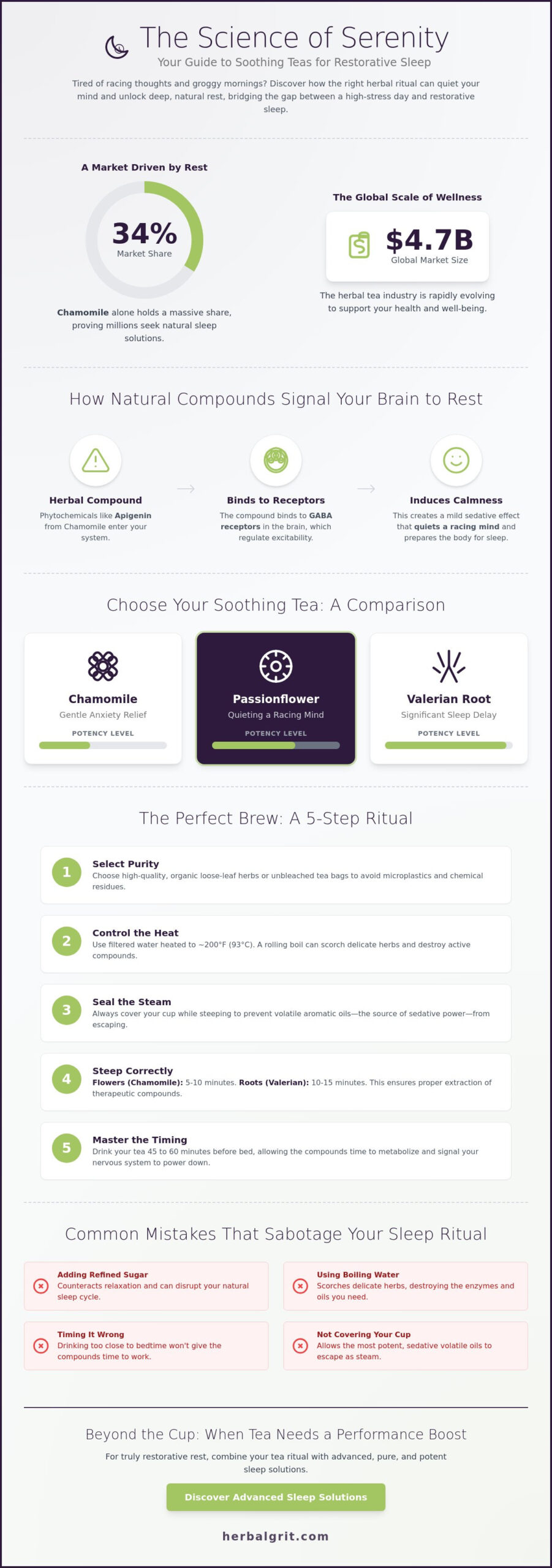
With chamomile holding a massive 34% share of the herbal tea market, it’s clear that millions are searching for rest. Yet, if you’re still staring at the ceiling at 2 AM, your current mug probably isn’t doing its job. You’re likely tired of the racing thoughts that keep you wired or the heavy, groggy fog that follows synthetic sleep aids. Finding the right soothing teas for sleeping is about more than just flavor. It’s a ritual of Herbalgrit.com that combines the raw power of nature with a disciplined evening routine.
In this guide, you’ll learn how to identify the specific herbs that match your type of restlessness. We’ll examine the science behind these plants and how the $4.7 billion global herbal tea market is evolving to support your health. You’ll discover how to fall asleep faster naturally without the side effects of synthetic pills. From understanding the FDA’s April 2025 “healthy” labeling rules to avoiding unregistered products, you’ll gain the clarity needed to build a restorative bedtime checklist that actually works.
Key Takeaways
- Understand the science of nervines and how natural compounds like Apigenin bind to GABA receptors to quiet a racing mind.
- Master a 5-step checklist for the perfect brew, emphasizing the importance of organic, unbleached materials and high-quality “Big Three” ingredients.
- Learn how to choose between various soothing teas for sleeping based on whether you need gentle anxiety relief or support for significant sleep delay.
- Identify common mistakes that sabotage your evening ritual, such as adding refined sugar or timing your cup too close to bedtime.
- Discover how to bridge the gap between simple herbal infusions and advanced sleep solutions for a truly restorative night of rest.
Understanding the Power of Nervines and Sedative Herbs
Many people view a nightly cup of tea as a simple comfort, but it’s actually a sophisticated biochemical intervention. When you choose soothing teas for sleeping, you’re engaging with a class of plants known as nervines. Unlike pharmaceutical options, these herbs work with your body’s natural rhythms to lower the volume of your thoughts without forcing a metabolic shutdown. This modern apothecary approach focuses on purity and intentionality, treating your evening ritual as a necessary bridge between a high-stress day and deep, restorative rest. It’s about finding the balance between the softness of the herbs and the steadfastness of a disciplined routine.
How Herbal Compounds Signal the Brain to Rest
The effectiveness of herbal infusions often comes down to specific phytochemicals that interact with your biology. For instance, chamomile contains a flavonoid called apigenin. Research shows apigenin binds to GABA receptors in the brain, creating a mild sedative effect that prepares the body for slumber. Using a Caffeine Free Tea for Sleep provides the foundational baseline your body needs to start this process. Beyond just the taste, the aromatic compounds in these Herbal teas help reduce cortisol levels. When you blend multiple herbs, you create a synergistic effect where the plants work together to quiet the central nervous system more effectively than a single ingredient could alone.
Nervines vs. Adaptogens: What Your Body Needs
A nervine is a plant-based tool for nervous system restoration. It’s vital to distinguish these from adaptogens when planning your evening. Nervines like Lemon Balm or Passionflower provide immediate relaxation for the central nervous system, making them ideal for those nights when your brain won’t stop looping through a to-do list. In contrast, adaptogens like Ashwagandha focus on long-term stress resilience and are best taken consistently over time. If you need soothing teas for sleeping that offer a heavy-duty sedative effect to overcome significant sleep delay, Valerian root is often the preferred choice. It’s much stronger than gentle relaxants like Lemon Balm. Understanding the specific grit of each herb helps you match the remedy to your specific type of restlessness, ensuring your natural solution is as effective as it is pure.
The Soothing Sleep Tea Checklist: 5 Steps to the Perfect Brew
Preparing soothing teas for sleeping is an act of intentionality that begins long before the first sip. While many enthusiasts focus on the aesthetics of a tea ceremony, the true power of your brew lies in the technical execution of the extraction. To transform a simple cup of hot water into a potent sedative remedy, you must follow a disciplined protocol that preserves the delicate volatile oils and therapeutic compounds found in premium herbs. This modern apothecary approach ensures that your evening ritual is both a sensory delight and a functional tool for wellness.
- Select Purity: Choose high-quality, organic loose-leaf herbs or unbleached tea bags. This prevents microplastics and chemical residues from interfering with your body’s natural detoxification processes.
- Verify the “Big Three”: Ensure your blend features Chamomile, Valerian, or Passionflower. These are frequently cited among the best bedtime teas for their proven ability to quiet a racing mind.
- Control the Heat: Use filtered water heated to a specific therapeutic temperature. Avoid a rolling boil, which can scorch delicate leaves and destroy active enzymes.
- Seal the Steam: Always cover your cup while steeping. This prevents the volatile aromatic oils, which carry much of the plant’s sedative power, from escaping into the air.
- Master the Timing: Drink your infusion exactly 45 to 60 minutes before your head hits the pillow. This allows the compounds to metabolize and signal your nervous system that it’s time to power down.
Preparation Essentials: Temperature and Time
Consistency is the hallmark of herbal grit. You should standardize your steeping times based on the plant part you’re using. Flowers like Chamomile or Lavender require a 5 to 10 minute steep, while tougher roots like Valerian need 10 to 15 minutes to release their valeremic acids. Aim for a water temperature of approximately 200°F (93°C). This is just below boiling point, providing enough heat for extraction without compromising the integrity of the plant’s restorative properties. Covering the vessel is non-negotiable; if you can smell the tea across the room, the medicine is leaving the cup.
The Nightly Ritual Environment
Your tea works best when paired with an environment that supports melatonin production. Sip your soothing teas for sleeping in low-light “amber” settings, away from the blue light of screens. Try eliminating digital distractions during the first five sips to allow the tea to act as a sensory anchor. This signals your brain to enter “sleep mode” through taste, warmth, and aroma. For those who find that a standard cup isn’t enough to overcome deep-seated restlessness, integrating your ritual with a scientifically formulated sleep support can provide the extra strength needed for a truly restorative night.
Top 3 Soothing Teas for Sleeping: A Comparison
Selecting the right herb is about matching the plant’s grit to your specific type of restlessness. While generic commercial blends often prioritize flavor over function, therapeutic-grade soothing teas for sleeping provide targeted support for the nervous system. According to market data for 2026, chamomile remains the dominant force with a 34% market share, but it’s only one piece of the botanical puzzle. Whether you’re dealing with a “racing mind” or physical tension, understanding the profile of these primary herbs is essential for a successful bedtime ritual.
Chamomile: The Golden Standard
German chamomile is the variety most prized by modern apothecaries for its high concentration of volatile oils. Unlike the Roman variety, German chamomile offers a more robust profile of sedative properties. The primary active compound, apigenin, binds to benzodiazepine receptors in the brain to induce a state of calm. This interaction provides physical relaxation and significant anti-inflammatory benefits. As of April 28, 2025, pure chamomile teas with fewer than 5 calories and no added caffeine can be labeled as “healthy” under the latest FDA rules. This makes it a reliable, high-quality choice for mild anxiety and digestive ease before bed.
Valerian and Passionflower: Deep Dive Sedatives
For those who experience significant sleep onset delay, Valerian root acts as “nature’s valium.” It possesses a distinct, earthy scent that signals its potency. To extract its valeremic acids effectively, you’ll need a longer steep of 10 to 15 minutes. Passionflower serves as its ideal partner, specifically targeting circular, racing thoughts by increasing GABA levels in the brain. If you’re a sensitive adult or looking for a gentler option for children, Lemon Balm offers a citrusy, mild nervine alternative. These plants represent the bridge between the raw power of nature and our modern need for health support.
- Chamomile: Best for general relaxation and settling the stomach.
- Valerian Root: Preferred for those who struggle to fall asleep quickly.
- Passionflower: Ideal for silencing mental chatter and anxiety.
- Lemon Balm: A soft, restorative choice for sensitive systems.
Safety is a priority when working with these powerful plants. It’s vital to check for potential interactions if you’re already taking sleep medications. For a more comprehensive solution that combines these botanical benefits with advanced delivery, YU SLEEP offers a professionally curated formula designed to lock in restorative rest when individual teas aren’t enough. Always purchase from reputable sources. The FDA recently issued advisory No. 2026-0386 warning against unregistered products like “MINCH Chamomile Herbal Tea,” reminding us that purity and transparency are the foundations of true wellness.
Common Mistakes That Ruin Your Sleep Tea Experience
Even the most potent botanical remedies can fail if your routine lacks the necessary discipline. Many people approach soothing teas for sleeping as a sporadic fix rather than a foundational habit. This inconsistency prevents the body from recognizing the tea as a signal for rest. If you’re only brewing a cup once a week, you aren’t building the cumulative benefits that nervines offer. True herbal grit requires a steady, nightly commitment to see a shift in your sleep architecture. Beyond frequency, the quality of your ingredients and the timing of your intake dictate whether you’ll wake up feeling restored or frustrated.
Purity matters. Using old, dusty tea bags that have been sitting in your cupboard since 2024 results in a loss of the essential sedative oils required for efficacy. When herbs are exposed to air and light for too long, their therapeutic compounds degrade. Additionally, adding refined white sugar to your mug is a counterproductive move. Glucose spikes trigger an insulin response and a subsequent rise in cortisol, which physically counteracts the calming effects of the herbs. Stick to the raw power of nature to avoid these metabolic disruptions.
Timing and Hydration Management
One of the most frequent errors is drinking a large mug of tea too close to bedtime. This often leads to nocturia, the “trap” that wakes you up at 3 AM for a bathroom trip and breaks your sleep cycle. To avoid this, follow the “90-minute rule” by finishing your fluids at least an hour and a half before you intend to sleep. If you’re sensitive to fluid volume, try brewing a smaller, more concentrated “elixir” using the same amount of herbs in only four ounces of water. This allows you to reap the herbal benefits without overtaxing your bladder during the night.
Sweeteners and Additives
If you prefer a hint of sweetness, raw honey or stevia are far better alternatives to processed sugars. You can also enhance your tea’s effectiveness by pairing it with magnesium-rich additives or tinctures that support muscle relaxation. For individuals who find that chronic sleep loss is beginning to impact their cognitive recall and mental sharpness, integrating a Synaptigen is a cutting-edge brain health formula that can help protect brain health while you work on your evening ritual. When your nightly tea isn’t quite enough to bridge the gap to deep rest, consider upgrading to the YU SLEEP formula for a more comprehensive, science-backed approach to restorative slumber.
Beyond the Cup: When Tea Needs a Performance Boost
Natural remedies are powerful, yet they’re often part of a broader wellness ecosystem. While soothing teas for sleeping provide a gentle entry point into a nightly ritual, there are times when your nervous system requires a more robust intervention. Chronic stress or long-term sleep deprivation can create a biological deficit that a standard infusion cannot always bridge. Recognizing when herbal tea acts as a foundational support versus a total solution is a key aspect of the modern apothecary mindset. It’s about being honest with your body’s needs and adjusting your routine to ensure you achieve the deep, restorative rest required for daily function.
Embracing the “grit” in HerbalGrit means staying disciplined with your evening schedule even when life becomes chaotic. Tea is a sensory anchor, but its effectiveness depends on the environment you create. If you’ve optimized your temperature, timing, and purity as discussed in previous sections and still find yourself waking at 3 AM, it’s time to consider an integrated approach. This evolution from simple tea to VSL-supported supplements represents the bridge between traditional herbal wisdom and modern nutritional science.
Advanced Sleep Optimization
The YU SLEEP protocol is designed specifically for those who fail to respond to tea alone. Potent natural extracts found in professional-grade formulas offer a concentration level far beyond standard store-bought tea bags. While a cup of chamomile is excellent for mild relaxation, advanced sleep formulas utilize standardized dosages of sedative compounds to ensure a “locked-in” rest. This protocol was updated with a new March 2026 VSL to reflect the latest findings in sleep science. For those ready for a professional-grade rest, discover the YU SLEEP formula here.
The Connection Between Sleep and Memory
Scientific research continues to highlight that deep sleep is the essential “rinse cycle” for the brain. During these restorative hours, the glymphatic system clears out metabolic toxins that accumulate during your waking hours. This process is vital for long-term memory enhancement and protecting your cognitive recall as you age. When you prioritize soothing teas for sleeping or advanced formulas, you aren’t just avoiding morning grogginess. You are actively investing in your brain’s long-term health and resilience. For those looking to further support cognitive function alongside better sleep, exploring how Synaptigen is a cutting-edge brain health formula targeting the gut-brain axis can complement your nightly rest routine. Optimize your sleep and protect your brain today.
Master Your Nightly Rest
Your journey to restorative sleep relies on the synergy between botanical power and personal discipline. By understanding the science of nervines and following a precise steeping checklist, you’ve transformed a simple habit into a functional wellness ritual. You now know that avoiding refined sugars and timing your intake 90 minutes before bed are essential steps to prevent mid-night wakings. While soothing teas for sleeping provide a beautiful foundation, sometimes your nervous system needs the steadfastness of a more concentrated solution to fully quiet a racing mind.
If you’re ready for deep, uninterrupted slumber, upgrade your nightly ritual with the YU SLEEP optimization formula. This solution is grounded in potent natural alternatives and was carefully curated by the wellness experts at Herbal Grit. Featuring NEW March 2026 VSL data-backed results, it’s designed for those who demand more from their evening routine than a standard tea bag can provide. Take the next step toward the clarity and energy that only true rest can offer. You have the grit to reclaim your nights and wake up feeling truly renewed.
Frequently Asked Questions
Is it okay to drink soothing teas for sleeping every night?
Yes, drinking soothing teas for sleeping nightly is an excellent way to establish a consistent circadian rhythm. Unlike synthetic aids, herbal nervines like Chamomile or Lemon Balm work best when they become a recurring signal to your nervous system. A 2022 study showed that consistent nightly rituals significantly improve sleep quality over a 30-day period by lowering baseline cortisol levels.
Can I give sleep tea to my children?
You can offer gentle herbal infusions to children, provided you select mild nervines like Lemon Balm or Catnip. Avoid potent sedatives such as Valerian Root, which are too strong for developing systems. Always use a weaker brew by steeping the herbs for only 2 to 3 minutes. It’s best to consult a pediatrician before introducing new botanical remedies to a child’s routine to ensure safety.
How long before bed should I drink my herbal tea?
Aim to finish your cup exactly 45 to 60 minutes before your head hits the pillow. This window allows the active compounds to metabolize while giving your body time to process the extra fluid. Following this specific timing helps prevent the 3 AM bathroom trips that disrupt deep sleep cycles, ensuring you stay in a restorative state throughout the night.
What is the strongest herbal tea for deep sleep?
Valerian Root is widely considered the most potent herbal sedative for inducing deep sleep. It contains valeremic acids that significantly reduce the time it takes to fall asleep. For a truly professional-grade rest, many people transition from standard tea bags to the YU SLEEP formula. This protocol uses concentrated natural extracts that provide a stronger physiological response than a single cup of tea can offer.
Will drinking tea for sleep make me feel groggy in the morning?
No, herbal sleep teas rarely cause the “hangover” effect associated with synthetic pharmaceuticals. Because herbs like Passionflower support your body’s natural GABA production, they don’t force a metabolic shutdown. You’ll typically wake up feeling refreshed rather than heavy. This lack of morning fog is why the global herbal tea market is projected to reach $4.7 billion by the end of 2026.
Does chamomile tea actually help with insomnia or is it a placebo?
Chamomile is a scientifically validated sedative rather than a placebo. Its primary active compound, Apigenin, binds to the same receptors in the brain as common anti-anxiety medications to induce calm. Clinical trials have demonstrated that 270mg of chamomile extract taken twice daily for 28 days reduced nighttime waking by 33%. This evidence supports its role as a foundational tool for natural sleep hygiene.
What happens if I boil the water too hot for my sleep tea?
Boiling water at 212°F (100°C) can scorch delicate flowers and evaporate the volatile oils that carry the plant’s medicinal power. You should aim for a temperature of approximately 200°F (93°C) for optimal extraction. Using water that’s too hot results in a bitter taste and a significantly weaker sedative effect. Always cover your cup during the steep to keep those restorative vapors inside the brew.