What if the most powerful ingredient in your evening mug isn’t the herb itself, but the chemical signal your brain receives before you even take a sip? Many of us understand the exhaustion of mid-night waking or the frustration of a mind that refuses to switch off after a long day. If you’re sensitive to stimulants, you’ve likely felt the anxiety of choosing the wrong blend and paying for it with hours of restlessness. It’s a common struggle in a world where the global herbal tea market has reached a 4.2 billion dollar valuation in 2026, driven by our collective need for genuine rest.
You deserve a bedtime routine that feels like a sanctuary rather than a chore. This article explains how a consistent ritual using caffeine free tea for sleep serves as a biological anchor, naturally triggering your brain’s transition into deep recovery. We’ll look at the science of herbal sedation, including the latest 2026 findings on L-theanine and adaptogens. You’ll also learn how the Sarah Katz Caffeine Safety Act, scheduled for a hearing on April 29, 2026, is changing how we identify pure ingredients. We’ll preview the best botanical blends to help you wake up refreshed, without the heavy fog of synthetic supplements.
Key Takeaways
- Understand how sensory signals from warmth and aroma activate your parasympathetic nervous system to prepare your body for rest.
- Explore why choosing a naturally caffeine free tea for sleep is superior to decaf options that may still harbor trace stimulants.
- Identify the specific biological roles of ingredients like apigenin and valerenic acid in reducing the time it takes to fall asleep.
- Learn to implement the “Golden Hour” brewing method to synchronize your tea ritual with your body’s internal clock.
- Discover how to use the 5-10 minute steeping process as a dedicated space for mindful breathwork to quiet a racing mind.
The Biological Power of Caffeine-Free Tea for Sleep
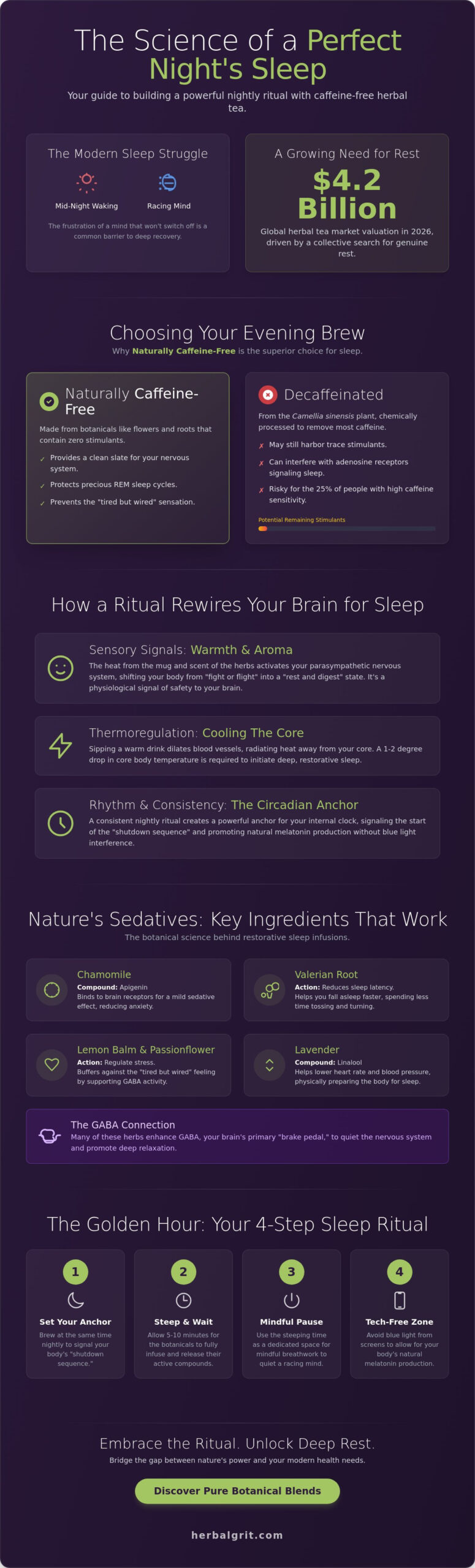
Rest isn’t just about closing your eyes; it’s about the chemistry you invite into your body before the lights go out. To understand the foundations of rest, one must first ask what is herbal tea? and how it differs from traditional varieties. Unlike black or green teas that originate from the Camellia sinensis plant, caffeine free tea for sleep is naturally composed of botanicals like roots and flowers that contain zero stimulants. These infusions provide a clean slate for your nervous system, ensuring that no residual caffeine interferes with your brain’s ability to enter deep recovery.
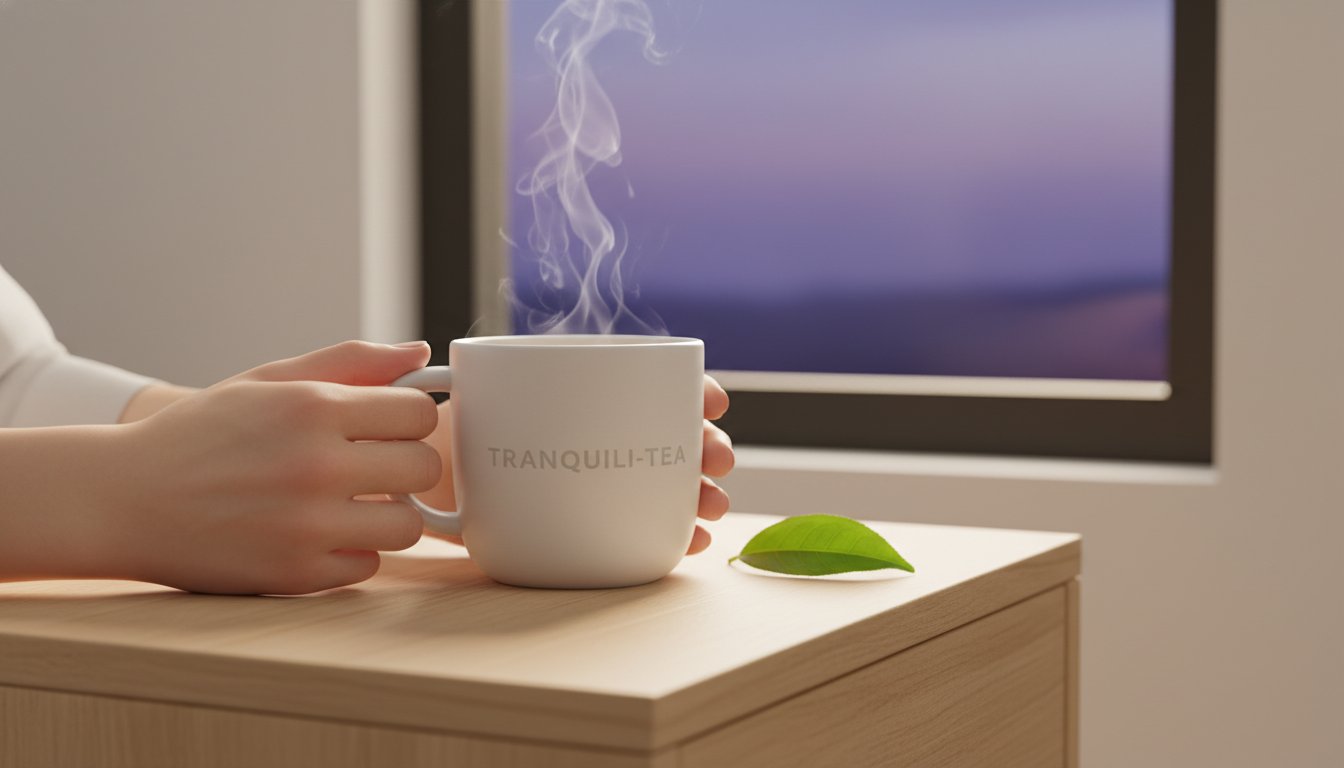
The “Sensory Signal” theory suggests that your brain begins its shutdown sequence through external cues like warmth and aroma. When you hold a steaming mug, the heat triggers your parasympathetic nervous system to shift your body from “fight or flight” into a restorative state. This isn’t a placebo effect. It’s a physiological response to specific scents and temperatures that signal safety to the amygdala. As you inhale the vapors of restorative herbs, you’re effectively telling your brain that the environment is secure for sleep.
Biological rest also depends on thermoregulation. Your core body temperature must drop by approximately 1 to 2 degrees to achieve deep sleep. Sipping a warm drink causes your blood vessels to dilate, radiating heat to the surface of your skin and effectively cooling your internal organs. Adopting this practice requires a level of discipline we call Herbalgrit.com. It’s the steadfastness of a nightly wellness routine that bridges the gap between nature’s raw power and your modern health needs. By committing to this rhythm, you’re not just drinking a beverage; you’re anchoring your biology.
Tea as a Circadian Rhythm Anchor
Consistency is the language of your internal clock. When you brew a cup at the same time every night, you create a powerful circadian anchor. This 10 minute window offers a vital tech-free transition, allowing your brain to produce melatonin without the interference of blue light. The ritual itself becomes as restorative as the ingredients, providing a predictable end to the day’s stressors and signaling the start of the “shutdown sequence.”
Caffeine-Free vs. The “Tired but Wired” State
Many people suffer from a “tired but wired” sensation caused by blocking adenosine receptors. Even small amounts of caffeine can prevent these receptors from signaling sleepiness to the brain. For the 25% of individuals with high caffeine sensitivity, 100% caffeine free tea for sleep is the only reliable way to protect REM cycles. This ensures your mental quietude matches your physical relaxation, allowing for a deep, uninterrupted night of rest.
Nature’s Sedatives: Top Ingredients That Actually Work
While many commercial brands focus on sugary, fruity flavors, true restorative power lies in the specific chemical compounds of the plant. Choosing a caffeine free tea for sleep is an intentional act of self-care rooted in botanical science. These plants contain active metabolites that interact with your nervous system to encourage a state of deep, undisturbed rest.
Chamomile remains the gold standard for nighttime infusions. It contains a flavonoid called apigenin, which binds to benzodiazepine receptors in the brain. This interaction produces a mild sedative effect without the risks associated with pharmaceutical aids. Research highlights chamomile as one of the best teas for sleep because it effectively reduces the symptoms of generalized anxiety. It’s a gentle but powerful ally for those who find their thoughts racing as soon as the lights go out.
Valerian root offers a more robust solution for persistent wakefulness. Often referred to as nature’s sedative, it’s specifically valued for its ability to reduce sleep latency. This means you spend less time tossing and turning and more time in restorative sleep cycles. For individuals dealing with the anxiety component of insomnia, lemon balm and passionflower are essential additions. These herbs support the body’s natural ability to regulate stress, providing a buffer against the “tired but wired” feeling discussed in the previous section. Lavender completes this botanical toolkit. It contains linalool, a compound that helps lower heart rate and blood pressure, physically preparing your body for the transition to sleep. If you want a comprehensive guide to matching the right botanicals to your specific type of restlessness, our detailed breakdown of soothing teas for sleeping walks you through every step of building an effective bedtime ritual checklist.
The GABA Connection
GABA, or gamma-aminobutyric acid, is your brain’s primary inhibitory neurotransmitter. Think of it as the brake pedal for your nervous system. Herbs like valerian and passionflower directly enhance GABA activity. This leads to a gentle, natural relaxation rather than the forced sedation of synthetic pills. It ensures your “shutdown sequence” feels organic and leaves you refreshed in the morning.
Floral vs. Earthy: Choosing Your Flavor Profile
Your sensory preference is a vital part of the ritual. Floral notes from lavender or rose provide a light, airy sense of relaxation. Earthy roots like ashwagandha and valerian offer a grounded, heavy calm that many find deeply reassuring. You can explore these different profiles by selecting carefully curated herbal remedies that match your specific sensory needs. Mixing these profiles allows you to customize your ritual, making the act of drinking your caffeine free tea for sleep as enjoyable as the rest it provides.
Caffeine-Free vs. Decaffeinated: Choosing Your Evening Brew
While we’ve explored the biological signals that prepare your body for rest, the purity of your source determines whether those signals are actually received. Many consumers use the terms decaf and caffeine-free interchangeably, but the chemical reality is quite different. Decaffeination is a rigorous industrial process. The CO2 method uses pressurized carbon dioxide to strip caffeine molecules from the Camellia sinensis leaf. Alternatively, the Ethyl Acetate method, often marketed as “naturally decaffeinated,” uses a solvent found in fruit but can leave behind chemical residues that disrupt the restorative experience you’re trying to cultivate.
The primary danger in decaf products is the residual stimulant content. A standard cup of decaffeinated black or green tea typically contains between 2mg and 5mg of caffeine. While this seems minor, it is enough to block adenosine receptors in sensitive individuals, preventing the “shutdown sequence” mentioned earlier. Choosing a caffeine free tea for sleep removes this risk entirely. It’s also important to read labels for hidden additives. Some manufacturers include “green tea extract” in their sleep blends for antioxidant marketing, which unknowingly reintroduces caffeine into what should be a zero stimulant beverage.
The Decaf Trap for Sensitive Sleepers
For individuals with high sensitivity, trace caffeine has a cumulative impact. If you drink two cups of decaf tea every night, you’re consuming up to 70mg of stimulants over a week. This is roughly the equivalent of a full cup of coffee delivered right before bed. Beyond caffeine, decaf teas still contain theobromine. This compound acts as a mild cardiac stimulant that can increase heart rate and prevent the deep physical relaxation required for REM sleep. Look for the “Caffeine-Free” seal on premium packaging to ensure you’re avoiding these hidden disruptors.
Herbal Infusions: The Pure Path to Rest
The gold standard for a clean evening ritual is the tisane, or herbal infusion. These are naturally devoid of stimulants because they’re made from dried flowers, roots, and seeds rather than the traditional tea plant. They are a foundational component of creating a bedtime routine that prioritizes long-term health. We advocate for whole-leaf herbs over the dust-filled tea bags found in grocery aisles. Whole leaves retain their essential oils and therapeutic potency much longer. At Herbalgrit.com, we recommend organic-only ingredients to ensure your nightly cup is free from synthetic pesticides that can interfere with your hormonal balance and sleep quality.
Designing Your Nightly Tea Ritual for Maximum Rest
The brain loves patterns. Designing a structured ritual is an act of Herbalgrit.com that transforms a simple drink into a biological command for rest. While the ingredients provide the chemical foundation, the environment you create determines how effectively your body absorbs those benefits. A successful routine begins exactly 60 minutes before you intend to sleep. We call this the “Golden Hour.” By starting your caffeine free tea for sleep at this specific interval, you give your system enough time to process the sedative compounds and initiate the cooling process discussed in previous sections.
Mindful steeping is your second step. Don’t simply pour water and walk away. Use the 5 to 10 minute brew time as a dedicated window for box breathing or light stretching. This period of stillness acts as a mental buffer between the day’s stressors and the night’s recovery. Sensory engagement is equally vital. Choose a heavy ceramic mug that feels grounded in your hands. The weight provides a subtle grounding effect, while the rising steam serves as a direct aromatherapy cue. Finally, commit to a digital detox. Pair your mug with a physical book rather than a smartphone. In 2026, research continues to show that even five minutes of blue light can delay melatonin production by up to 90 minutes. For a complete step-by-step framework on structuring these elements into a consistent nightly practice, the ultimate bedtime ritual checklist for soothing teas for sleeping offers a practical roadmap you can follow every evening.
Temperature and Timing
Precision matters when working with delicate botanicals. For herbs like Lemon Balm, avoid using rolling boiling water, which can scald the leaves and dissipate essential oils. Aim for approximately 90 degrees Celsius or 194 degrees Fahrenheit. Timing your intake is also a practical necessity. You should aim to finish your cup at least 30 minutes before your head hits the pillow. This allows your kidneys to process the liquid, preventing mid-night waking for bathroom trips that can fracture your REM cycles. You can find the ideal tools for this process by exploring our premium herbal wellness collections.
Setting the Scene: Aromatherapy and Light
Your environment should reflect the calm you’re trying to cultivate. Start in the kitchen by dimming the lights. Warm, amber lighting protects your natural melatonin levels, which naturally begin to rise about two hours before sleep. Consider pairing your tea with a light mist of lavender oil or a eucalyptus spray. This creates a multi-sensory “Sleep Sanctuary” that extends from your first sip to your final breath before sleep. By the time you finish your caffeine free tea for sleep, your nervous system should already be in a state of deep, quiet readiness.
Beyond the Cup: Advanced Sleep Optimization
While the sensory ritual of caffeine free tea for sleep provides the psychological anchor needed to start the shutdown sequence, it isn’t always a total cure for chronic wakefulness. Every harvest of chamomile or valerian varies. One batch might be rich in apigenin; another, grown in different soil conditions, offers significantly less potency. This natural variability makes it difficult to standardize the exact sedative dosage entering your system through a simple liquid infusion. For many, tea is the supportive bridge. However, deeper metabolic rest often requires a more concentrated, scientific approach to ensure consistency every single night.
The limitations of tea extraction are well documented. As we discussed in the ritual section, water temperature and steeping time are critical variables. Even with perfect technique, a liquid infusion can only carry a fraction of a plant’s active metabolites. This is why advanced sleep optimization often moves beyond the mug. In 2026, the most effective routines use the “Sensory Signal” of a warm drink to prime the brain, while relying on standardized formulas to do the heavy lifting of biological sedation. This two tiered approach ensures that your mind is quiet and your body has the raw materials it needs for cellular repair. Chronic sleep deprivation also takes a measurable toll on cognitive function, which is why many practitioners now pair their evening routine with a natural brain health formula designed to support memory, focus, and cognitive clarity as part of a complete recovery strategy.
Standardized Potency vs. Gentle Infusions
Some nights require the “Killer Sleep Offer” level of intensity that a standard mug cannot provide. This is where YU SLEEP enters the ritual as the #1 formula for 2026. It’s designed for those who need consistent, deep recovery without the guesswork of steeping times. By combining your liquid ritual with a high-performance sleep supplement, you address both the psychological and physiological barriers to rest. This synergy allows the tea to calm the nervous system. Meanwhile, the proprietary formula in YU SLEEP provides the metabolic support necessary for uninterrupted REM cycles. Our VSL-driven results demonstrate that deep recovery is achievable when you pair gentle nature with standardized science. The formula is trusted by a community that values both purity and performance, reflected in its $5 EPC performance trust rating.
The Herbalgrit.com Approach to Total Recovery
At Herbalgrit.com, we view sleep as the master key for total bodily restoration. Optimization doesn’t just stop at feeling rested. It feeds into cognitive functions like memory enhancement and long-term physical wellness, including prostate health. Our perspective is that of a wise, eco-conscious guide. We balance the softness of herbal remedies with the steadfastness of potent, professional-grade formulas. This is the essence of the Herbalgrit.com philosophy. Natural health requires both the gentle signal of a warm cup and the raw power of a disciplined supplement routine. You don’t have to choose between a caffeine free tea for sleep and a potent aid. You can use both. Enhance your nightly ritual with professional-grade support to ensure every hour spent in bed is an hour spent healing.
Step Into a New Era of Restorative Sleep
Real rest isn’t a luxury; it’s a discipline of Herbal Grit. You now understand why choosing 100% caffeine free tea for sleep is the only way to avoid the trace stimulants found in decaf products that disrupt REM cycles. By honoring the Golden Hour and selecting pure botanicals like chamomile or valerian root, you’ve built a sanctuary for your nervous system. These small, intentional steps create the foundation for long-term health and mental clarity. Every mug you brew serves as a biological anchor in an increasingly loud world.
While a warm mug provides the essential sensory signal your brain craves, some nights demand more precision. You can bridge the gap between gentle rituals and professional-grade metabolic recovery. Optimize your rest with YU SLEEP – The #1 Sleep Formula for 2026. This proprietary formula delivers standardized potency backed by VSL-driven results and a trusted $5 EPC performance record. It’s time to stop settling for a “tired but wired” state and start waking up with genuine vitality. Your journey toward deeper, more restorative rest is just beginning. Trust in the power of nature and the discipline of your new ritual.
Frequently Asked Questions
Is caffeine-free tea the same as decaf tea?
No, decaf and caffeine-free are not identical. Decaf tea is processed to remove caffeine but often retains 2mg to 5mg of the stimulant per cup. Naturally caffeine free tea for sleep, such as peppermint or rooibos, is harvested from plants that never contained caffeine. This distinction is vital for the 25% of the population with high caffeine sensitivity who may find even trace amounts disruptive to their REM cycles.
What is the best herb in tea for deep sleep?
Valerian root is the most effective herb for improving sleep latency and depth. It works by inhibiting the breakdown of GABA in the brain, which creates a sedative effect similar to mild pharmaceutical aids. A 2025 review of herbal remedies confirmed that valerian significantly reduces the time it takes to fall asleep. It’s best used for those who struggle with persistent wakefulness rather than simple relaxation.
Can I drink caffeine-free tea every night?
You can and should drink caffeine free tea for sleep every night to establish a consistent circadian rhythm. Building a “Golden Hour” ritual tells your brain to initiate its natural shutdown sequence. This consistency is more important than the specific blend you choose. Over time, the mere aroma of the tea becomes a psychological trigger that prepares your nervous system for rest without needing synthetic intervention.
Will drinking tea before bed make me wake up to use the bathroom?
Drinking any liquid before bed carries a risk of nocturia, but you can minimize this by finishing your tea 30 to 45 minutes before sleep. This window allows your kidneys to process the infusion so you can use the bathroom before your head hits the pillow. If you’re particularly sensitive, limit your serving to 6 or 8 ounces to enjoy the restorative benefits without the mid-night interruption.
Does chamomile tea actually have sedative effects?
Chamomile tea has proven sedative effects due to a flavonoid called apigenin. This compound binds specifically to benzodiazepine receptors in the brain, which helps reduce anxiety and promote sleepiness. While it’s a gentle remedy, its impact on the central nervous system is supported by decades of botanical research. It remains the most popular choice for a tech-free transition period because it rarely causes morning grogginess.
How long should I steep herbal sleep tea for maximum benefit?
To extract the maximum amount of therapeutic compounds, you should steep your herbal tea for 5 to 10 minutes in a covered mug. Covering the cup prevents the volatile essential oils, which contain the sedative properties, from escaping with the steam. For delicate leaves like lemon balm, use water at 90 degrees Celsius to avoid scalding the plant material and losing the active metabolites needed for rest.
Can I give caffeine-free sleep tea to children?
Most mild herbal teas like chamomile or lemon balm are considered safe for children over the age of two. However, a 2025 FDA study reminded parents that herbal supplements aren’t regulated with the same rigor as medications. Always consult a pediatrician before using stronger sedatives like valerian or passionflower. For children aged 8 to 12, L-theanine is often a safer, more studied alternative for calming a racing mind.
Why do I feel groggy after some sleep teas but not others?
Grogginess usually occurs when you consume potent sedatives like valerian root or skullcap too late in the evening. These herbs have a specific half-life that may extend into your morning if you don’t get a full 7 to 8 hours of rest. If you frequently feel heavy in the morning, try switching to a lighter blend like lavender or reducing your steeping time to 5 minutes to find your balance.