What if the eight hours you spent in bed last night didn’t actually do the work of repairing your brain? It’s a heavy realization when you wake up at 3 AM with racing thoughts or find yourself reaching for a third cup of coffee to mask a persistent mental fog. You likely already feel that a “sleep hangover” isn’t just about the quantity of hours you clock, but the profound depth of your recovery. Understanding how to improve deep sleep quality is the bridge between simply existing and truly thriving in our modern, fast-paced world.
This guide explores the essential science of Stage 3 NREM sleep through the lens of physiological synchronization. We’ll show you how to master your internal rhythms using nature-rooted protocols to achieve lasting cognitive longevity and sustained energy. You’ll learn how to move beyond basic tracking and embrace holistic habits that anchor your biological health. We will preview the latest 2026 insights into botanical supports and light timing that turn restless nights into a steady foundation for a vibrant, wakeful life.
Key Takeaways
- Understand the glymphatic system’s role in brain detoxification during Stage 3 NREM sleep to prioritize recovery over mere duration.
- Learn how to anchor your internal clock using morning sunlight and nighttime light management to trigger natural melatonin production.
- Discover how to improve deep sleep quality by choosing restorative botanical solutions over synthetic alternatives that can cause dependency.
- Implement the 10-3-2-1-0 ritual to signal your nervous system that it’s time to downshift from the day’s stress.
- Explore the vital link between consistent deep sleep and long-term neuroprotection against metabolic waste accumulation.
Understanding the Architecture of Deep Sleep and Why It Fails
Deep sleep isn’t a passive lapse in consciousness. It is a rigorous, active physiological achievement. When we look at the architecture of sleep, Stage 3 NREM (Non-Rapid Eye Movement) stands out as the most vital phase for physical restoration. During this time, your heart rate slows and your muscles relax completely. It’s the only window where the body focuses entirely on cellular repair, tissue growth, and immune fortification. Without enough time in this state, your body stays in a state of perpetual “emergency repair” rather than true healing.
This restorative window is also when the body releases the majority of its growth hormones. For individuals looking to maximize their physical potential during these critical hours, you can learn more about Tallori and their approach to supporting development through targeted nutrition.
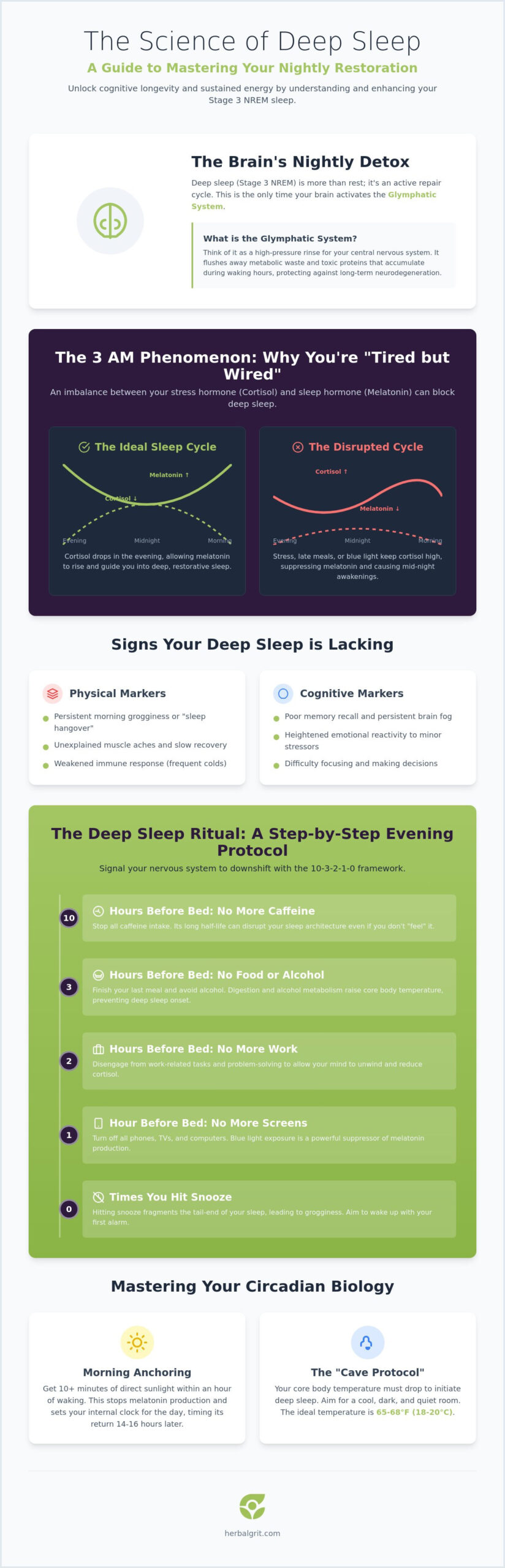
Many people focus on total time in bed, yet they still feel exhausted. This happens because sleep duration and sleep architecture are two different things. You might spend eight hours under the covers, but if you don’t reach Stage 3, your brain doesn’t activate the glymphatic system. Think of this system as a nightly rinse for your central nervous system. It “washes” away metabolic waste and toxic proteins that accumulate during your waking hours. Learning how to improve deep sleep quality is essentially learning how to facilitate this vital internal cleansing process.
The “Tired but Wired” syndrome is a common barrier to this restorative state. It occurs when high cortisol levels, driven by modern stressors, block your entry into deep sleep. Even if you manage to drift off, your nervous system remains on high alert, skimming the surface of rest without ever diving into the deep, slow-wave cycles your brain requires for longevity.
The 3 AM Phenomenon: Cortisol vs. Melatonin
Waking up in the middle of the night isn’t just a nuisance; it’s often a sign of metabolic distress. When your blood sugar fluctuates or your stress levels remain high, your body produces cortisol at the wrong time. This spike suppresses your natural melatonin surge. Instead of a smooth transition through sleep stages, your brain stays in a state of hyper-vigilance. True restorative rest requires metabolic sleep support to ensure your body stays in a state of tranquil equilibrium until the sun rises.
Signs Your Deep Sleep is Lacking
If you’re struggling with how to improve deep sleep quality, your body is likely already sending you signals. Physical markers include persistent morning grogginess, unexplained muscle aches, and a weakened immune response. Cognitively, you might notice poor memory recall or heightened emotional reactivity to minor stressors. These aren’t just signs of a “bad night.” They are symptoms of a deeper biological imbalance. The deep sleep deficit is the silent 2026 health crisis, where we are physically present but neurologically depleted. Consistent Stage 3 rest is the only way to clear this debt and reclaim your natural vitality.
Circadian Biology: Mastering the Light-Dark Mastery
Your body is a finely tuned instrument that responds to the celestial dance of light and shadow. To understand how to improve deep sleep quality, you must first master your circadian biology. This 24-hour internal clock regulates everything from your metabolism to your mental clarity. It’s a rhythm that doesn’t start when you hit the pillow; it begins the moment you open your eyes and encounter the world.
Morning Anchoring for Nighttime Success
Stepping into direct sunlight for at least 10 minutes within an hour of waking is a non-negotiable anchor for your system. This exposure stops melatonin production and signals your brain to begin the countdown for its return 14 to 16 hours later. It also helps build adenosine, the “sleep pressure” that makes you feel naturally tired by evening. This foundational habit is also a key component in how to stay mentally sharp as you age, as it aligns your neurological health with the natural rhythms of the environment.
While light is the primary signal, temperature is the biological gatekeeper of Stage 3 rest. Your core body temperature must drop by about two to three degrees Fahrenheit to initiate deep sleep. If you’re still searching for how to improve deep sleep quality, look toward your bedroom’s climate. Creating a “Cave Protocol” in your bedroom involves more than just turning off the lights. It requires total sensory deprivation. This means blackout curtains, a consistent temperature of 65 to 68 degrees, and total silence. As noted in Johns Hopkins’ guide to natural sleep aids, a cool and dark environment is just as critical as the botanical supports you choose.
Digital Sunset: Managing 2026 Technology
In our current era, simply using a blue light filter isn’t enough to protect your sleep architecture. The “infinite scroll” of social media and the constant ping of notifications create a state of cognitive arousal that keeps you in a shallow sleep state. A true digital sunset means putting away screens at least 90 minutes before bed. This reduces sleep-onset latency and allows your mind to downshift naturally. Instead of scrolling, try tactile hobbies like analog reading or restorative stretching to signal to your nervous system that the day is done. If you find that your mind still struggles to quiet down despite these changes, a gentle, nature-rooted solution like YU SLEEP can help bridge the gap between a busy day and a deep, restorative night.
Botanical vs. Pharmaceutical Support: Choosing a Sustainable Path
Choosing a path toward restorative rest often involves a choice between forceful sedation and gentle cultivation. Many people turn to pharmaceutical “knockout” solutions when they struggle with their nightly rest. While these synthetic aids can force the body into unconsciousness, they often bypass the delicate stages of sleep architecture. Instead of the restorative glymphatic rinse we discussed earlier, the brain remains in a state of chemical sedation. Over time, this creates a dependency where the body forgets how to initiate its own descent into Stage 3 NREM sleep.
Melatonin supplements are a common alternative, yet they frequently backfire. As of July 2026, the FDA regulates melatonin as a dietary supplement, which means quality and potency can vary significantly between brands. Taking high doses often leads to a persistent “sleep hangover” or morning grogginess. This happens because synthetic melatonin can linger in your system long after the sun rises, confusing your circadian clock. If you are exploring how to improve deep sleep quality, especially when navigating hormonal changes, Artemis Curated offers insights into selecting high-purity supports that respect your body’s endogenous rhythms.
A more sustainable approach involves a synergistic blend of traditional botanicals and minerals. Nature doesn’t force. It invites. By combining elements like valerian root, magnesium, and adaptogens, you can nurture the nervous system into a state of tranquil readiness. These ingredients work together to lower cortisol and relax muscle tension without the risk of long-term dependency or morning fog.
The YU SLEEP Advantage: Nature’s Restorative Formula
For those seeking a non-habit-forming way to anchor their nightly rest, YU SLEEP offers a carefully curated botanical blend. It focuses on the purity of its ingredients, ensuring that each element supports the natural transition into deep sleep. This approach mirrors the wisdom of a modern apothecary, prioritizing high-quality sourcing to help you achieve a sense of rugged endurance throughout your waking hours. It’s about providing the softness your body needs to downshift effectively.
Metabolic Stability and Rest
Your metabolic health is the silent foundation of your sleep. When your blood sugar crashes in the middle of the night, your body releases cortisol to compensate, leading to that dreaded 3 AM wake-up. Addressing metabolic support is a vital step in how to improve deep sleep quality. By avoiding a late-night “carb-crash” and focusing on cellular energy stability, you provide your brain with the steady environment it needs to remain in a deep, uninterrupted state of repair.
- Focus on protein and healthy fats in your final meal to stabilize glucose.
- Consider magnesium as a metabolic cofactor for relaxation.
- Avoid processed sugars that trigger nighttime insulin spikes.
The Deep Sleep Ritual: A Step-by-Step Evening Protocol
Deep sleep doesn’t happen by chance; it happens by design. If you’ve been wondering how to improve deep sleep quality, the answer lies in the hours before you actually close your eyes. Your brain requires a structured transition to move from the sympathetic “fight or flight” state into the parasympathetic “rest and digest” mode. This transition is best achieved through a sensory ritual that signals to every cell in your body that the day’s labor is finished. By creating a bridge between the chaos of the day and the tranquility of the night, you allow your nervous system to downshift naturally.
A cornerstone of this preparation is the “Brain Dump.” Before you begin your countdown, take five minutes to write down every task, worry, or racing thought on a piece of physical paper. This simple act of externalizing your stress prevents your mind from looping through these thoughts at 3 AM. Combine this with the calming power of magnesium or a warm cup of valerian tea to soothe your physical body. These traditional botanical solutions provide a grounded sense of peace that synthetic aids simply cannot replicate. To find the right natural balance for your evening, you can experience the restorative power of YU SLEEP as part of your nightly routine.
The Countdown to Deep Rest
Success in Stage 3 sleep is built on a specific timeline of physiological readiness. Following the 10-3-2-1-0 rule ensures your body isn’t fighting against digestion or stimulants when it should be repairing itself:
- 10 hours: No more caffeine. This allows the stimulant to clear your system so it doesn’t block adenosine receptors.
- 3 hours: No more food or alcohol. This prevents metabolic spikes and acid reflux that disrupt sleep architecture.
- 2 hours: Stop all work. Close the laptop and end the mental “problem-solving” mode.
- 1 hour: No more screens. Eliminate blue light to allow your natural melatonin to surge.
- 0: The time your head hits the pillow in a cool, dark room.
Calming the Mind with Audio and Breath
Once you are in bed, your focus should shift to neurological harmony. Using The Brain Song can help synchronize your brainwaves for deep relaxation, making the descent into sleep feel effortless. Pair this audio therapy with the 4-7-8 breathing technique: inhale for four seconds, hold for seven, and exhale slowly for eight. This practice acts as a manual override for your nervous system, forcing it into a state of calm. For more ideas on how to craft the perfect evening, you can explore our detailed comparison of Roman sleep support vs YU SLEEP to see which protocols align best with your lifestyle.
Optimizing for Longevity: Integrating Deep Sleep into Your Routine
Viewing sleep as a chore is a common modern mistake. It is actually a profound act of self-nurturing. When you commit to a routine that honors your biology, you aren’t just escaping tomorrow’s brain fog; you’re investing in your brain’s structural integrity. Understanding how to improve deep sleep quality is the most effective way to ensure long-term neuroprotection. During these deep cycles, your brain isn’t just resting. It’s actively preventing the accumulation of amyloid plaques, which are the metabolic waste products linked to cognitive decline.
Building a resilient wellness routine requires a shift in perspective. You must prioritize physiological recovery with the same discipline you apply to your career or fitness. This isn’t about rigid perfection, but about creating a steady, supportive environment where your body feels safe enough to descend into Stage 3 rest. When your internal rhythms are synchronized with the natural world, your health gains a level of rugged endurance that carries you through the most demanding days.
The Cognitive Longevity Connection
Deep sleep is where the magic of memory consolidation and learning happens. It is the time when your brain files away the day’s information and clears the slate for new insights. Deep sleep is the cornerstone of mental clarity in 2026. Without it, your cognitive performance will eventually plateau, regardless of how much caffeine you consume. To support this vital process, you can enhance your sleep architecture with YU SLEEP, providing your system with the botanical nutrients it needs for deep, uninterrupted repair.
Your Next Steps for Better Rest
As you begin your journey toward better rest, focus on the three pillars we’ve explored: light, temperature, and botanicals. Start by anchoring your morning with sunlight and cooling your bedroom to a tranquil 65 degrees. Introduce nature-rooted supports to help your nervous system downshift without the “knockout” effect of synthetics. If you use a wearable device, use the data as a gentle guide rather than a source of anxiety. The goal is to feel the difference in your own vitality and presence. By staying steadfast in these simple, nature-positive habits, you’ll find a level of botanical endurance that supports your well-being for decades to come.
Reclaiming Your Natural Rhythm
Achieving truly restorative rest requires more than just closing your eyes; it demands a conscious alignment with the rhythms of the natural world. By anchoring your day with morning sunlight and cooling your environment to mirror the night’s chill, you provide your body with the essential signals it needs to downshift. Mastering how to improve deep sleep quality isn’t about forced sedation. It’s about nurturing your system so it can naturally enter Stage 3 NREM sleep, where the most profound neurological repair occurs.
Transitioning away from synthetic aids toward nature-rooted solutions allows you to build a foundation of long-term health without the risk of dependency. If you’re ready to embrace a more intentional approach to your well-being, we invite you to Experience the Restorative Power of YU SLEEP Today. Our pure, nature-positive botanical formula provides non-habit-forming support specifically designed to enhance your sleep architecture. Trust in the resilience of your own biology and the gentle strength of traditional botanical solutions. You deserve to wake up feeling grounded, clear, and fully restored every single morning.
Frequently Asked Questions
What is the best temperature for deep sleep quality?
The ideal temperature for restorative rest falls between 65 and 68 degrees Fahrenheit. Your core body temperature must drop to initiate Stage 3 NREM sleep; a cool room acts as a biological trigger for this descent. If the environment is too warm, your body stays in a state of thermal regulation rather than deep repair. This simple adjustment is a fundamental step for anyone learning how to improve deep sleep quality through environmental cues.
Can I improve deep sleep if I work night shifts?
You can certainly enhance your rest by creating a strictly controlled “biological night” during the day. Use high-quality blackout curtains and a cool room to simulate the darkness and temperature of a natural evening. Consistency is your greatest ally here. By wearing blue-light blocking glasses during your commute home and maintaining a steady schedule, you help your brain navigate the challenges of a non-traditional work rhythm.
Does alcohol help or hurt deep sleep stages?
Alcohol is a sedative that fragmentizes your sleep architecture rather than supporting it. While it might help you fall asleep faster, it prevents you from reaching the deeper, restorative stages. As the substance clears your system, it often triggers a rebound effect that leads to middle-of-the-night waking. For those focused on long-term cognitive health, replacing evening spirits with a gentle botanical tea is a much more sustainable choice.
How much deep sleep do I actually need per night?
Most healthy adults require between 1.5 and 2 hours of deep sleep each night. This typically accounts for about 20% of your total time spent asleep. Since the majority of Stage 3 rest occurs during the first half of the night, going to bed earlier can help you capture these vital windows. If you consistently wake up feeling refreshed and mentally sharp, you’re likely meeting your body’s specific restorative needs.
Why do I wake up at 3 AM even if I fall asleep easily?
Waking up in the early hours is often a sign of metabolic instability or a mistimed cortisol surge. If your blood sugar drops too low, your body releases stress hormones to compensate, which pulls you out of deep rest. Addressing your evening nutrition and managing stress through nature-rooted protocols can help stabilize these internal rhythms. This is a key area to investigate when looking at how to improve deep sleep quality over time.
Is it safe to take natural sleep aids every night?
High-quality, nature-positive botanicals are generally safe for nightly use when they focus on nurturing the nervous system. Unlike synthetic pharmaceuticals, these traditional solutions work with your body’s natural chemistry to encourage relaxation. It’s important to choose formulas that prioritize purity and sustainable sourcing. Always listen to your body and consult with a professional if you have specific health concerns or are taking other medications.
Can weighted blankets actually increase deep sleep time?
Weighted blankets can support deeper rest by providing gentle pressure that calms the peripheral nervous system. This sensation often reduces physical restlessness and lowers heart rate, making it easier for the body to transition into Stage 3 sleep. While they aren’t a “magic fix” for everyone, many people find the added weight provides a sense of security that helps quiet a busy mind before bed.
How does exercise timing affect nighttime rest?
Vigorous exercise is best completed at least three to four hours before you plan to sleep. While physical activity builds sleep pressure, it also raises your core body temperature and heart rate. If you train too late in the evening, your body may struggle to cool down enough to enter deep restorative cycles. Gentle movement like restorative stretching is a better choice for your evening wind-down ritual.