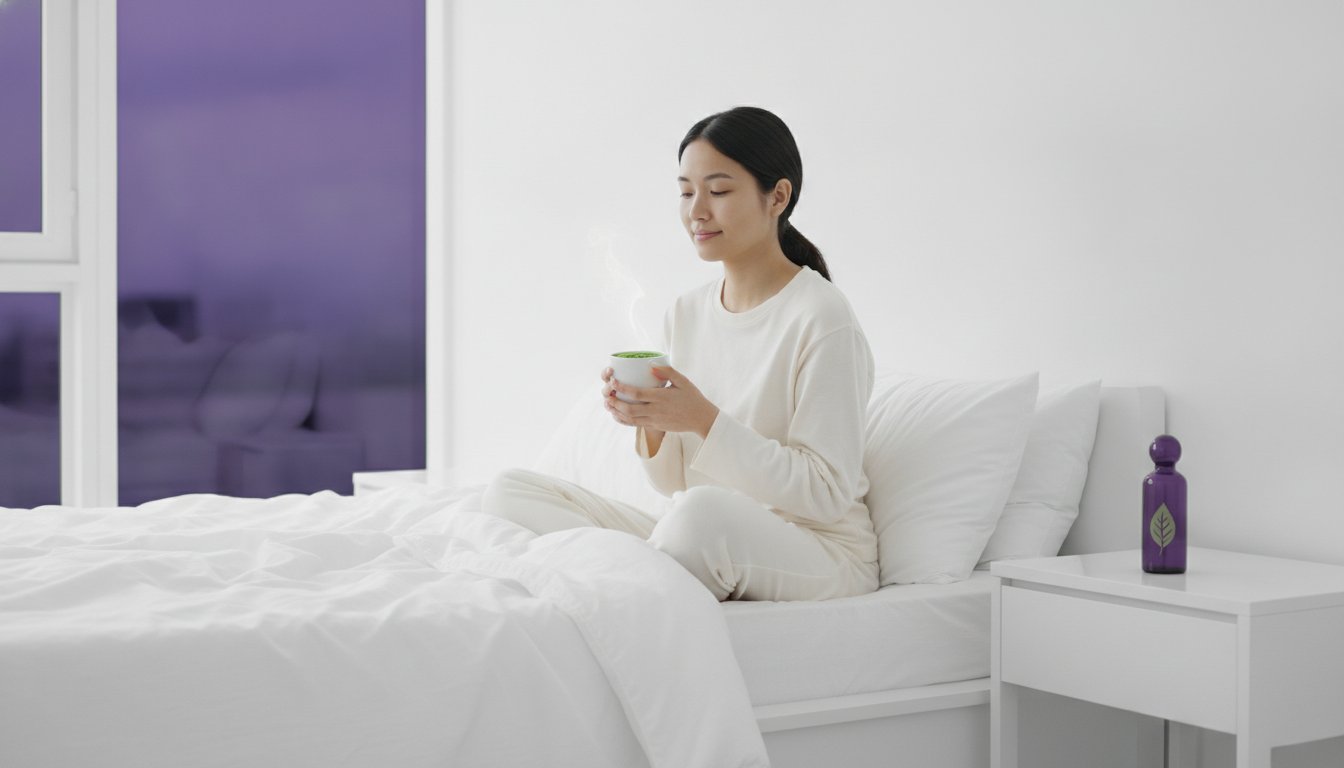
Did you know that 81% of Americans actually lose sleep because they are worrying about getting the perfect night of rest? This modern anxiety, known as orthosomnia, often leaves us staring at the ceiling at 3 AM with racing thoughts and a heavy heart. If you feel groggy despite spending eight hours in bed, it is time to shift your perspective. Learning how to create a sleep routine for adults is not about following a strict set of chores; it is about crafting a nurturing bridge between the demands of your day and the restorative power of the night.
We understand that the transition from a high-pressure world to a state of deep recovery requires a gentle, intentional touch. In this 2026 guide, you’ll discover how to master a 30 to 60 minute evening ritual that aligns your biology with the natural world. We’ll explore how to calm your nervous system through intentional habits, why consistency matters more than duration, and how to reduce your reliance on pharmaceutical aids. By the end, you’ll have a clear path to consistent energy and a ritual that feels like a soulful reward rather than another item on your to-do list.
Key Takeaways
- Understand how the “Cortisol-Melatonin Seesaw” regulates your internal clock and why biological alignment is the foundation of daily energy.
- Discover how to create a sleep routine for adults through a five-step ritual, featuring the “Digital Sunset” and specific temperature regulation techniques.
- Learn to distinguish between your external bedroom sanctuary and your internal body chemistry to maximize natural melatonin production through the “Darkness Protocol.”
- Master tactical solutions for the “3 AM Club,” including the 20-minute rule to quiet racing thoughts and gently return to a state of rest.
- Explore the concept of Botanical Synergy to enhance your evening ritual with pure, natural solutions that support deeper sleep without morning grogginess.
The Science of the Circadian Rhythm: Why Adults Need a Routine
Your body operates on a quiet, internal metronome that dictates when you feel vibrant and when you need to retreat into stillness. The Science of the Circadian Rhythm reveals that this biological clock is responsible for far more than just your bedtime. It coordinates your body temperature, heart rate, and hormone production over a 24 hour cycle. Understanding this natural orchestration is the vital first step in learning how to create a sleep routine for adults that feels effortless rather than forced.
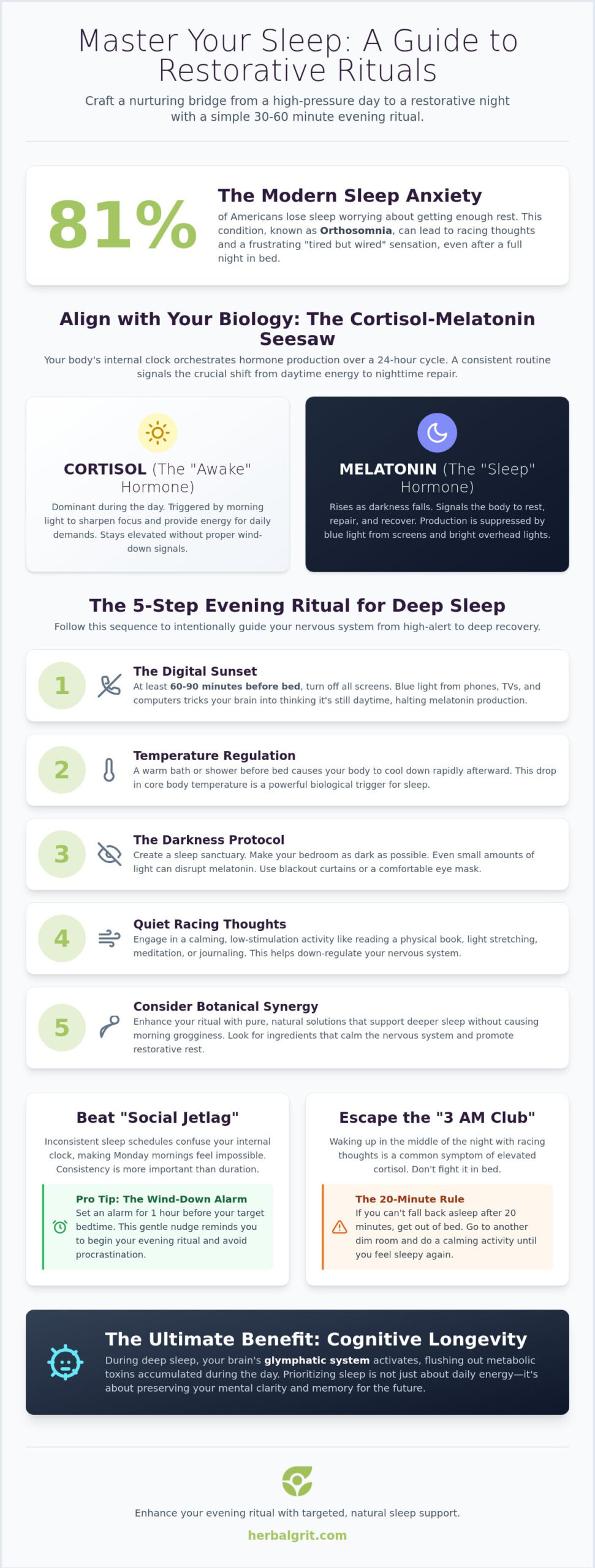
At the heart of this system is the “Cortisol-Melatonin Seesaw.” During the morning light, your body produces cortisol to sharpen your focus and prepare you for the day’s demands. As the sun sets, your biology should ideally tip the scales toward melatonin, the hormone of darkness and repair. A consistent evening ritual acts as the physical signal your brain needs to initiate this hormonal shift. Without it, your body may remain in a state of high-alert cortisol production long after you’ve climbed into bed, leading to the racing thoughts that keep many of us awake.
Throughout your waking hours, a chemical called adenosine steadily builds up in your brain, creating what scientists call “sleep pressure.” While this buildup is inevitable, it requires a calm, low-stimulation environment to effectively trigger the onset of sleep. If your surroundings are chaotic or bright, your brain may ignore these signals, leading to that frustrating “tired but wired” sensation. Sleep hygiene is the practice of environmental and behavioral consistency to optimize rest.
The Link Between Deep Sleep and Cognitive Longevity
During the deepest stages of your rest, a specialized waste-clearance system called the glymphatic system becomes active. It works like a botanical infusion for the mind, flushing out metabolic toxins that accumulate during the day. This process is vital for maintaining mental clarity and ensuring your memory remains sharp. Learning how to stay mentally sharp as you age is deeply connected to how well you protect these nocturnal cleaning cycles through a disciplined routine. When you prioritize how to create a sleep routine for adults, you’re not just resting; you’re preserving your cognitive future.
The Consequences of “Social Jetlag”
Many of us suffer from “social jetlag,” a state where our social or work schedules clash with our internal biological clocks. You might try to “catch up” on sleep during the weekend, but this often backfires by shifting your rhythm and making Monday morning feel impossible. This inconsistency confuses your internal clock and leads to lingering grogginess. To combat this, consider setting a “wind-down alarm” an hour before your target sleep time. This gentle nudge reminds you to begin your transition, ensuring you don’t fall victim to evening procrastination or the dopamine loop of a smartphone.
The 5-Step Evening Ritual for Consistent Deep Sleep
Transitioning from the high-performance stress of the day to a state of deep botanical recovery requires a structured approach. When you are learning how to create a sleep routine for adults, it helps to view these steps as a series of gentle signals to your nervous system. By following a prioritized sequence, you guide your body toward the restorative rest it naturally craves. This ritual is not a list of chores; it is an intentional gift to your future self, ensuring you wake with clarity and purpose.
Step 1 & 2: Preparing the Physical Body
The first step in any effective ritual is the Digital Sunset. At least 60 minutes before your head hits the pillow, dim the overhead lights and stow away your digital devices. This is a non-negotiable step because Managing Modern Disruptors like blue light is the only way to allow your natural melatonin production to begin. To make this easier, try using “warm” amber lighting or salt lamps in the evening. These hues mimic the spectrum of a natural sunset, telling your brain that the day is officially over.
Next, focus on temperature regulation. While it seems counterintuitive, taking a warm bath or shower before bed is one of the most effective ways to trigger a core temperature drop. As you step out of the warmth, your body rapidly cools down, which serves as a powerful biological trigger for sleep. To support this process, keep your bedroom environment around 65°F (18°C). This cool atmosphere helps maintain your body’s lower nocturnal temperature, preventing the restless tossing and turning often caused by overheating.
This transition period is also an ideal opportunity to engage in a tactile self-care ritual; using authentic products from My Seoul My Skin can transform your evening hygiene into a soothing practice that signals to your nervous system that the day is done.
Step 3 & 4: Calming the High-Performance Mind
To quiet a racing mind and prevent the dreaded 3 AM wake-up call, you must engage in cognitive offloading. Spend two minutes with a journal, using a simple prompt to clear mental clutter: “What are three small wins from today, and what three tasks will I handle tomorrow?” Writing these down transfers the “open loops” from your brain onto the paper, allowing your subconscious to relax. This practice is essential for anyone mastering how to create a sleep routine for adults who carry the weight of professional or personal responsibilities.
Pair this mental clearing with sensory signaling. Specific scents like lavender or sounds like pink noise can act as anchors for your routine. Pink noise is particularly effective because it uses lower frequencies that mimic natural environments, such as steady rain or rustling leaves, to stabilize your brainwaves. While these sensory tools help at night, using resources like The Brain Song during your waking hours can improve overall brain harmony. When your mind is balanced during the day, it becomes much easier to settle into stillness when the sun goes down.
The final step is botanical preparation. This involves introducing calming nutrients that signal your nervous system to fully disengage from the day’s demands. These natural elements should feel like a soft blanket for the mind, filling the gaps that lifestyle changes alone might not reach. For those seeking a deeper level of tranquility, incorporating targeted botanical solutions can ensure your transition into sleep is both swift and profoundly restorative.
Creating a Sleep Sanctuary: Balancing Environment and Physiology
To truly master how to create a sleep routine for adults, you must address both the space around you and the chemistry within you. While a consistent schedule provides the timing, your sanctuary provides the support. We distinguish between the external sanctuary, your physical bedroom, and the internal sanctuary, your physiological state. Both must be in harmony to unlock the deepest levels of restorative rest. When these two environments align, sleep becomes a natural consequence rather than a forced effort.
The “Darkness Protocol” is the foundation of the external sanctuary. Your brain is incredibly sensitive to light; even a small sliver from a streetlamp or a charging LED can signal your pineal gland to halt melatonin production. Using blackout curtains or a high-quality eye mask ensures that your internal clock remains undisturbed throughout the night. This darkness acts as a protective cocoon, allowing your biology to remain in a state of pure, uninterrupted recovery until the morning sun rises.
Your internal environment is just as critical as the room you sleep in. Many people believe a “nightcap” helps them drift off, but alcohol actually destroys sleep architecture by suppressing REM cycles and causing fragmented rest. Similarly, heavy or high-sugar meals late in the evening force your body to focus on digestion and heat production rather than repair. To support the muscular and nervous systems, focus on minerals like magnesium. This raw element of nature helps regulate neurotransmitters that quiet the mind and relax the physical body, preparing you for a night of stillness.
The External Sanctuary: Bedroom Optimization
Your mattress should provide enough support to maintain spinal alignment, reducing the physical discomfort that leads to midnight tossing and turning. If you live in an urban area, white noise machines are excellent for masking disruptive environmental sounds like traffic or sirens. Creating a sleep-ready room involves a few simple, intentional choices:
- Cool: Maintain a temperature around 65°F (18°C).
- Dark: Use blackout curtains or eye masks to maximize melatonin.
- Quiet: Utilize white noise or earplugs to block external disruptions.
- Tech-Free: Keep phones and tablets in another room to avoid the dopamine loop.
The Internal Sanctuary: Managing Nighttime Cortisol
Waking up at 3 AM is rarely a coincidence. It is often a sign of a cortisol spike caused by a blood sugar dip. When your body runs out of steady fuel, it releases stress hormones to wake you up and find nourishment. If you find yourself hungry before bed, a small, protein-rich snack like a few almonds can stabilize your levels through the night. For a deeper look at how specific nutrients support this internal balance, you can read our analysis of Roman Sleep Support vs YU SLEEP. Understanding how to create a sleep routine for adults means choosing the right botanical support to ensure your internal chemistry remains as calm as your bedroom sanctuary.
Managing Modern Disruptors: Stress, Blue Light, and the 3 AM Wake-up
The modern world presents obstacles to rest that our ancestors never faced. The most significant disruptor to a peaceful night is the “always-on” dopamine loop fueled by our smartphones. Each notification and scroll triggers a micro-burst of alertness that keeps the brain in a state of high-performance vigilance. When you’re mastering how to create a sleep routine for adults, recognizing this digital pull is essential for reclaiming your stillness. Racing thoughts are a physiological response to unfinished stress cycles. If you find yourself in the “3 AM Club,” staring at the ceiling, follow the 20-minute rule. If you haven’t fallen back asleep within twenty minutes, get out of bed. Move to a different room with dim lighting and engage in a low-stimulation activity like reading a physical book. This prevents your brain from associating your bed with the frustration of being awake.
To ground your physical body during moments of stress, try Progressive Muscle Relaxation. This technique involves tensing and then slowly releasing each muscle group, starting from your toes and moving up to your jaw. This practice signals to your nervous system that the immediate threat has passed and it’s safe to surrender to rest. It acts as a bridge between the raw tension of the day and the soft recovery of the night.
The Digital Detox in a 2026 World
In 2026, we face the irony of sleep-tracking wearables. While these tools provide valuable data, they often lead to “orthosomnia,” a state of anxiety about achieving perfect sleep scores. To protect your wind-down window, use “Do Not Disturb” modes on all devices at least sixty minutes before bed. For remote workers, it’s vital to “close the office” mentally. Physically shutting your laptop and clearing your workspace creates a boundary that your biology respects, ensuring your home remains a sanctuary rather than a secondary cubicle.
Breaking the Cycle of Nighttime Anxiety
When anxiety strikes, you can manually override your sympathetic nervous system using “box breathing.” Inhale for four seconds, hold for four, exhale for four, and hold for four. This rhythmic pattern acts as a steady anchor for a drifting mind. Remember to practice self-compassion if your routine isn’t perfect every night; stress about the routine itself only fuels the fire. For a more comprehensive approach to your well-being, you can explore our guide on how to create a daily supplement routine. To support your body’s natural ability to disengage from the day, consider incorporating a curated sleep solution like YU SLEEP to fill the gaps left by modern stress.
Botanical Synergy: Enhancing Your Routine with Targeted Sleep Support
Even with the most disciplined evening ritual, modern stress can occasionally create a physiological barrier that lifestyle changes alone cannot breach. This is where the concept of Botanical Synergy becomes vital. It is the practice of using the raw power of nature to fill the biological gaps in your daily schedule. While you are refining how to create a sleep routine for adults, these natural elements act as a supportive bridge, ensuring your body truly transitions into a state of deep, restorative recovery. Unlike traditional pharmaceutical aids that often lead to heavy morning grogginess, botanical solutions work with your biology rather than overriding it.
High-quality botanical support focuses on pure ingredients that gently encourage the nervous system to settle. Valerian root has been used for centuries to promote tranquility, while GABA acts as a natural brake for the brain’s excitability. L-Theanine, an amino acid often found in botanical extracts, further supports a calm, focused state of relaxation without the risk of dependency. For those who have already optimized their environment and habits but still struggle to reach the deepest stages of rest, YU SLEEP serves as the ultimate tool for restoration and depth.
The YU SLEEP Difference: Non-Melatonin Support
Many adults are increasingly wary of synthetic melatonin, as long-term use can sometimes disrupt the body’s own natural hormone production. The “Apothecary Approach” behind YU SLEEP prioritizes pure, non-hormonal ingredients that target the root causes of nighttime restlessness, such as an overactive mind or physical tension. By focusing on botanical purity and sustainability, this solution allows you to wake up feeling refreshed and clear-headed. It is a persona of resilience and gentleness, providing the steadfastness required for a disciplined wellness routine.
Integrating Supplements into Your 5-Step Ritual
To get the most out of your botanical support, timing is essential. We recommend introducing your chosen nutrients about 30 to 60 minutes before you intend to sleep, ideally right as you begin your Digital Sunset. This ensures the ingredients are fully absorbed and working in harmony with your core temperature drop and cognitive offloading. Supplements are not a replacement for healthy habits; they are a force multiplier for a solid routine. When you combine intentional behaviors with the inherent strength of the environment, you unlock a level of rest that feels both profound and sustainable. Experience deep, botanical rest with YU SLEEP today.
Step Into a New Era of Restorative Rest
Your journey toward deeper rest begins with a single, intentional choice to prioritize your biology over the demands of a digital world. We’ve explored how aligning your circadian rhythm and mastering your physical environment can transform your health from the inside out. Understanding how to create a sleep routine for adults is about more than just checking boxes; it’s about building a sustainable bridge to cognitive longevity and daily vitality. By integrating a cool, dark sanctuary with the calming power of botanical synergy, you can finally break the cycle of nighttime anxiety.
When your lifestyle habits need a professional force multiplier, look to nature’s most potent solutions. Our high-performance formula offers targeted physiological support for deep rest, ensuring you stay asleep through the night. Reclaim your nights with the #1 Botanical Sleep Offer: YU SLEEP. Featuring our new March 2026 VSL release, this curated solution helps you surrender to stillness with confidence. You deserve a morning that feels like a fresh beginning. Trust in the resilience of your body and the gentle strength of the botanical world as you embark on this path to wellness.
Frequently Asked Questions
How long does it take to establish a new sleep routine?
It generally takes between three to four weeks of consistent practice for the brain to recognize a new pattern as a habit. While some might feel a shift in energy within the first week, biological rhythms require time to stabilize. Patience is key during this transition. Focus on small, incremental changes of 15 to 30 minutes each night rather than attempting a drastic overhaul of your entire schedule.
What is the best time for an adult to start their bedtime routine?
The ideal time to begin is 60 to 90 minutes before your target sleep time. This window allows your body to transition from high-performance stress to a state of stillness. If you aim to be asleep by 10 PM, your “Digital Sunset” and wind-down rituals should commence no later than 9 PM. This structured timing ensures your biology has sufficient space to trigger the necessary hormonal shifts for rest.
Can I look at my phone if I use a blue light filter?
No, because blue light is only part of the problem; the psychological stimulation of the “dopamine loop” is just as disruptive. Blue light filters can reduce eye strain, but the act of scrolling keeps your brain in a state of high alert. When learning how to create a sleep routine for adults, the goal is to disengage from the digital world entirely. This allows your mind to settle into a natural, unhurried rhythm.
Why do I wake up at 3 AM even if I have a good routine?
Mid-night awakenings are often tied to internal physiological factors like blood sugar fluctuations or cortisol spikes. Even with a perfect environment, your body may release stress hormones if it runs out of steady fuel or if an “unfinished stress cycle” remains from the day. Consider a small, protein-rich snack before bed to stabilize your levels. This internal balancing act is a crucial part of how to create a sleep routine for adults.
Is it better to read a physical book or an e-reader before bed?
A physical book is the superior choice for deep recovery. E-readers, even those with “warm” light settings, can still emit subtle frequencies that signal alertness to your brain. The tactile experience of turning paper pages encourages a slower, more meditative pace. This simple, traditional practice grounds your senses and acts as a gentle anchor, pulling you away from the frantic energy of modern technology.
How does exercise during the day affect my nighttime routine?
Regular physical activity significantly improves sleep quality by increasing the buildup of adenosine, the chemical responsible for “sleep pressure.” However, timing is vital. Vigorous exercise within three hours of bedtime can raise your core temperature and heart rate, which may delay the onset of rest. Morning or afternoon movement is best, as it aligns with your body’s natural peak energy levels and supports a smoother evening transition.
What should I do if my partner has a different sleep schedule?
Communication and compromise are essential for maintaining a shared sanctuary. You can still follow your personal ritual by using tools like eye masks, earplugs, or a bedside lamp with amber bulbs to minimize disruption. If your partner goes to bed later, they should enter the room quietly and avoid using bright overhead lights. Focus on protecting your own biological rhythm while respecting the unique needs of your partner’s schedule.
Are natural sleep aids like YU SLEEP safe for long-term use?
Yes, because YU SLEEP is formulated with pure, non-hormonal botanical extracts designed to support your body’s natural processes. Unlike synthetic aids that can create dependency, our blend uses ingredients like Valerian and L-Theanine to promote a restorative morning. It acts as a resilient yet gentle guide for your nervous system. This “Apothecary Approach” ensures that you can enhance your well-being through sustainable, nature-positive solutions every single night.