What if the very solution you’re using to find rest is actually stealing your morning? Many people reach for a bottle when they can’t drift off, only to wake up feeling heavy, foggy, and disconnected from the day ahead. If you’ve been searching for how to avoid grogginess from sleep aids, you’re likely familiar with that frustrating “drugged” sensation that lingers long after your alarm goes off. It feels like a betrayal of the body’s natural need for restoration and clarity.
We understand that you want to fall asleep quickly and stay asleep without sacrificing your mental sharpness at dawn. It’s entirely possible to bridge the gap between the raw power of nature and your need for modern health support. This 2026 guide reveals the science behind the morning hangover effect and provides actionable, nature-positive strategies to help you wake up refreshed. You’ll learn how to synchronize your rest with your biological clock, explore the benefits of low-dose botanical solutions like those found in YU SLEEP, and build a sustainable routine that honors your body’s innate resilience.
Key Takeaways
- Understand why “residual sedation” occurs when chemicals linger in your system and how to calculate your wake-up window for morning clarity.
- Master the 8-hour rule and other timing techniques to learn how to avoid grogginess from sleep aids while still achieving deep, restorative rest.
- Discover the benefits of a micro-dose strategy and why high-dose melatonin can actually worsen your morning fog.
- Learn how to use immediate light therapy upon waking to reset your circadian clock and clear away the lingering “hangover” effect.
- Explore how botanical blends and raw ingredients like magnesium glycinate support a gentler transition into sleep and immediate mental sharpness at dawn.
Understanding Sleep Aid Hangover: Why You Wake Up Groggy
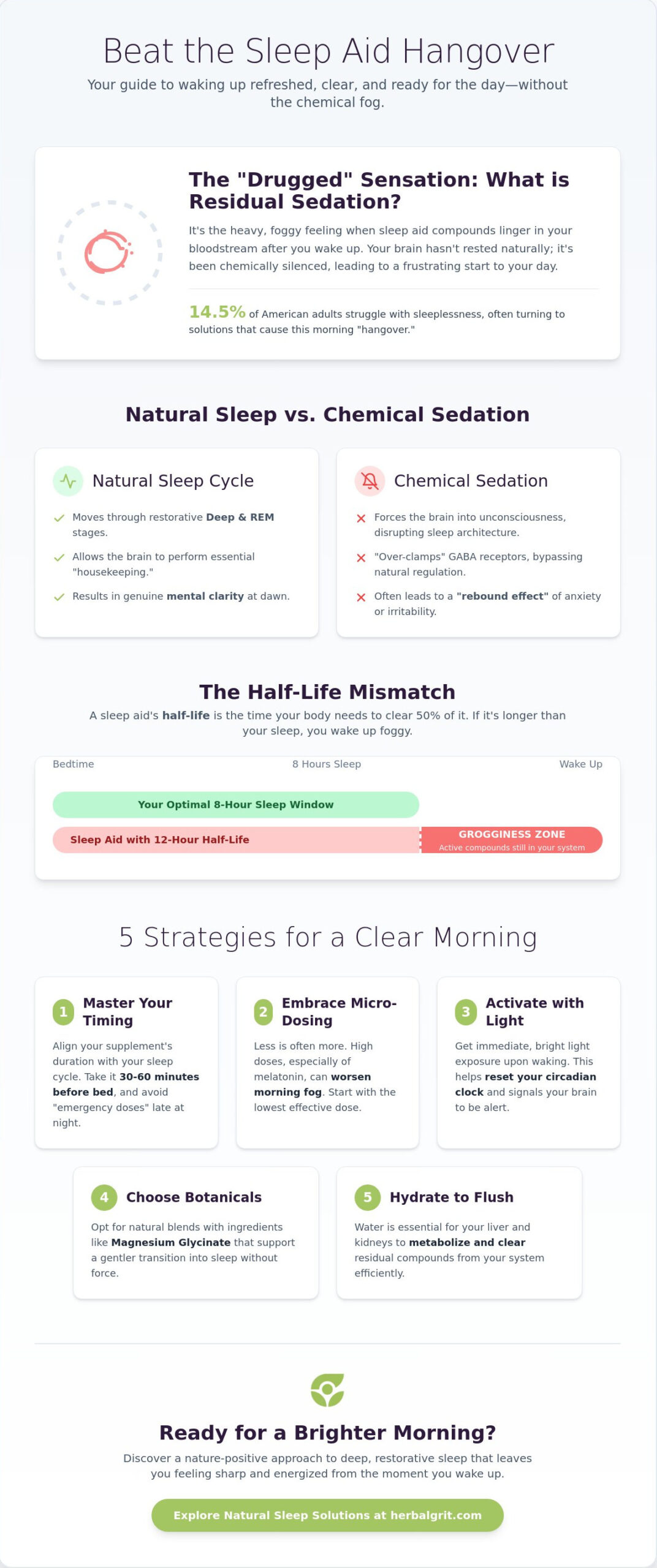
That heavy, “drugged” sensation you feel upon waking isn’t just a minor side effect; it’s a physiological state known as residual sedation. This occurs when the active compounds in your sleep support remain in your bloodstream long after your alarm has sounded. While approximately 14.5% of American adults struggle with sleeplessness according to the CDC, many turn to synthetic solutions without understanding the chemical cost. If you’re looking for how to avoid grogginess from sleep aids, you must first understand that your brain hasn’t truly rested, it’s been chemically silenced.
The primary culprit is often the way synthetic sedatives interact with your GABA receptors. These receptors act as the brain’s “off switch.” Traditional pharmaceuticals and many over-the-counter hypnotics “over-clamp” these receptors, creating a state of deep depression in the central nervous system. This is fundamentally different from a natural transition into sleep. By studying the science of hypnotic sleep aids, we see that while these substances induce sleep, they often do so by bypassing the brain’s delicate self-regulation mechanisms. This leads to a lingering fog that can last well into your morning work hours, clouding your mental clarity and physical energy.
The Science of Residual Sedation
Your liver is the primary architect of your recovery, working through the night to process and eliminate foreign compounds. However, many common sleep aids have a “half-life mismatch” with a standard eight-hour rest period. The half-life of a sleep aid is the specific duration required for your body to metabolize and remove 50% of the substance from your system. If an ingredient has a 12-hour half-life, a significant portion remains active when you try to start your day. This metabolic backlog is a major reason why learning how to avoid grogginess from sleep aids is so difficult when using high-dose or synthetic products that linger in the blood for 12 or more hours.
Sleep Architecture vs. Sedation
True restoration requires moving through specific stages, particularly Deep Sleep and REM cycles. Sedatives often act as a blunt instrument, forcing the brain into a state of unconsciousness that mimics sleep but lacks its restorative architecture. You might be “knocked out,” but your brain isn’t performing the essential housekeeping required for mental sharpness. This disruption often leads to a “rebound effect,” where the body becomes irritable or anxious as the sedative wears off. Understanding The Risks of Long-Term Pharmaceutical Sleep Aid Use is vital for anyone seeking a sustainable, nature-positive routine that honors the body’s intrinsic rhythm rather than overriding it with heavy sedation.
The Half-Life Mismatch: Timing Your Rest for Clarity
Timing is the silent architect of a clear morning. Most people treat sleep aids as a panic button rather than a scheduled ritual, which often leads to a violation of the “8-Hour Rule.” If you ingest a supplement with a significant half-life after midnight, you’re essentially guaranteeing a foggy start. To truly master how to avoid grogginess from sleep aids, you must align the substance’s duration with your required sleep cycle. This means looking at the clock before you look at the bottle to ensure the active ingredients have sufficient time to exit your system before your feet hit the floor.
Calculating Your Ideal Ingestion Time
Your body needs a head start to enter a restorative state. Ingesting your sleep support 30 to 60 minutes before you intend to close your eyes allows the ingredients to peak just as you hit the pillow. The most common mistake is the “emergency dose” taken in the middle of the night. If you wake up at 3 AM and take a full dose, you are forcing your liver to process compounds while you should be waking up. Understanding The Real Causes of Waking Up at 3 AM Every Night can help you address the root issue rather than reaching for a late-night sedative that ruins your morning. A late dose creates a chemical overlap with your morning responsibilities, leaving your brain trapped in a twilight state.
Metabolic Factors and Clearance Rates
Your biology determines how quickly the fog lifts. Hydration plays a vital role; water acts as the medium for your liver and kidneys to flush out residual compounds. For older adults, the stakes are higher. The 2023 Beers Criteria highlights that certain ingredients can linger much longer in older systems due to reduced clearance rates. A slow metabolism or compromised liver health can effectively double the duration of grogginess, making it essential to understand how to avoid grogginess from sleep aids by adjusting your dosage to match your body’s clearance rate. Body mass also dictates how concentrated a dose remains in your system.
Authorities at Johns Hopkins Medicine emphasize the safe use of sleep medication, which includes ensuring you have a full eight hours dedicated to rest. Stacking these aids with alcohol or other depressants creates a chemical synergy that is difficult for the body to break. This combination doesn’t just make you sleepier; it slows down the liver’s ability to detoxify, extending the “hangover” effect. For those seeking a predictable path to wakefulness, a liquid formula like YU SLEEP offers a more controlled way to manage your wake-up window through precise, gentle dosing that respects your body’s natural pace.
5 Practical Strategies to Stop Morning Brain Fog
Reclaiming your mornings requires a shift from passive sedation to active recovery. While timing is critical, the way you interact with your body upon waking determines how quickly you can shed the residual fog. If you’re looking for how to avoid grogginess from sleep aids, start by auditing your dosage. Most consumers take far more than necessary; implementing a micro-dose strategy allows you to find the minimum effective volume that supports rest without overwhelming your liver’s ability to clear compounds by dawn. This gentle calibration ensures you aren’t waking up with a chemical backlog that weighs down your cognitive function.
The Power of Early Morning Light
Sunlight is the most potent tool in your restorative toolkit. When morning light hits your retinas, it triggers a natural surge of cortisol, which serves to clear away lingering adenosine and sleep-aid compounds. We recommend a simple 10-minute walk outdoors immediately after waking. While blue light from screens is disruptive at night, that same spectrum is essential in the morning to reset your circadian clock and signal to your brain that the period of sedation is over. This physical movement also stimulates blood flow, helping to move nutrients through your system more rapidly than sitting in a darkened room.
Hydration and Nutrient Flushing
A dry mouth upon waking isn’t just uncomfortable; it’s a clear signal of sleep-aid induced dehydration. To flush residual chemicals efficiently, hydrate with water and a pinch of sea salt or electrolytes to support the kidneys in their filtration process. Additionally, B-vitamins and magnesium glycinate play a vital role in restoring energy levels and supporting cognitive function after a night of deep rest. Learning How to Create a Daily Supplement Routine can help you integrate these supportive elements into a seamless morning ritual that prioritizes mental clarity over lingering confusion.
Consider shifting away from high-dose synthetic melatonin. A 2017 study in the Journal of Clinical Sleep Medicine found that the actual melatonin content in supplements can range from -83% to +478% of the labeled amount. This unpredictability is a major factor in next-day grogginess. Switching to botanical precursors like L-theanine or red tart cherry extract provides a gentler slope into sleep by supporting your body’s own production of sleep hormones. These raw ingredients work with your biology rather than overriding it, which is a foundational step in how to avoid grogginess from sleep aids.
Finally, optimizing your sleep environment can significantly reduce your need for high-dose aids. By maintaining a cool room temperature and reducing ambient noise, you lower the physiological barriers to rest. This holistic approach allows you to rely on smaller, more manageable amounts of sleep support. When your environment does the heavy lifting, your body doesn’t need to process heavy synthetic sedatives, leaving you feeling lighter and more resilient the moment you open your eyes.
Natural Alternatives: Restorative Sleep Without the Chemicals
Nature provides a sophisticated toolkit for rest that synthetic chemicals often ignore. While pharmaceutical sedatives override your system with blunt force, botanical solutions work as a bridge to your body’s innate rhythms. This is why many are turning to plant-based blends when researching how to avoid grogginess from sleep aids. These traditional solutions offer a gentler slope into and out of sleep, ensuring you wake up with the same mental sharpness you had before bed. By choosing raw ingredients over synthetic sedatives, you honor the body’s need for tranquility without compromising its morning resilience.
The Melatonin Trap
Melatonin is a hormone, not a sedative; its primary role is to signal to your brain that it’s time to prepare for rest. Taking high doses, often 5mg or more, can lead to what experts call a “melatonin hangover.” This happens because your body cannot process such a massive hormonal spike before morning, leaving you feeling heavy and disconnected. By supporting your body’s own production through precursors rather than flooding the system, you maintain the integrity of your natural sleep architecture. This approach avoids the dependency risks associated with synthetic hormones and allows for a more fluid wake-up process.
Botanical Synergy for Performance
True restorative power comes from botanical synergy, where multiple ingredients work together to calm the nervous system without inducing a state of unconsciousness. Magnesium glycinate and L-theanine are exceptional at quietening a racing mind, allowing for a peaceful transition into sleep that wears off naturally by dawn. Traditional solutions like Valerian root and Chamomile have been used for centuries to support tranquility. These herbs don’t “knock you out” in the traditional sense. Instead, they reduce the physiological barriers to sleep, such as muscle tension and mental chatter, allowing for a deeper and more authentic rest.
The importance of purity and sourcing cannot be overstated in this process. Using raw, high-quality ingredients ensures that you receive the full botanical profile without hidden fillers that can contribute to morning fog. For those who prioritize cognitive health, understanding Herbal Supplements for Focus and Memory can further enhance your daily wellness routine. When you balance your rest with these gentle elements, you solve the mystery of how to avoid grogginess from sleep aids for good. If you are ready to experience deep rest without the chemical fog, consider a curated solution like YU SLEEP, which uses a proprietary blend designed for rapid onset and natural wakefulness.
Achieving Peak Rest with YU SLEEP
Finding a solution for restless nights shouldn’t mean sacrificing your morning vitality. Throughout this guide, we’ve explored the importance of timing, metabolic clearance, and botanical synergy. YU SLEEP acts as the final piece of this wellness puzzle, providing a sophisticated liquid formula that prioritizes both rapid onset and morning clarity. It’s designed for those who have struggled with how to avoid grogginess from sleep aids and are ready for a more intuitive, nature-positive approach to rest. By moving away from heavy synthetic sedatives, you allow your brain to follow its own restorative rhythm rather than being forced into a state of chemical silence.
Why YU SLEEP is Different
The 2026 formula represents a significant shift in the modern apothecary tradition. Unlike traditional tablets that require hours for the liver to process, these liquid drops allow for faster absorption and more precise dosing. This is essential for cognitive preservation; your brain needs to clear away metabolic waste during the night, a process that heavy sedatives often hinder. YU SLEEP leverages a gentle 0.9mg dose of melatonin, which acts as a subtle signal to your internal clock rather than a blunt hammer. This low-dose approach is combined with a proprietary blend of raw ingredients, including GABA, 5-HTP, and L-Theanine.
Herbalgrit.com positions itself as a bridge between the raw power of the environment and your modern need for health support. This formula reflects that mission, offering high-quality ingredients like Magnesium Glycinate, Apigenin, and Lemon Balm Extract that honor the inherent strength of your body’s biology. It’s a specialized, high-tier solution that avoids the “over-clamping” of receptors, ensuring you wake up with immediate mental sharpness. The inclusion of Red Tart Cherry and Vitamins B2 and B6 further supports your morning energy levels, ensuring the transition from sleep to wakefulness is seamless and vibrant.
Your New Morning Routine Starts Tonight
Transitioning from synthetic sedatives to a botanical routine is a journey of resilience and self-care. We encourage a 30-day transition period to allow your GABA receptors to find their natural balance. During this time, you can implement the light therapy and hydration strategies mentioned earlier to further support your system. If you’ve been searching for how to avoid grogginess from sleep aids, the answer lies in trusting the softness of botanical elements and the steadfastness of a disciplined wellness routine.
You deserve to wake up feeling vibrant, focused, and ready to meet the challenges of your day. It’s time to stop settling for the morning fog and start investing in your long-term cognitive health. If you’re ready to upgrade your rest and experience the difference of a truly restorative formula, Experience the #1 Sleep Offer: Get YU SLEEP for Restorative Rest and reclaim your mornings today.
Embrace a New Dawn of Mental Clarity
True restoration is a balance between the raw power of nature and a disciplined wellness routine. Throughout this guide, we’ve explored how understanding metabolic half-lives and prioritizing botanical synergy can transform your relationship with rest. By timing your support correctly and choosing ingredients that honor your body’s innate architecture, you can finally master how to avoid grogginess from sleep aids. Your mornings should be a time of vibrant energy, not a struggle through a chemical fog that lingers long after your alarm.
If you’re ready to transition away from heavy synthetic sedatives, YU SLEEP provides the gentle, effective support your system needs. This proprietary 2026 formula is specifically designed for cognitive harmony, ensuring your brain moves through essential REM cycles without the weight of a next-day hangover. Its nature-positive ingredients act as a supportive guide rather than a blunt instrument, allowing you to wake up with immediate sharpness and purpose. End the morning fog and wake up refreshed with YU SLEEP. You deserve to feel fully present and resilient every single day. Let this be the night you choose a more intentional path to wellness.
Frequently Asked Questions
Why do I feel groggy even after 8 hours of sleep on a sleep aid?
Residual sedation occurs when the active compounds of the aid remain in your bloodstream after you wake up. Even if you rested for a full eight hours, the substance’s half-life might be longer than your sleep window. This keeps your GABA receptors in a suppressed state, preventing your brain from fully transitioning into a state of alert wakefulness. This lingering chemical presence is the primary reason many people search for how to avoid grogginess from sleep aids.
Can I take half a sleep pill to avoid morning fog?
Reducing your dosage is an effective way to find the minimum effective volume needed for rest without overwhelming your system. A smaller dose typically allows your liver to clear the compounds more efficiently before your alarm sounds. This prevents the metabolic backlog that leads to a heavy, “drugged” sensation in the morning. You should always verify if your specific supplement is designed to be split or if a liquid formula would offer better precision.
How long does sleep aid grogginess typically last?
Morning fog generally persists for two to four hours as your body completes the detoxification process. The exact duration depends on your individual metabolism, hydration levels, and the specific ingredients used. For some individuals, especially those with slower clearance rates, the sensation of heaviness can linger until the early afternoon. Consistent hydration and movement can help speed up this recovery period by stimulating your natural filtration systems.
Is there a specific sleep aid that doesn’t cause grogginess?
Low-dose botanical solutions and non-habit-forming aids are specifically designed to prioritize morning clarity. Liquid formulas like YU SLEEP use a gentle approach that supports the brain’s natural rhythm rather than forcing it into deep sedation. By avoiding high-dose synthetic hormones and harsh antihistamines, these nature-positive alternatives ensure you wake up with immediate mental sharpness. They bridge the gap between effective rest and the modern need for morning performance.
Does drinking coffee help clear sleep aid grogginess?
Caffeine can temporarily mask the symptoms of a sleep-aid hangover by blocking adenosine receptors, but it doesn’t remove the chemicals from your system. While a cup of coffee might provide a brief sense of alertness, it doesn’t address the underlying residual sedation. It’s often more effective to use sunlight and deep hydration to support your body’s innate clearance process. Relying solely on stimulants can lead to a cycle of afternoon crashes and further sleep disruption.
What should I do if I took a sleep aid too late in the night?
If you take a dose after midnight, prioritize immediate sunlight exposure and electrolyte-rich hydration the moment you wake up. Taking an aid too late violates the eight-hour rule, making it likely that active ingredients will still be in your blood at dawn. A brisk ten-minute walk can help trigger a cortisol surge and increase blood flow, which assists your liver in processing the remaining compounds more rapidly. This physical reset is essential for clearing the mental fog.
Are natural sleep aids like YU SLEEP safer than over-the-counter pills?
Botanical blends offer a gentler interaction with your body’s chemistry compared to synthetic hypnotics or over-the-counter antihistamines. YU SLEEP utilizes raw ingredients like magnesium glycinate and L-theanine to encourage tranquility without the risks of dependency or heavy sedation. This modern apothecary approach focuses on supporting your natural sleep architecture. It provides a sustainable solution for long-term wellness by avoiding the harsh “over-clamping” of brain receptors common in traditional pharmaceutical options.
Can dehydration make sleep aid grogginess worse?
Dehydration significantly slows down the rate at which your liver and kidneys filter out foreign substances. When your body lacks sufficient water, the concentration of the sleep aid remains higher in your bloodstream for a longer period. This metabolic slowdown is a common factor in why some people experience extended morning fog. Drinking water with a pinch of sea salt before bed and upon waking is a foundational strategy for how to avoid grogginess from sleep aids.