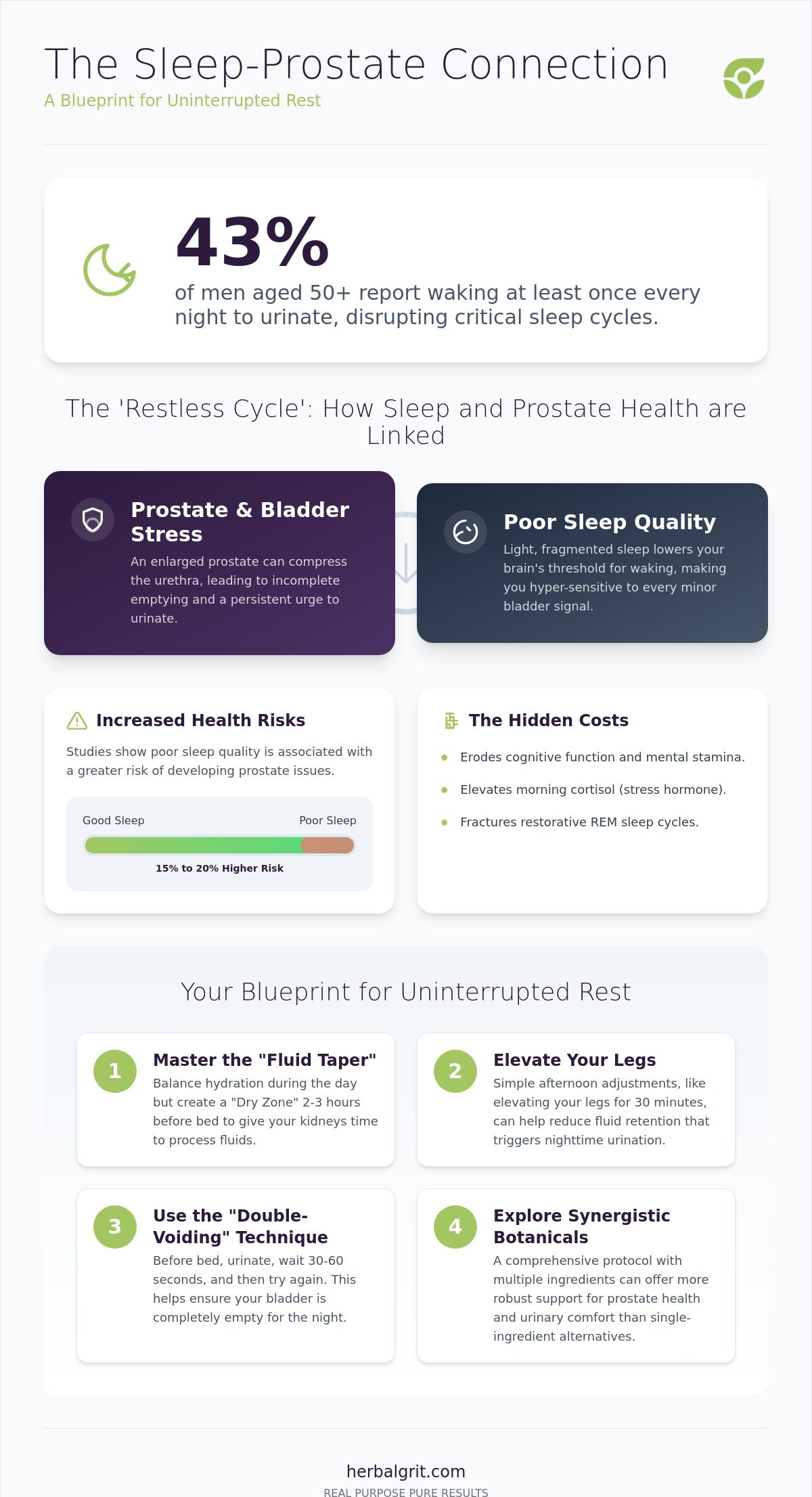
Did you know that as of 2026, over 43% of men aged 50 and older report waking at least once every night to urinate? While many dismiss this as a standard part of aging, the reality is much more complex. There is a profound link between sleep quality and prostate health that often goes ignored in traditional medical settings. When the prostate is stressed, your sleep suffers, but when your sleep is shallow, your body becomes more sensitive to every bladder signal. It’s a cycle that leaves you feeling drained and frustrated by morning.
You deserve to wake up feeling truly restored rather than reaching for a second cup of coffee to mask chronic fatigue. We understand the anxiety that comes with bladder control concerns and the heavy weight of interrupted nights. This guide provides a 2026 blueprint for reclaiming seven or more hours of deep, continuous rest. We will explore the physiological triggers of nocturia and introduce a holistic protocol that bridges the raw power of nature with modern wellness needs. You’ll learn how to use behavioral adjustments and gentle botanical support to help you finally stay in bed until the sun rises.
Key Takeaways
- Understand the bidirectional link between sleep quality and prostate health and how light sleep increases your sensitivity to bladder pressure.
- Master the “Fluid Taper” and “Dry Zone” strategies to balance hydration while giving your kidneys time to catch up before bed.
- Discover how simple afternoon adjustments, such as elevating your legs, can reduce the physical triggers of nighttime urination.
- Learn the “Double-Voiding” technique to ensure your bladder is completely empty and ready for a full night of rest.
- Explore why a synergistic botanical protocol offers more comprehensive support for prostate health and urinary comfort than single-ingredient alternatives.
What is Nocturia? Understanding the ‘Restless Cycle’
Clinical definitions often strip away the human experience of health. In the simplest terms, What is Nocturia? refers to the act of waking up more than once per night specifically to urinate. It is a cycle that feels relentless, turning the sanctuary of your bedroom into a place of frustration. By 2026, clinical perspectives have shifted toward a more holistic understanding of this condition. A significant study from the National Cancer Institute (NCI) has highlighted that chronic sleep deprivation may actually influence cellular health within the prostate. Current data suggests that poor sleep quality is associated with a 15% to 20% greater risk of developing prostate issues. This reveals a critical link between sleep quality and prostate health; your rest and your physical vitality are mirror images of one another.
To find a solution, we must first distinguish between two distinct experiences. Nocturnal polyuria involves a high volume of urine production at night, often related to how your kidneys manage fluids. Conversely, nocturnal frequency involves a low volume of urine but a high, persistent urge. Regardless of the volume, every trip to the bathroom resets your sleep architecture. These interruptions fracture your REM cycles, the deep phases of sleep where your brain processes emotion and restores its energy. Without these cycles, you aren’t just tired; you’re operating on a deficit of life force.
The Hidden Cost of Interrupted Sleep
Sleep fragmentation does more than make you groggy. It erodes your cognitive function and mental stamina over time. When you wake up repeatedly, your body fails to complete its restorative processes, leading to elevated cortisol levels the following morning. This stress hormone keeps you in a state of high alert, making it harder to find tranquility during the day. Many men believe that these disruptions are just an inevitable part of getting older. This is a myth that keeps many from exploring the gentle power of nature. Reclaiming your nights often starts with acknowledging that your body deserves better than inevitable decline, often through targeted botanical support.
Is Your Bladder Overactive or Just Sensitive?
It’s vital to understand if you’re dealing with a truly full bladder or a phantom urge. When you’re in a state of light sleep, your brain is hyper-aware of the micturition reflex. This is the neurological signal that triggers the urge to go. In many cases, pelvic floor tension or a sensitive nervous system can mimic the sensation of a full bladder, even when there’s very little urine to release. This sensitivity is a hallmark of the link between sleep quality and prostate health. When you don’t reach the deepest levels of sleep, your threshold for waking is much lower, meaning every minor bladder signal becomes an urgent wake-up call. Understanding this neurological sensitivity is the first step toward a more resilient wellness routine.
The Biological Link Between Sleep Quality and Prostate Health
The connection between your physical body and your nightly rest is more than a simple inconvenience; it’s a biological feedback loop. When we examine the link between sleep quality and prostate health, we see that the prostate gland plays a central role in how the bladder communicates with the brain. As the prostate grows, it can compress the urethra, much like a kink in a garden hose. This physical obstruction makes it difficult for the bladder to empty completely, leading to “residual urine.” This small pool of fluid remains behind, giving you the sensation that you need to go again shortly after you’ve already tried.
This physical pressure is only half of the story. The impact of nocturia on sleep quality is often driven by what we call the “Sleep-Urination Loop.” While most people assume they wake up because their bladder is full, the opposite is often true. If you’re a light sleeper, your brain remains in a state of high alert. In this shallow stage of rest, your nervous system is neurologically more likely to notice even minor bladder pressure. A bladder that is only 20% full can trigger a wake-up signal that a deep sleeper would simply ignore. This creates a cycle where poor sleep increases bladder sensitivity, which then further degrades your sleep quality.
Hormonal shifts also play a quiet but powerful role in this process. Normally, your body produces Antidiuretic Hormone (ADH) at night, which tells your kidneys to slow down and concentrate your urine. As men age, the production of ADH naturally declines. This means your kidneys continue to produce large volumes of dilute urine throughout the night, filling the bladder faster than it did in your younger years. When you combine this with the disruption of circadian rhythms caused by late-night tech use, the problem intensifies. Blue light suppresses melatonin, which is essential for the deep sleep phases where your body naturally manages fluid balance.
Male Urinary Health and the Prostate Connection
The prostate is a resilient gland, yet its position wrapping around the urethra makes it a primary factor in urinary flow. Early signs of prostate-related issues, such as a hesitant start or a weak stream, shouldn’t be ignored as an inevitable part of aging. These are signals from your body that it’s time to provide extra care. Recognizing the signs that your prostate support is working can help you stay committed to a proactive wellness routine that honors your body’s needs.
The Role of Circadian Rhythms in Fluid Management
Your internal clock is a master regulator of health, including how your kidneys function. During restorative sleep, your body is designed to concentrate urine to allow for long stretches of rest. Understanding the link between sleep quality and prostate health requires looking at how these rhythms govern our physical urges. When your internal clock is out of sync, you may experience “nocturnal polyuria,” or excessive nighttime production. High cortisol levels during a 3 AM waking window can make the bladder feel hyper-sensitive, making it difficult to return to tranquility. Supporting your system with restorative botanical solutions can help maintain this delicate natural balance.
Beyond Fluid Restriction: Strategic Behavioral Tweaks
While many common guides suggest simply drinking less water, this approach is often too blunt and can lead to dehydration. It fails to account for the intricate link between sleep quality and prostate health. Instead of total restriction, we advocate for the “Fluid Taper.” Focus on hydrating aggressively during the morning and early afternoon to nourish your system. By 4 PM, begin pulling back significantly. This strategic shift ensures your body has ample time to process and expel fluids while you are still active and upright, rather than forcing your kidneys to work overtime the moment you close your eyes.
Beyond timing, you can train your bladder to become more resilient through daytime habits. Many men fall into the habit of “just in case” urination, which actually shrinks the bladder’s functional capacity over time. During the day, try to wait an extra ten or fifteen minutes after the first urge to go. This gradual retraining increases your comfort level and helps reduce the “phantom” urges that often disrupt the link between sleep quality and prostate health at night. By combining these behavioral shifts, you create a more supportive environment for the deep, restorative rest your body requires.
The Afternoon Leg Elevation Hack
Peripheral edema, or fluid retention in the lower extremities, is a quiet contributor to nighttime waking. Throughout the day, gravity causes fluid to pool in your legs. The moment you lie flat in bed, that fluid returns to your bloodstream and is filtered by your kidneys, filling your bladder just as you’re trying to sleep. To prevent this, adopt the “30-minute elevation rule.” Raise your legs above the level of your heart in the late afternoon. This encourages fluid to move toward the kidneys while you’re still awake. Some men find that wearing compression socks during the day also reduces the total volume of fluid that returns to the bladder at night.
Dietary Adjustments for a Calmer Bladder
Certain dietary choices act as direct irritants to the bladder lining, triggering urgency even when the bladder isn’t full. High salt intake is a primary offender; sodium forces your body to retain water that it must eventually release. Alcohol and caffeine are well-known diuretics, but even “hidden” caffeine in dark chocolate or certain sodas can agitate the system late at night. Spicy foods can also cause temporary inflammation in the pelvic region, worsening the sensation of pressure. If you’re looking for a foundation for long-term relief, learning how to shrink the prostate naturally with diet can help you choose ingredients that support tranquility rather than irritation.
The 2026 Blueprint for Uninterrupted Rest
Creating a blueprint for rest requires more than just willpower; it demands a structured environment that respects your body’s natural rhythms. The “Dry Zone” is a cornerstone of this approach. By establishing a firm window three hours before you intend to sleep where you stop all fluid intake, you give your kidneys the necessary time to filter remaining water. This allows the bladder to be emptied while you’re still awake and active, preventing the midnight surge that often breaks the link between sleep quality and prostate health. It’s a simple boundary that protects the sanctity of your deep sleep stages.
Raising your waking threshold is the final piece of this blueprint. When your nervous system is calm, you’re less likely to be jarred awake by minor physical sensations. Natural calmative agents can provide this gentle buffer, allowing you to drift through light sleep phases without fully waking. To experience the benefits of a deeply restorative night, consider incorporating a targeted botanical protocol for uninterrupted sleep into your evening ritual. This support helps raise the threshold of your waking response, so a half-full bladder doesn’t result in a full wake-up call.
The Double-Voiding Technique
Residual urine is a common challenge for men with prostate concerns. Even when you feel finished, a small amount often remains trapped. The double-voiding technique is a simple, effective way to ensure the bladder is truly empty. You simply urinate once at the start of your evening routine, then wait ten minutes and try again right before getting into bed. During the second attempt, use the “Lean Forward” method. By leaning slightly forward while seated, you change the physical angle of the bladder. This makes it easier for fluid to bypass the prostatic obstruction. This practice is critical for reducing the volume of residual urine that would otherwise trigger a wake-up call at 2 AM.
Optimizing the Sleep Sanctuary
Your bedroom environment should act as a fortress for deep rest. Micro-wakings caused by external noise or temperature shifts are often the catalyst for the urge to pee. When your sleep is shallow, you become hyper-sensitive to bladder signals. Keeping your room at a cool 65°F reduces your metabolic rate and encourages the body to stay in deeper sleep stages. Total darkness is equally vital; it signals the brain to produce melatonin and supports the production of Antidiuretic Hormone (ADH), which we previously identified as essential for concentrating urine overnight. If you’re deciding between different aids to deepen this rest, you might find our comparison of Roman Sleep Support and YU SLEEP helpful for finding the right balance. By addressing these environmental factors, you strengthen the link between sleep quality and prostate health, ensuring your body stays in a state of restorative tranquility.
Nature’s Support: Synergistic Solutions for Nighttime Comfort
Nature provides a rich tapestry of solutions that often surpass the singular focus of modern pharmaceuticals. While many traditional routes rely on isolated chemicals to manage symptoms, a holistic approach looks at the body as a connected ecosystem. For men navigating the challenges of middle age and beyond, a multi-nutrient strategy is far superior to relying on a single ingredient. This is because the link between sleep quality and prostate health is influenced by multiple biological pathways at once, from hormone balance to nervous system sensitivity. By using a blend of raw, botanical extracts, you can support your body’s natural resilience without the harshness of synthetic interventions.
The synergy of traditional plants works to soothe the physical triggers of nocturia while simultaneously calming the mind. This dual action is essential for breaking the cycle of restless nights. When you nourish the prostate and the nervous system together, you address both the physical urge and the neurological sensitivity that keeps you awake. This approach moves beyond the “inevitable aging” narrative and offers a path toward authentic, long-term vitality.
ProstaVive: The Foundation of Male Urinary Flow
The health of the prostate tissue is the cornerstone of a quiet night. When this gland is supported by the right nutrients, it maintains a healthy size that doesn’t impede the natural flow of the urethra. Ingredients like Saw Palmetto and Pumpkin Seed Oil have been used for generations to promote comfort and reduce the urgency that leads to midnight waking. ProstaVive utilizes these traditional elements to help you achieve a more predictable and steady stream. ProstaVive is a powerhouse prostate formula designed for long-term physiological support. By addressing the physical state of the prostate, you remove the primary obstacle to a restful, uninterrupted night.
YU SLEEP: Raising the Waking Threshold
Even with a calm prostate, a sensitive nervous system can still pull you out of your dreams. This is where the second half of the dual-track approach becomes vital. YU SLEEP is crafted to help you reach and remain in the deepest stages of rest. These phases are critical because they act as a natural shield against external and internal stimuli. When you are in a state of profound tranquility, your brain’s awareness of the bladder is significantly reduced. This synergy between a calm mind and a supported prostate is the ultimate defense against the midnight bathroom trip. Deep sleep doesn’t just help you feel better tomorrow; it actively protects the link between sleep quality and prostate health by raising your waking threshold so you can finally stay in bed until the sun rises.
Step Into a Future of Restored Vitality
Reclaiming your nights isn’t about accepting a decline; it’s about honoring your body’s need for deep, restorative rest. By mastering the “Dry Zone” and adopting the double-voiding technique, you’ve already taken the first steps toward silence in the midnight hours. This guide has shown that the link between sleep quality and prostate health is a powerful tool for wellness. When you address both the physical state of the prostate and the sensitivity of your nervous system, you break the cycle of exhaustion and frustration.
Our nature-positive, high-performance wellness approach provides targeted support for men over 50 through proprietary botanical formulas. You don’t have to navigate this journey alone. You can reclaim your night with the ProstaVive and YU SLEEP protocol today. These solutions bridge the raw power of the environment with the modern need for tranquility and resilience. Trust in the steadiness of a disciplined routine and the softness of natural elements. A life of seven hours of continuous sleep is within your reach, and we’re here to guide you back to the deep rest you deserve.
Frequently Asked Questions
Is it normal to pee once a night after age 50?
Waking up once during the night to urinate is considered quite common after age 50. In a 2026 study, 43.6% of men in this age group reported waking once per night. While common, it’s still worth monitoring the link between sleep quality and prostate health to ensure these interruptions don’t escalate into more frequent disruptions that leave you feeling exhausted by morning.
Can an enlarged prostate cause frequent urination at night?
An enlarged prostate is a primary cause of frequent nighttime urination, also known as nocturia. As the gland grows, it can compress the urethra and prevent the bladder from emptying fully. This leaves behind residual urine, which means your bladder reaches capacity much faster. This physical obstruction forces you to wake up and find relief multiple times throughout your rest.
How much water should I drink before bed to avoid nocturia?
You should aim to stop drinking all fluids roughly three hours before your intended bedtime. This “Dry Zone” allows your kidneys to process existing fluids while you are still awake and active. While staying hydrated is essential for overall wellness, front-loading your water intake in the morning ensures your system is nourished without overtaxing your bladder during your restorative sleep hours.
Does caffeine affect nighttime bathroom trips even if I drink it in the morning?
Caffeine can indeed impact your bladder even if you consume it early in the day. It acts as a direct irritant to the bladder lining and can increase overall urgency. For some men, the stimulant effect lingers in the nervous system, which degrades the link between sleep quality and prostate health by keeping them in a shallower, more wakeful stage of sleep.
What are the best natural remedies for nighttime urination?
The most effective natural approaches combine botanical support with strategic behavioral changes. Extracts like Saw Palmetto and Pumpkin Seed Oil are traditionally used to support healthy prostate tissue and flow. When paired with habits like afternoon leg elevation and double-voiding before bed, these natural solutions provide a grounded foundation for more continuous, restorative sleep without the need for harsh interventions.
When should I see a doctor about frequent nighttime urination?
You should consider consulting a professional if you are waking two or more times per night or if your sleep quality is significantly declining. It’s also important to seek guidance if you notice a weak stream or difficulty starting. Tools like the International Prostate Symptom Score (IPSS) can help you track these changes and determine if your symptoms require a more structured management plan.
Can stress or anxiety make me pee more at night?
Stress and anxiety have a direct impact on urinary frequency. When your nervous system is in a “high alert” state, your brain becomes much more sensitive to signals from the bladder. This mental tension can also lead to pelvic floor tightness, which mimics the urge to urinate even when your bladder isn’t physically full, leading to unnecessary wake-up calls.
How do I fall back asleep quickly after a bathroom trip?
To return to sleep quickly, keep your bathroom trip as dark and quiet as possible. Avoid turning on bright overhead lights, as blue light suppresses melatonin production and wakes up your brain. Move slowly and unhurriedly; this helps your heart rate stay low and signals to your body that it is safe to return to a state of deep tranquility and rest.