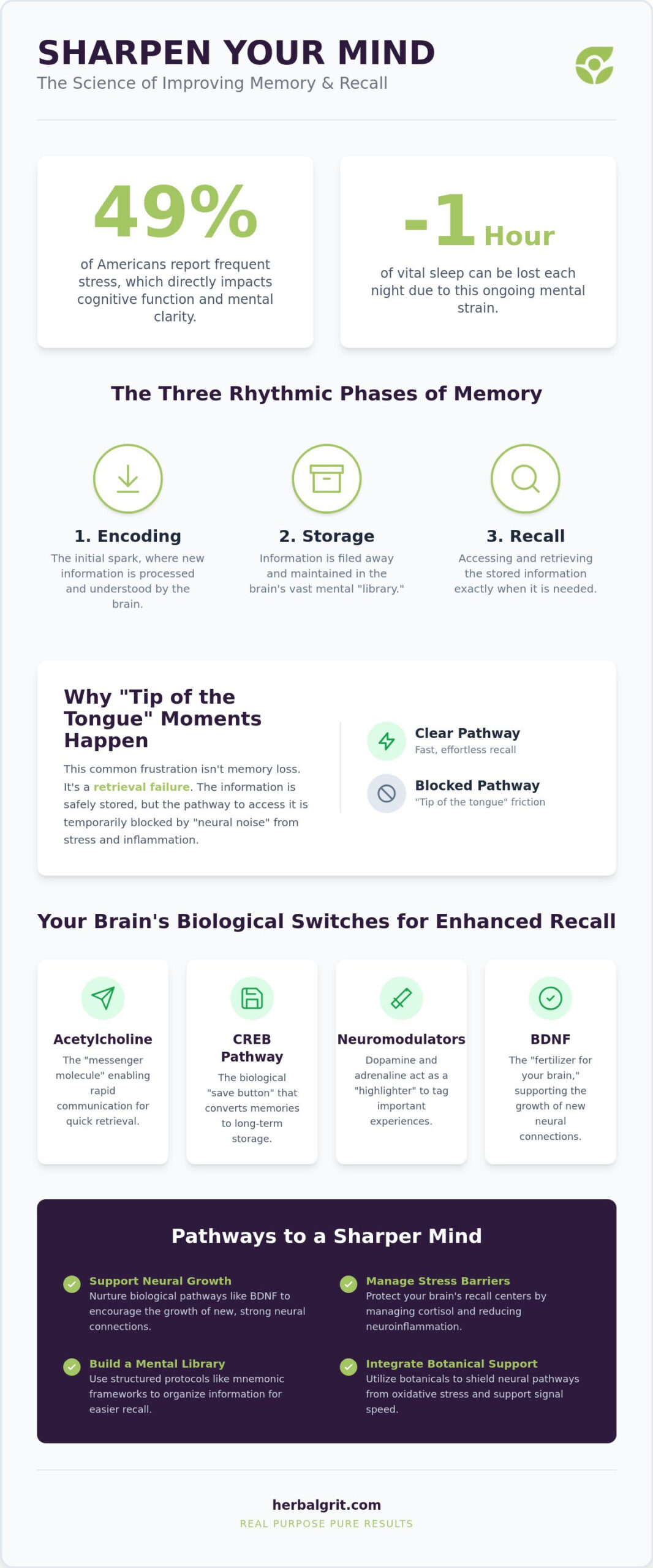
Did you know that 49% of Americans reported frequent stress in 2026, often losing an hour of vital sleep every single night? This mental strain makes it difficult to stay sharp, leading many to search for how to improve memory and recall as they navigate the frustration of “tip of the tongue” moments. It’s natural to feel overwhelmed by conflicting advice, but your journey to mental clarity shouldn’t feel like a struggle against your own biology.
We understand that you’re looking for more than just a quick fix; you’re seeking a sustainable way to protect your long-term cognitive health. You’ll discover the science-backed intersection of biological support, neural activation, and lifestyle protocols to sharpen your mental edge. We will explore how to achieve faster information retrieval and sustained mental stamina through a grounded, holistic approach that honors both modern research and botanical wisdom.
Key Takeaways
- Distinguish between information encoding and retrieval to understand why “tip of the tongue” moments occur and how to fix them.
- Discover how to improve memory and recall by supporting the growth of new neural connections through biological pathways like BDNF.
- Protect your cognitive stamina by identifying the metabolic and stress barriers, such as cortisol, that can physically impact the brain’s recall centers.
- Master modern protocols including sound frequency alignment and mnemonic frameworks to build a structured, reliable mental library.
- Learn to integrate restorative botanical solutions that shield your neural pathways from oxidative stress and support faster signal transmission.
Understanding the Mechanics of Memory and Recall
To find true cognitive harmony, we must first understand the delicate architecture of the mind. Memory is not a single, static event. It’s a rhythmic process consisting of three distinct phases: encoding, storage, and recall. Encoding is the initial spark, much like planting a seed in fertile soil. Storage is the quiet period of growth where the brain files that information away for future use. Finally, recall is the harvest, the act of retrieving that data when you need it most. When people ask how to improve memory and recall, they’re often seeking ways to make this retrieval process more fluid and reliable.
The “tip of the tongue” phenomenon is a common source of anxiety, yet it’s rarely a sign that you’ve lost the information. Instead, this is typically a retrieval failure. The data is safely stored in your mental library, but the path to reach it has become temporarily blocked. This biological friction can be frustrating, but understanding the Mechanics of Memory and Recall helps us realize that the information is still there; we simply need to clear the neural pathways to reach it. Learning how to improve memory and recall involves nurturing these pathways to ensure they remain open and accessible.
The hippocampus acts as your brain’s dedicated librarian. It carefully sorts through daily sensory inputs and decides which details are fleeting and which should be moved into long term storage. As we age, it’s natural for the “librarian” to take a few moments longer to find a specific file. These minor delays are quite different from clinical cognitive impairment. While clinical issues involve a fundamental breakdown in the brain’s ability to store or process data, age related recall delays are often just a byproduct of a life rich with experiences and a very full mental library.
The Three Stages of Memory Formation
Your mind processes the world through layers of depth. Sensory memory is the most fleeting, capturing a snapshot of a bird’s song or the scent of rain for just a few seconds. Working memory serves as your daily workbench, allowing you to hold onto a new acquaintance’s name long enough to finish a conversation. Long term memory is the enduring architecture of your life story, where neural pathways have been strengthened over time to create a permanent record of your most cherished moments and essential skills.
Why Recall Slows Down: The Biological Friction
Modern life often introduces “neural noise” that interferes with our natural cognitive rhythm. Chronic stress and neuro inflammation can act like a thick fog, slowing down the electrical signals between neurons. This friction makes it harder for the brain to locate specific data points quickly. To maintain mental agility, we must focus on synaptic plasticity, which is the brain’s inherent ability to reorganize itself and build new connections. By reducing inflammation and supporting the brain’s natural resilience, we can ensure that our mental signals travel with the speed and clarity nature intended.
The Biological Switches for Enhanced Recall
Behind every clear thought and sharp memory lies a complex network of biological switches. While the mechanics of storage and retrieval provide the structure, these chemical messengers and growth factors provide the vitality. Learning how to improve memory and recall is about more than just mental tricks; it’s about flipping these biological switches to ensure your neural environment is primed for success. When we support our brain’s natural chemistry, we move from fighting against mental fog to flowing with cognitive ease.
Acetylcholine serves as your brain’s primary “messenger molecule” for rapid retrieval. Without enough of this vital neurotransmitter, even the most well-stored memories can feel out of reach. Similarly, the CREB pathway acts as a biological “save button.” It’s the mechanism that tells your brain to move information from the temporary workbench of working memory into the permanent architecture of long-term storage. By understanding these pathways, we can better appreciate how lifestyle choices for memory improvement, such as sleep and nutrition, directly influence our ability to retain what we learn.
Memories are also tagged for importance through neuromodulation. When you experience something exciting or vital, your brain releases dopamine and adrenaline. These chemicals act like a digital “highlighter,” marking specific data as important enough to keep. This is why you can remember a vivid sunset from years ago but forget what you ate for lunch yesterday. Your brain is designed to prioritize what matters, and by consciously engaging your focus, you can harness this tagging system to improve your daily retention.
BDNF: The Fertiliser for Your Brain
Brain-Derived Neurotrophic Factor, or BDNF, is often described as a natural fertiliser for the mind. It plays a critical role in growing new neural connections and preventing synaptic pruning, which is the brain’s tendency to “delete” unused pathways. You can trigger BDNF production through specific movement patterns; even 12 minutes of focused neural activation, such as a brisk walk or a complex balance exercise, can significantly boost your learning capacity. This surge in BDNF helps your brain remain plastic and resilient, regardless of age.
Synaptic Remodelling and Retrieval Speed
Think of your neural pathways as a series of roads. Frequent use and proper biological support turn these into high-speed neural highways, while neglected memories remain as faint dirt paths. A key part of this process is myelination, where a protective sheath insulates your brain signals to ensure they travel with lightning speed. To keep these highways efficient, variety is essential. Instead of repeating the same crossword puzzles daily, challenge your mind with new skills or languages to encourage robust synaptic remodelling.
For those seeking to nurture these internal pathways, a balanced approach often includes targeted nutrients that support the brain’s delicate ecosystem. Solutions like Synaptigen are designed to complement your wellness routine by providing the foundational support your neurons need for clarity and focus. By combining these natural solutions with intentional lifestyle habits, you create a steady rhythm of cognitive health that lasts a lifetime.
Metabolic and Stress Barriers to Mental Clarity
Stress isn’t just an emotional burden; it’s a physiological state that can physically reshape your brain. When you’re constantly under pressure, your body releases cortisol. In high doses, this hormone acts like a corrosive agent in the hippocampus, the very region responsible for forming new memories. Research from 2025 and 2026 shows that 49% of Americans report feeling frequent stress, which directly impacts their search for how to improve memory and recall. High cortisol levels don’t just distract you; they physically block the neural pathways used for retrieval, making it feel as though your thoughts are locked behind a heavy door.
Beyond the stress response, your metabolic health dictates the speed at which your neurons fire. Most people rely on glucose for brain fuel, but the resulting spikes and crashes often lead to “afternoon brain fog.” This happens because insulin resistance can slow down the communication between your brain cells. Your brain thrives on stable energy. Additionally, the gut-brain axis plays a massive role in your mental stamina. A balanced microbiome supports the production of neurotransmitters that keep you focused and resilient throughout the workday.
Cortisol and Short-Term Memory Loss
Chronic stress creates a biological bottleneck that prevents the brain from accessing stored data. While your memories remain intact, cortisol inhibits the hippocampus from sending those signals to your conscious mind. You can find more detail on how stress causes short-term memory loss and explore practical ways to break this cycle. Lowering cortisol through deep breathing or time in nature isn’t just about relaxation; it’s a vital step for immediate recall improvement. It clears the “neural noise” so your brain’s librarian can work efficiently again.
Fueling the Brain: Ketones vs. Glucose
The brain is an energy-hungry organ, consuming about 20% of your daily calories. While glucose is the most common fuel, many people find that ketones provide a steadier, more resilient energy source that prevents the dreaded midday slump. Maintaining healthy blood pressure is also essential for optimal cerebral circulation, ensuring your brain receives the oxygen and nutrients it requires. Solutions like Bazopril can be a supportive part of a routine focused on cardiovascular and cognitive health. By stabilizing your internal environment, you ensure your neurons have the fuel they need to fire at peak velocity.
We must also respect the brain’s nightly cleaning crew. During deep sleep, the glymphatic system opens up to flush out metabolic waste that accumulates during the day. This process is crucial for long-term brain health and daily clarity. If you struggle to reach those deep restorative stages, a natural support like YU SLEEP can help you align with your body’s natural rhythms. Clearing this metabolic debris every night is one of the most effective ways to ensure your mind remains sharp and ready for the challenges of tomorrow.
Modern Protocols for Sharper Recall and Focus
While understanding the biological foundations of the mind is essential, applying modern protocols allows you to actively orchestrate your cognitive performance. True mental clarity requires more than just avoiding barriers; it involves fine-tuning your brain’s rhythmic frequencies. Many individuals discovering how to improve memory and recall find that traditional study methods often fall short because they ignore the brain’s natural resonance. By aligning your mental state with specific audio frequencies and structured retrieval techniques, you can transform a cluttered mind into a precision instrument.
The Mnemonic Framework, specifically the use of “Memory Palaces,” offers a powerful way to organize complex data. By mentally placing information within a familiar physical space, you leverage the brain’s natural spatial memory to improve retrieval. This technique works best when paired with active recall. Unlike passive review, where you simply re-read notes, active recall forces the brain to pull data from its storage banks. This process strengthens the neural highway and ensures the information is ready for use. Integrating these methods into a daily routine, even for just twelve minutes, provides the structure your mind needs to maintain its edge.
Frequency-Based Memory Activation
Your brain operates on different wave states, with Alpha and Theta waves being particularly crucial for learning and deep recall. Alpha waves bridge the gap between our conscious and subconscious minds, creating a state of relaxed alertness perfect for absorbing new data. Theta waves are often associated with deep intuition and memory consolidation. Using audio-based “brainwave entrainment” can help your mind reach these states more efficiently than willpower alone. Tools like The Brain Song are designed to create this neural harmony, using specific frequencies to align your brainwaves for peak cognitive performance.
Sleep Optimization for Memory Consolidation
The “3 AM wake-up” is a significant enemy of long-term storage. When sleep is fragmented, the brain misses critical REM cycles where consolidation occurs. Statistics from 2026 show that 53% of adults get a good night’s sleep only four nights a week or less, with stress being the primary cause. To protect your recall, you must prioritize an evening routine that prepares the nervous system for rest. This involves lowering your core temperature and clearing mental clutter before your head hits the pillow. For those seeking deeper support, YU SLEEP offers a way to ensure your REM cycles remain uninterrupted, allowing your brain to perform its essential nightly maintenance.
To truly support your journey in how to improve memory and recall, consider the quiet power of restorative rest. A brain-first evening routine should include:
- Dimming the lights 60 minutes before bed to signal your brain it’s time for rest.
- Using a “brain dump” journal to move tomorrow’s worries out of your working memory.
- Keeping your bedroom cool and quiet to support the glymphatic system’s cleaning process.
Integrating Botanical Support and Cognitive Longevity
True cognitive harmony is a lifelong journey. While we have explored the biological switches and metabolic hurdles that define our mental state, the final piece of the puzzle lies in providing your brain with the raw, botanical materials it needs for enduring resilience. Learning how to improve memory and recall is not a one-time event; it is a commitment to nurturing your neural garden. By shielding your neurons from oxidative stress with traditional adaptogens, you protect the delicate structures that allow for clear thought and steady focus.
One of the most vital components of this structural support is the myelin sheath. This protective layer acts as insulation for your brain’s wiring, ensuring that electrical signals travel with the speed and precision intended by nature. When this insulation is supported by targeted nutrients, signal transmission remains rapid, reducing the time it takes to retrieve a name or a complex concept. As you select formulas to support this process, always look for third-party testing. Purity and transparency are the foundations of trust in the world of natural health, ensuring that your supplements are free from the synthetic fillers that can cloud your mental clarity.
Targeted Botanical Solutions for Clarity
Modern apothecary solutions offer a bridge between ancient wisdom and the needs of the 2026 consumer. Formulas like Synaptigen are crafted to support daily focus by providing the brain with a balanced blend of restorative ingredients. For those concerned with the structural integrity of aging neurons, NewEra Protect serves as a steadfast guide, helping to maintain the rugged endurance of your cognitive pathways. You can also explore natural ways to improve blood flow to the brain, ensuring that every cell receives the oxygen and nutrients required for peak performance.
The 2026 Cognitive Longevity Routine
Consistency is the secret to lasting mental stamina. You don’t need hours of training to see results. A simple 15 minute daily habit that combines clean nutrition, frequency-based audio activation, and mindful stress management can create profound shifts in your mental edge. This structured flow allows your mind to stay organized and calm even during the busiest workdays. It’s about treating your memory as a precious asset that requires daily, gentle attention rather than a series of emergency fixes.
When you are looking for how to improve memory and recall through online solutions, stay vigilant. Red flags like “miracle” claims, a lack of verifiable lab reports, or hidden recurring charges often signal scams that prioritize profit over your well-being. Your brain is a resilient organ, capable of renewal and growth at any age. By choosing authentic, nature-positive solutions and maintaining a disciplined wellness routine, you can enjoy the peace of mind that comes with long-term brain health and a sharp, vibrant spirit.
Embrace the Rhythm of a Sharper Mind
Your journey toward cognitive harmony is rooted in the understanding that your brain is a living, breathing landscape capable of renewal. We’ve explored how biological messengers like BDNF act as neural fertilizer and how managing metabolic spikes prevents the fog that slows us down. True mastery of how to improve memory and recall comes from this balance of biological support, steady metabolic health, and intentional lifestyle protocols. By clearing the neural noise and nurturing your mental pathways, you allow your natural brilliance to shine through without the friction of “tip of the tongue” moments.
Protecting your mental edge doesn’t require hours of struggle; it only takes 12 minutes of daily commitment to see lasting change. Our nurturing, nature-positive philosophy is designed to bridge the gap between ancient botanical wisdom and modern neuroscience-backed brainwave activation. If you’re ready to move beyond the frustration of mental fatigue and embrace a future of sustained clarity, take the next step in your wellness routine. Activate your neural pathways with The Brain Song today and discover the tranquility of a mind in perfect alignment. Your brain is resilient, and it’s never too late to begin your path toward lasting cognitive vitality.
Frequently Asked Questions
Can stress cause permanent short-term memory loss?
Stress primarily creates a retrieval blockade rather than causing immediate structural damage. While chronic exposure to cortisol can physically shrink the hippocampus over time, this process is often reversible through restorative lifestyle practices and consistent stress management. By lowering your cortisol levels naturally, you allow your brain to repair neural pathways and regain the clarity you might feel you’ve lost during difficult periods.
What is the fastest way to improve memory recall for a test or presentation?
The most efficient method is practicing active recall rather than passively reading through your notes. By forcing your brain to retrieve information repeatedly, you strengthen the neural pathways for that specific data. Combining this with mnemonic frameworks like Memory Palaces allows you to anchor complex information in familiar spatial environments, making it much easier to find when you’re under pressure.
Are there specific foods that cause brain fog and fatigue?
Diets high in saturated fat and added sugar are known to impair the function of the hippocampus, which is the brain’s primary center for memory. These ingredients often cause rapid glucose spikes followed by crashes, leading to the sluggishness we recognize as brain fog. Transitioning to anti-inflammatory foods and omega-3 fatty acids provides the stable energy your neurons need to fire with precision.
How much sleep do I actually need for my memory to function properly?
The CDC recommends that adults get at least 7 hours of sleep per night to support proper memory consolidation. Unfortunately, an estimated 32.8% of U.S. adults fall short of this goal. Without this restorative time, your brain cannot move short-term memories into long-term storage, which is a critical part of how to improve memory and recall for your daily life.
Is it possible to grow new brain cells after the age of 50?
Yes, your brain remains capable of growth and renewal through a process called neurogenesis. By triggering the production of Brain-Derived Neurotrophic Factor (BDNF) through regular physical activity, you can significantly influence how to improve memory and recall naturally. Even 12 minutes of focused neural activation can help maintain synaptic plasticity as you age, keeping your mind resilient and adaptable.
What is the difference between normal forgetfulness and early signs of memory problems?
Normal forgetfulness is usually a retrieval delay, where your internal librarian takes a moment longer to find a file in a very full library. Early signs of more serious issues often involve a breakdown in the ability to store new information or follow familiar steps in a task. If you’re concerned, the “Fastball” memory test developed in the UK is a recent breakthrough for assessing risk at home.
How do audio frequencies like The Brain Song actually affect the brain?
Audio frequencies work through a process called brainwave entrainment, where your neural activity aligns with the external rhythm of the sound. Specific frequencies help shift your brain into Alpha or Theta states, which are associated with relaxed focus and deep memory consolidation. This method bypasses traditional mental blocks, helping you reach a state of cognitive harmony more easily than through willpower alone.
What ingredients should I avoid in brain supplements for safety?
You should avoid formulas that contain synthetic fillers, artificial colors, or excessive amounts of undisclosed stimulants that can lead to energy crashes. It’s essential to stay away from products that lack clear third-party testing or transparent ingredient labels. Always look for botanical solutions that prioritize purity and sustainability, as these are the hallmarks of a trustworthy wellness partner.