What if the midday haze you’re feeling isn’t a lack of sleep, but a direct response to the ingredients on your plate? Many of us accept mental fatigue as a normal part of a busy life, yet it often stems from specific foods that cause brain fog rather than just a packed schedule. You likely recognize the sensation; your brain feels offline, your focus drifts during important meetings, and your mental energy crashes just when you need it most. It’s a heavy, clouded feeling that pulls you away from the vibrant life you’re meant to lead.
You don’t have to settle for a clouded mind. We’re here to help you reclaim your cognitive harmony through a grounded, nurturing approach to wellness. In this guide, you’ll discover the hidden dietary triggers disrupting your focus and learn how to align your choices with your body’s innate wisdom. We’ll examine the latest 2026 shifts in food safety, including the phase-out of synthetic dyes, and provide a clear list of restorative botanical swaps. By understanding the deep connection between your gut and your brain, you can finally enjoy the consistent clarity you’ve been seeking.
Key Takeaways
- Uncover how modern dietary friction creates neuroinflammation, leaving your mind feeling heavy and disconnected from your daily rhythm.
- Identify the common foods that cause brain fog by triggering blood sugar spikes and the subsequent crashes that cloud your mental landscape.
- Discover the hidden neurotoxins and artificial sweeteners that disrupt your delicate neurotransmitter balance and steal your natural focus.
- Explore the profound link between your digestive health and cognitive clarity to understand how sensitivities impact your mental sharpness.
- Learn a nature-positive protocol to replace processed offenders with nutrient-dense, botanical solutions that restore your inner tranquility.
Understanding the Mental Cloud: Why Certain Foods Trigger Brain Fog
Think of your mind as a clear, tranquil pool. When your system is in harmony, thoughts move through your consciousness with effortless grace. But for many, that clarity has been replaced by a heavy, suffocating sensation often described as mental quicksand. This isn’t just a byproduct of a busy schedule; it’s a physiological response to modern dietary friction. When we consume certain foods that cause brain fog, we’re essentially throwing grit into a finely tuned machine. This article serves as your guide to moving away from that clouded state and toward a life of botanical clarity and peak mental stamina.
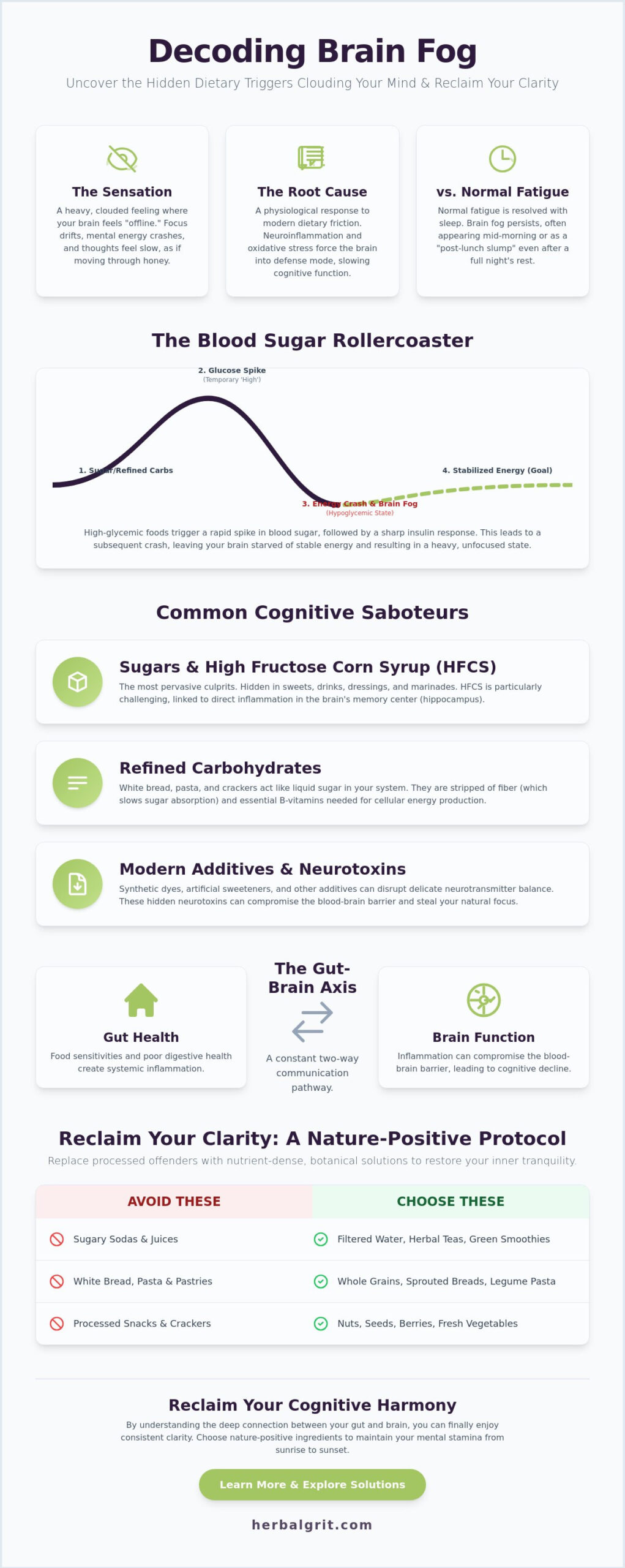
Our ancient biology wasn’t designed to process the synthetic additives and highly refined ingredients found in modern pantries. This mismatch creates a state of neuroinflammation and oxidative stress. Instead of your brain focusing on creative problem-solving or deep concentration, it’s forced to manage a cascade of internal irritants. This friction is the root cause of that “offline” feeling that sleep alone cannot fix.
The Physiology of the ‘Fog’
Neuroinflammation acts as a physical barrier to quick thinking. When the brain’s environment becomes inflamed, the protective microglia cells shift their focus away from maintenance and toward defense. This shift can slow the speed of neuron firing, making it feel like your thoughts are moving through honey. The blood-brain barrier, which should act as a pristine gatekeeper for your mind, can become compromised by systemic inflammation, allowing dietary toxins to disrupt your focus. The emerging science of Nutritional psychiatry validates what many have felt intuitively: our food choices directly dictate our mental weather. Ultimately, brain fog is a metabolic mismatch between the fuel you provide and the function your brain is trying to perform.
Brain Fog vs. Normal Fatigue
It’s vital to distinguish between a simple lack of rest and a true cognitive slump. Normal fatigue usually fades after a restorative night of sleep. However, if you wake up feeling refreshed but find your mind clouding over by mid-morning, you’re likely dealing with food-induced decline. The most common red flag is the post-lunch slump, that predictable crash where words become harder to find and focus feels impossible. Identifying the specific foods that cause brain fog is the first step in reclaiming your day. Understanding how to feel sharper at work requires looking beyond the coffee pot and examining the inflammatory triggers on your lunch plate. By choosing nature-positive ingredients, you can maintain consistent energy from sunrise to sunset.
The Inflammatory Offenders: Sugars and the Blood Sugar Rollercoaster
When we talk about foods that cause brain fog, sugar is often the most pervasive culprit. Your brain is a metabolic powerhouse, requiring a steady, gentle stream of energy to function at its peak. When you consume high-glycemic sugars, you aren’t providing fuel; you’re triggering a biological storm. The initial glucose spike feels like a temporary surge of energy, but it’s quickly followed by a sharp insulin response. This leads to a hypoglycemic crash, leaving your brain starved of the very glucose it just had in excess. This rapid fluctuation is what creates that heavy, unfocused sensation shortly after a meal.
High Fructose Corn Syrup (HFCS) presents an even deeper challenge for cognitive health. Unlike regular sugar, HFCS has been linked to direct inflammation in the hippocampus, the region of your brain responsible for memory and learning. It’s not just the obvious sweets you need to watch. Hidden sugars in savory items like salad dressings, marinades, and even “healthy” grain bowls are often the most deceptive. These additives keep you on a blood sugar rollercoaster without you even realizing you’ve stepped on the ride. If you’ve ever wondered about the specific link between starches and mental clarity, you might find our guide on Brain Fog After Eating Carbs particularly enlightening.
The Refined Carbohydrate Trap
Refined grains like white bread, pasta, and crackers act much like liquid sugar once they enter your system. During processing, these grains are stripped of their outer bran and germ, removing the fiber that slows down sugar absorption. This process also depletes essential B-vitamins, which are the vital cofactors your cells need to produce energy. Without these nutrients, your neurons lack the metabolic support required for sustained focus. You’re left with a temporary spark that quickly fades into a lingering mental haze, making these some of the most common foods that cause brain fog in the modern diet.
Type 3 Diabetes: The Sugar-Brain Connection
Recent research has introduced a compelling theory: chronic brain fog may be a sign of brain insulin resistance, sometimes referred to as Type 3 Diabetes. When insulin levels remain chronically high due to a diet rich in processed sugars, your brain loses its ability to use insulin effectively. This prevents your mind from switching to ketones, a cleaner and more efficient fuel source. Supporting your body’s ability to mimic the effects of the keto diet can help bypass this metabolic gridlock. By encouraging your system to utilize alternative energy sources, you can help restore the natural, vibrant clarity your mind deserves.
Hidden Cognitive Saboteurs: Modern Additives and Neurotoxins
Navigating the modern grocery aisle requires a level of rugged endurance. While we’ve explored the obvious impact of sugar, many foods that cause brain fog hide behind scientific names and deceptive labeling. These additives act as hidden saboteurs, quietly disrupting your cognitive harmony. Among the most concerning are excitotoxins. These substances overstimulate your neurons, causing them to fire uncontrollably until they become exhausted or even damaged. This cellular fatigue manifests as a heavy, persistent mental cloud that prevents you from feeling present in your own life.
Common excitotoxins include Monosodium Glutamate (MSG), hydrolyzed proteins, and autolyzed yeast extract. These are often masked under the vague term “natural flavors” on ingredient lists. Beyond these enhancers, modern emulsifiers like polysorbate 80 are now under significant scrutiny. Research suggests these compounds can increase intestinal permeability, which often precedes a breakdown in the blood-brain barrier’s integrity. When this protective gatekeeper is weakened, toxins that should remain in the bloodstream can enter the brain, leading to immediate cognitive sluggishness.
Artificial Sweeteners and Excitotoxicity
The aspartame debate remains central to understanding chemical-induced fog. When you consume aspartame, it breaks down into phenylalanine and aspartic acid. High levels of phenylalanine can cross into the brain, where they disrupt the production of essential neurotransmitters like dopamine. This is why “diet” versions of your favorite snacks are often more detrimental to your focus than the originals. They trade calories for chemical complexity that your neurons aren’t equipped to handle. For those seeking a restorative path, nature-positive alternatives like Stevia or Monk Fruit provide sweetness without the neurotoxic load. These traditional botanical solutions respect your body’s delicate internal balance.
Neurotoxic Metals and Industrial Oils
Your choice of fats and proteins also dictates your mental weather. Mercury, a heavy metal found in large predatory fish like tuna, can accumulate in brain tissue and cloud your memory over time. Equally disruptive are industrial seed oils, such as soybean and canola oil. These oils are high in linoleic acid, which can trigger significant oxidative stress within your brain cells. This stress damages the delicate membranes of your neurons, making it harder for them to communicate efficiently. Choosing pure, sustainable fat sources like cold-pressed avocado oil or traditional ghee provides the structural support your brain needs for long-term resilience. By avoiding these industrial oils, you remove a major category of foods that cause brain fog and start the journey toward lasting clarity.
The Gut-Brain Axis: How Food Sensitivities Cloud Your Thinking
Your digestive tract is far more than a simple processing center for nutrients. It’s home to the enteric nervous system, a complex network of neurons often called the “second brain.” This internal guide is in constant dialogue with your skull through the Vagus nerve, a primary communication highway that dictates your mental weather. When you consume foods that cause brain fog, you aren’t just irritating your stomach; you’re sending distress signals directly to your mind. This connection is why a troubled gut so often manifests as a clouded consciousness.
A primary driver of this mental haze is the phenomenon of intestinal permeability, or “leaky gut.” When the delicate lining of your digestive tract is compromised, undigested food particles and bacterial toxins escape into the bloodstream. This systemic irritation can eventually lead to a “leaky brain,” where the same inflammatory markers weaken the blood-brain barrier. You can explore this deeper in our 2026 guide on The Surprising Link Between Gut Health and Brain Fog. Reclaiming your focus requires nurturing this internal garden with the same care a modern apothecary would give to their most precious botanicals.
Gluten and the ‘Grain Brain’ Effect
Gluten is a frequent offender in the gut-brain dialogue. When sensitive individuals consume wheat, the body releases zonulin, a protein that regulates the openings between cells in the intestinal lining. Too much zonulin causes these junctions to stay open, triggering the inflammatory cascade that leads to cognitive decline. This isn’t limited to those with Celiac disease; many experience non-celiac gluten sensitivity, where the primary symptom is a heavy, unfocused mind. Wheat proteins can act as exorphins, mimicking the structure of natural neurotransmitters and binding to receptors in the brain to create a lingering mental haze.
The Role of BDNF and Gut Microbes
Your microbiome garden is responsible for producing Brain-Derived Neurotrophic Factor (BDNF), a vital protein that supports the growth and resilience of your neurons. Beneficial bacteria thrive on whole, nature-positive fibers, but they are easily depleted by antibiotics and ultra-processed convenience foods. When these microbes dwindle, your BDNF levels can drop, making it harder for your brain to repair itself and maintain clarity. Some emerging research even suggests how audio supports BDNF, showing that cognitive health is a multi-sensory journey. By removing the foods that cause brain fog and supporting your gut flora, you provide the steadfast foundation your mind needs to flourish. If you’re ready to start restoring your metabolic and cognitive harmony, focusing on gut-brain alignment is a powerful first step.
Reclaiming Clarity: A Nature-Positive Protocol for Cognitive Resilience
Restoring your mental sharpness isn’t a matter of luck; it’s a disciplined wellness routine that bridges the raw power of nature with modern nutritional science. While identifying the foods that cause brain fog is a vital first step, true cognitive resilience requires a proactive rebuilding phase. This nature-positive protocol moves you beyond simple avoidance and toward a state of vibrant, sustainable focus. By following these structured steps, you can transition from mental quicksand to a life of tranquil clarity.
- Step 1: The ‘Modern Apothecary’ Elimination Phase. Begin by removing the primary inflammatory offenders we’ve identified: refined sugars, industrial seed oils, synthetic additives, gluten, and heavy-metal-laden fish. This three-week reset allows your neuroinflammation to subside.
- Step 2: Nutrient-Dense Swaps. Replace processed grit with brain-healthy fats like avocado and extra virgin olive oil. These provide the structural integrity your neurons need to fire with precision.
- Step 3: Neural Pathway Support. Use botanical solutions to sweep away oxidative stress and protect your blood-brain barrier from environmental irritants.
- Step 4: Daily Ritualization. Consistency is your greatest ally. Implementing a daily supplement routine ensures your brain has the physiological support required to withstand the friction of modern life.
The Power of High-Performance Botanicals
In our journey to reclaim focus, we often need more than just a clean plate. High-performance botanicals act as a bridge between your current state and peak cognitive function. We recommend Synaptigen as a foundational tool for this transition. This cutting-edge formula uses pure, sustainably sourced ingredients to clean neural pathways and support the delicate balance of your neurotransmitters. Purity in sourcing isn’t just a preference; it’s the steadfastness required to ensure you aren’t introducing new toxins while trying to heal. These antioxidants provide the gentle strength your mind needs to flourish.
Activating the ‘Brain Song’
Cognitive health is a multi-sensory experience that extends beyond what you eat. Even after you’ve removed the foods that cause brain fog, your mind may remain stuck in a rhythmic rut. Sound frequencies can act as a restorative reset, helping to shift your brain into more productive wave patterns. There is a powerful synergy between a clean, nature-positive diet and The Brain Song protocol. By combining targeted nutritional support with neuroscience-based audio, you nurture your mind from every angle. This holistic approach ensures that your clarity isn’t just a temporary window, but a permanent state of being. Trust your body’s innate wisdom and provide it with the authentic, botanical solutions it deserves.
Embracing a Future of Cognitive Harmony
Reclaiming your mental clarity is a journey of returning to your natural state of focus. We’ve explored how identifying the specific foods that cause brain fog allows you to quiet the internal storm of neuroinflammation. By choosing to align your diet with your ancient biology and nurturing the delicate gut-brain axis, you’re building a foundation for lasting cognitive resilience. It’s about more than just avoidance; it’s about providing your neurons with the high-performance fuel and restorative environment they deserve.
True transformation often requires a multi-sensory approach that extends beyond the kitchen. To support your memory recall and cognitive longevity, you can integrate proprietary, neuroscience-backed audio formulas into your daily wellness routine. This nature-positive method offers a gentle yet steadfast way to enhance your well-being and clear the mental quicksand. Discover how The Brain Song activates your peak mental clarity in 12 minutes and experience the restorative power of sound. You have the strength and the tools to lift the haze and step into a more vibrant, focused future.
Frequently Asked Questions
Can certain foods cause immediate brain fog?
Yes, high-glycemic ingredients can trigger a rapid blood sugar spike followed by a sharp crash within 30 to 60 minutes. This metabolic shift starves the brain of steady energy, leading to a sudden loss of focus. Chemical additives like MSG or certain artificial sweeteners can also cause near-instantaneous neuroinflammation in sensitive individuals, creating a heavy sensation that disrupts your mental flow almost immediately after eating.
How long does food-induced brain fog usually last?
The duration of a mental cloud typically ranges from a few hours to several days depending on the specific trigger. Simple sugar crashes might resolve once your glucose levels stabilize, but inflammatory responses to gluten or dairy can linger much longer as the body works to clear the irritants. In cases of systemic inflammation or gut sensitivity, the mental haze may persist until you provide your system with a period of restorative, clean nutrition.
Is coffee good or bad for brain fog?
Coffee is a complex tool for cognitive health that offers both temporary benefits and long-term risks. While caffeine provides a quick surge of dopamine and focus, it can also mask the symptoms of underlying nutritional deficiencies or poor sleep. Excessive consumption often leads to a cycle of dependency and adrenal fatigue, which ultimately worsens the symptoms associated with common foods that cause brain fog by keeping your nervous system in a state of constant, rugged stress.
What is the #1 food to avoid for mental clarity?
Refined sugar is the primary culprit to remove if you want to achieve consistent mental clarity. It triggers the most significant blood sugar fluctuations and promotes the systemic inflammation that clouds your thinking. By removing high-fructose corn syrup and white sugar from your pantry, you eliminate the most common source of dietary friction, allowing your brain to return to its natural state of tranquil, high-performance harmony.
Can a keto diet help clear brain fog?
A ketogenic approach can be highly effective for clearing mental haze by shifting the brain’s primary fuel source from glucose to ketones. Ketones are a cleaner, more efficient energy source that produces fewer inflammatory byproducts during metabolism. Supporting your body’s transition into this state with nature-positive solutions like BioVanish can help you bypass the metabolic gridlock caused by insulin resistance, leading to a more resilient and focused mind.
Is there a specific ‘brain fog diet’ I should follow?
The MIND diet and anti-inflammatory, plant-based protocols are the most reliable frameworks for long-term cognitive health. These patterns focus on leafy greens, berries, nuts, and healthy fats while strictly limiting ultra-processed convenience items. Aligning your plate with these traditional botanical solutions provides the steadfastness your nervous system requires to maintain peak mental stamina and clarity throughout your busy day without the need for synthetic stimulants.
What happens if I ignore chronic brain fog?
Ignoring persistent mental fatigue can lead to chronic neuroinflammation and an increased risk of long-term cognitive decline. Over time, the oxidative stress caused by poor dietary choices may damage the delicate structures of your neurons and impair your memory recall. Addressing these early warning signs is a vital act of self-care that protects your mind’s resilience and ensures your cognitive longevity as you navigate the challenges of modern life.
Can dehydration feel like food-induced brain fog?
Dehydration frequently mimics the symptoms of food-induced brain fog because your brain is composed of approximately 75% water. Even a small drop in hydration levels can impair your concentration, coordination, and short-term memory. It’s essential to distinguish between a metabolic reaction to specific foods that cause brain fog and simple fluid depletion by ensuring you maintain a steady, intentional intake of pure, filtered water throughout your day.