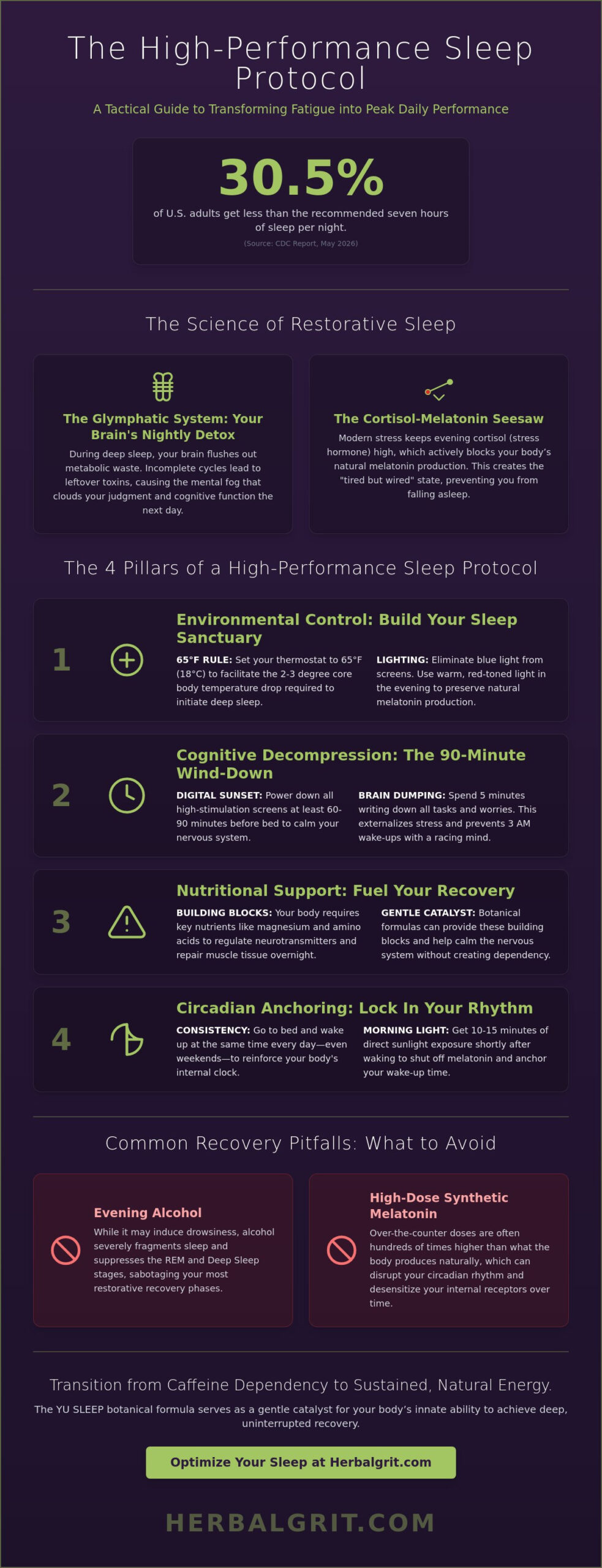
A May 2026 report from the CDC reveals that 30.5% of U.S. adults are now getting less than the recommended seven hours of sleep per night. If you find yourself waking up at 3 AM with a racing mind, you aren’t just tired; you’re part of a growing silent epidemic of exhaustion. Achieving true sleep optimization isn’t about forcing yourself to lie still in the dark. It’s about a tactical recalibration of your nervous system to bridge the gap between your modern schedule and your body’s natural rhythms.
We know how heavy it feels to face high-stakes meetings through a thick layer of brain fog or to feel your heartbeat quicken from a heavy dependency on caffeine. You likely want a sustainable, non-habit-forming way to reclaim your vitality without resorting to synthetic prescriptions. This article shows you how to transform that chronic fatigue into peak daily performance through a grounded, systematic approach. We’ll preview the specific routines and tools, from wearable data to the gentle support of botanical remedies, that help you secure a consistent eight hours of restorative rest.
Key Takeaways
- Understand how the glymphatic system functions as your brain’s nightly detox mechanism to clear mental fog and restore cognitive function.
- Learn to build a high-performance sleep environment and a 90-minute wind-down routine that signals your nervous system to transition into deep rest.
- Discover why a systematic approach to sleep optimization can successfully transition you from caffeine dependency to sustained, natural morning energy.
- Identify common recovery pitfalls, including why high-dose synthetic melatonin and evening alcohol often sabotage your most restorative sleep stages.
- Explore how the YU SLEEP botanical formula serves as a gentle catalyst for the body’s innate ability to achieve deep, uninterrupted recovery.
The Science of Sleep Optimization: Beyond the 8-Hour Myth
True vitality begins where the conscious mind ends. While many people focus on the total hours spent in bed, sleep optimization prioritizes the quality of the physiological processes that happen within those hours. It focuses specifically on maximizing the time spent in Rapid Eye Movement (REM) and Deep Sleep stages. These are the phases where your body repairs tissues and your brain processes the day’s emotions. Understanding The Science of Sleep reveals that rest is a dynamic activity rather than a passive state of being.
During these deep stages, your brain activates the glymphatic system. This is essentially a nightly detox mechanism that flushes out metabolic waste products that accumulate during your waking hours. If you don’t reach these deep levels, these toxins remain; this leads to the familiar fog that clouds your judgment the next morning. Your body’s drive to rest is governed by adenosine, a chemical that builds up in your brain throughout the day. This “sleep pressure” curve dictates how ready you are for recovery, but modern habits often disrupt this natural accumulation.
At Herbalgrit.com, we call the discipline required to protect these cycles “Sleep Grit.” It’s the steadfast commitment to a restorative recovery routine that respects your biological needs. It requires more than just a soft pillow. It demands a tactical approach to your internal environment and the courage to prioritize your health in a fast-paced world.
Why Quantity Does Not Equal Quality
High-performance recovery isn’t a numbers game. Eight hours of fragmented, light sleep often leaves you feeling more exhausted than six hours of uninterrupted, optimized cycles. Sleep fragmentation, often caused by late-night blue light or temperature fluctuations, prevents you from completing the necessary biological repair work. This disruption can impact cognitive longevity over time. Sleep optimization is the strategic alignment of circadian rhythms with metabolic recovery.
The Cortisol-Melatonin Seesaw
Your body operates on a delicate chemical balance. Modern stress often keeps your cortisol levels high well into the evening, which directly blocks the production of natural melatonin. This creates the “tired but wired” phenomenon where your body is exhausted, but your mind refuses to settle. You might feel a surge of nervous energy at 10 PM that prevents you from drifting off. In response, 2026 wellness trends have shifted toward cortisol suppression before midnight. By gently lowering stress hormones through natural rituals, you allow your body’s restorative chemistry to take the lead, ensuring you wake up with genuine clarity rather than a caffeine-induced spark.
The 4 Pillars of a High-Performance Sleep Protocol
Achieving peak sleep optimization requires a holistic framework rather than a handful of disconnected habits. While many sources offer simple tips, a truly restorative routine addresses the physical, cognitive, and nutritional requirements of the body. By treating rest as a tactical discipline, you can transform your bedroom into a high-performance recovery chamber. This protocol rests on four essential pillars: environmental control, cognitive decompression, nutritional support, and circadian anchoring.
Building Your Sleep Sanctuary
Your environment serves as the primary signal to your nervous system that it’s time to downshift. Biological data suggests that our core temperature must drop by approximately two to three degrees to initiate deep sleep. Adopting the “65-Degree Rule”-setting your thermostat to exactly 65 degrees Fahrenheit-facilitates this metabolic shift. Lighting also plays a decisive role. While blue light from screens suppresses melatonin, warm red light preserves the pineal gland’s function. Integrating a ritual like sipping soothing teas for sleeping helps lower your internal thermostat while providing a sensory cue for relaxation.
The 90-Minute Decompression Routine
The transition to rest shouldn’t be abrupt. A 90-minute wind-down period allows your nervous system to lower its “gain” and exit a state of high alert. This begins with a “digital sunset” at least 60 minutes before bed, where all high-stimulation devices are put away. To stop the 3 AM wake-up call caused by racing thoughts, use a “Brain Dumping” technique. Spend five minutes writing down every task, worry, or idea on your mind. This simple act of externalizing stress reduces cognitive load and prevents the midnight cortisol spikes that 30.5% of adults reported struggling with in a May 2026 CDC survey.
The third pillar focuses on a nutritional foundation. Your body requires specific building blocks, such as magnesium and amino acids, to repair tissues and regulate neurotransmitters. While many people turn to heavy sedatives, a more sustainable approach involves using pure, herbal support to encourage the body’s natural rhythms. If you’re seeking a balanced way to support these biological needs, our carefully selected wellness remedies provide a grounded path to recovery without the grogginess of synthetic alternatives.
Finally, circadian anchoring ensures your internal clock remains precise. This involves getting 15 minutes of direct morning sunlight and maintaining a consistent wake time, even on weekends. These habits align with Harvard’s sleep hygiene practices, which emphasize that regularity is the most powerful tool for long-term health. By anchoring your day with light and consistency, you ensure that your sleep pressure curve peaks exactly when you need it to, leading to deeper, more reliable rest.
Case Study: From 4 Hours of Tossing to 8 Hours of Deep Rest
To understand the practical application of these principles, consider the experience of Mark, a 45-year-old technology executive who struggled with what he called “CEO Insomnia.” For over three years, his baseline was 4.5 hours of fragmented rest. He relied heavily on four cups of coffee to navigate his mornings and experienced high levels of daily anxiety. Mark felt trapped in a cycle of exhaustion that no amount of weekend sleep could fix. He decided to commit to a 30-day intervention using the Herbal Grit Sleep Protocol combined with YU SLEEP.
Week 1-2: The Adjustment Phase
The first fourteen days focused on managing a significant sleep debt and recalibrating Mark’s internal clock. By implementing the 90-minute decompression routine discussed earlier, he began to signal his nervous system to downshift. During this phase, Mark noticed a marked increase in dream vividness. This was a clear sign that his brain was finally accessing longer REM cycles. He also reported a reduction in morning grogginess within the first ten days. YU SLEEP played a vital role here; its botanical blend served as a gentle catalyst to smooth the transition into deeper cycles. This period aligns with The Science of Sleep Optimization, which highlights how consistent routines allow the body to repair itself more effectively.
Week 3-4: Achieving Peak Optimization
By the third week, Mark’s circadian rhythm had stabilized. He no longer felt the “tired but wired” surge at 10 PM. Instead, his body followed a natural curve of sleepiness. The long-term benefits became clear as he experienced improved memory enhancement and better emotional regulation during high-pressure board meetings. He wasn’t just sleeping longer; he was sleeping better. By the end of the 30 days, wearable data showed a 35% increase in his Deep Sleep duration. Mark achieved 100% morning alertness, completely eliminating his need for caffeine before noon. This transformation proves that a systematic approach to sleep optimization can reclaim even the most exhausted mind.
Mark’s Optimization Metrics:
- Sleep Latency (Time to fall asleep): Before: 55 minutes | After: 12 minutes
- REM Sleep Percentage: Before: 14% | After: 23%
- Deep Sleep Duration: Before: 42 minutes | After: 78 minutes
- Morning Energy Rating (1-10): Before: 2 | After: 9
Common Pitfalls: Why Most Sleep Strategies Fail
Many well-intentioned efforts at sleep optimization fail because they rely on shortcuts that conflict with human biology. While the market is flooded with quick fixes, these often mask the symptoms of exhaustion without addressing the underlying causes of wakefulness. Understanding these pitfalls is essential for anyone serious about reclaiming their nightly recovery and avoiding the cycle of “tired but wired” energy. Most people unknowingly sabotage their rest through three primary habits:
- The Melatonin Trap: Using high-dose synthetic melatonin (5mg to 10mg) which can desensitize your brain’s natural receptors.
- The Alcohol Illusion: Relying on a “nightcap” that induces sedation but triggers a REM rebound, fragmenting the second half of your night.
- Social Jetlag: Shifting your wake times by more than 60 minutes on weekends, which keeps your circadian rhythm in a state of constant flux.
In 2026, the rise of wearable technology has also introduced “orthosomnia.” This is a condition where the data from your smart ring or watch creates so much anxiety about your “sleep score” that the stress itself prevents you from drifting off. When you prioritize a digital number over how your body actually feels, you lose the intuitive connection to your own wellness.
The Problem with Synthetic Sedatives
It’s vital to recognize that sedation is not the same as physiological sleep. Synthetic sedatives often bypass the brain’s natural transition through light, REM, and deep stages. Without these specific cycles, the glymphatic detox cannot occur, leaving you feeling heavy and unrefreshed the next morning. Choosing natural precursors allows your body to build its own sleep chemistry safely. This approach addresses the #1 objection many people have regarding sleep aids; you’re supporting your biology rather than overriding it with a habit-forming substance. If you’re ready to move away from synthetic traps, explore our sustainable wellness solutions designed to work with your body’s innate wisdom.
Navigating the Caffeine Half-Life
Caffeine is a powerful tool, but its biological persistence is often underestimated. It has a half-life of approximately five to six hours, meaning that a cup of coffee at 2 PM still has significant activity in your brain at 2 AM. Caffeine blocks adenosine receptors without removing the “sleep pressure,” effectively masking your fatigue while your body continues to accumulate the need for rest. To protect your sleep optimization efforts, follow the 12-hour rule: finish your last caffeinated beverage at least 12 hours before your target bedtime. Using herbal alternatives formulated as soothing teas for sleeping in the afternoon helps bridge the gap, ensuring your system is clear of stimulants when it’s time to downshift.
The YU SLEEP Solution: Your Catalyst for Optimization
Reclaiming your rest requires more than just willpower; it requires the right biological support to transition from a state of high alert to deep recovery. While the previous sections outlined the essential environmental and cognitive shifts, YU SLEEP serves as the physiological catalyst that brings these elements together. This liquid formula is specifically designed to support the glymphatic system, ensuring that your brain can effectively perform its nightly detox. By providing the body with carefully selected botanical compounds, it helps bridge the gap between a stressful day and a night of profound, restorative rest.
The March 2026 release of the new YU SLEEP presentation has set a new standard in the wellness industry. It addresses the core neurochemical imbalances that keep 30.5% of adults in a state of chronic exhaustion. Rather than forcing the body into a state of heavy sedation, this formula works in harmony with your natural sleep pressure curve. It encourages the steady accumulation of adenosine and the gentle suppression of evening cortisol, allowing you to drift off without the fear of a midnight wake-up call.
What Makes YU SLEEP Different?
Most sleep aids on the market rely on high-dose synthetic hormones that can disrupt your internal chemistry over time. YU SLEEP takes a different path by focusing on non-habit-forming, nature-derived compounds that promote both relaxation and metabolic repair. This synergy ensures that you aren’t just “unconscious” for eight hours, but truly optimized. The formula’s reputation for excellence is backed by significant consumer trust, reflected in its status as a top-rated choice for 2026 with an industry-leading performance of up to $5 EPC. This data point highlights the consistent results and high satisfaction levels among those who have integrated it into their wellness routines. It’s a premium solution for those who value purity and sustainability in their health journey.
Getting Started with Your Optimization Journey
Integrating YU SLEEP into your nightly ritual is a simple yet powerful act of self-care. For maximum efficacy, take the recommended dosage approximately 30 to 60 minutes before your target bedtime, ideally just as you begin your 90-minute decompression routine. This timing allows the liquid minerals and herbal extracts to enter your system as you dim the lights and step away from digital screens. This practice aligns perfectly with the Herbal Grit philosophy of the “Modern Apothecary,” where we combine the steadfastness of a disciplined routine with the gentle power of nature. You don’t have to settle for “getting by” on caffeine and fragmented rest any longer. Take the first step toward a clearer mind and a more resilient body. Experience the power of YU SLEEP today and discover what it feels like to wake up truly restored.
Step Into a More Restored Version of Yourself
You now have the framework to move beyond the cycle of midnight wake-ups and afternoon brain fog. By prioritizing your glymphatic detox and anchoring your circadian rhythm, you can transform your daily performance. Real rest requires the grit to maintain a disciplined routine and the softness of nature’s most effective botanical support. This holistic approach to sleep optimization ensures that your mind and body have the space they need to heal every single night.
Our proprietary formula for 2026 is built on the Herbal Grit philosophy of natural resilience. It provides VSL-backed high-performance results for those who are ready to leave caffeine dependency behind. You deserve to wake up with genuine mental clarity and a sense of calm authority over your day. Unlock Deep Rest: Discover the YU SLEEP Formula Now and start your journey toward sustainable vitality. Your most restorative night of sleep is well within reach.
Frequently Asked Questions
What is the difference between sleep hygiene and sleep optimization?
Sleep hygiene refers to foundational habits like keeping a dark room, while sleep optimization is the tactical maximization of REM and Deep Sleep quality. While hygiene sets the stage, optimization uses specific protocols to ensure your brain enters the glymphatic detox phase. It’s the difference between merely lying in bed for seven hours and ensuring those hours provide peak restorative recovery for your nervous system.
Can I optimize my sleep if I work the night shift?
You can absolutely optimize your rest as a night shift worker by strictly controlling your internal environment. Use 100% blackout curtains and maintain the “65-Degree Rule” to mimic natural nighttime conditions during the day. By using blue-light blocking glasses during your commute home and anchoring your “morning” with bright light, you can align your metabolic recovery cycles even when your schedule contradicts the sun.
Is YU SLEEP safe to take every night?
YU SLEEP is designed as a non-habit-forming, botanical solution for nightly use. Unlike synthetic sedatives that can override your natural chemistry, this formula supports your body’s innate rhythms through pure, nature-derived compounds. It’s a key part of the Herbal Grit approach to wellness, providing a gentle bridge to rest without the risk of dependency or morning grogginess that 13% of adults report with other sleep aids.
How long does it take to see results from a sleep optimization protocol?
Most individuals notice a reduction in morning grogginess within the first 10 days of a consistent sleep optimization protocol. However, full stabilization of your circadian rhythm typically takes 30 days of disciplined practice. As highlighted in our recent case study, this window allows your body to manage existing sleep debt and recalibrate its internal clock for sustained, high-performance energy and mental clarity.
Why do I still wake up tired after 8 hours of sleep?
Waking up tired after eight hours usually indicates poor sleep quality or fragmentation rather than a lack of duration. If your body doesn’t spend enough time in REM or Deep Sleep, the glymphatic system cannot flush metabolic waste from your brain. This often happens because of late-night cortisol spikes or temperature fluctuations that prevent you from completing the necessary biological repair cycles your body requires.
What are the best natural ingredients for deep sleep optimization?
The most effective ingredients for deep rest include magnesium, specific amino acids, and pure botanical extracts that calm the nervous system. Our YU SLEEP formula uses a proprietary 2026 blend of these nature-derived compounds to support the brain’s detox mechanism. These ingredients work in synergy to lower cortisol and encourage the natural accumulation of adenosine, which is the primary driver of healthy sleep pressure.
Does sleep optimization help with weight loss or metabolic health?
Restorative sleep is a cornerstone of metabolic health and weight management. When you lack deep rest, your body increases the hunger hormone ghrelin and decreases leptin, which signals fullness. Research shows that poor sleep can lead to a 25% increase in caloric cravings the following day. By fixing your sleep cycles, you balance these hormones and support your body’s natural ability to regulate energy and metabolism.
How does blue light actually affect my ability to fall asleep?
Blue light suppresses melatonin production by signaling to your pineal gland that it’s still daytime. This light mimics the short-wavelength energy of the sun, which keeps your cortisol levels elevated and prevents the transition into a restful state. Implementing a digital sunset 60 minutes before bed protects your brain’s natural chemistry, allowing for a significant improvement in sleep latency as your body prepares for recovery. For those looking to further support daytime cognitive performance alongside their sleep routine, Synaptigen is a cutting-edge brain health formula that targets the gut-brain axis with plant-based extracts to help sustain mental clarity throughout the day.