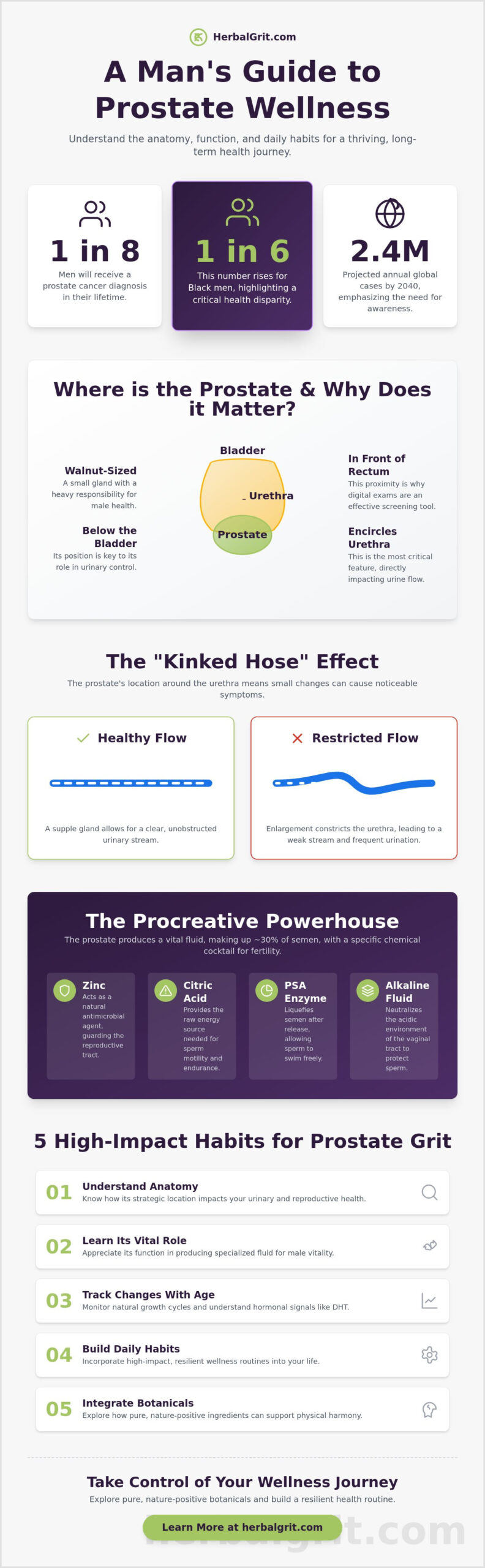
Did you know that 1 in 8 men will receive a prostate cancer diagnosis in their lifetime, a number that rises to 1 in 6 for Black men? By 2040, global cases are projected to reach 2.4 million annually. These figures aren’t meant to cause fear; they highlight why understanding your prostate function is a vital part of a grounded wellness journey. You might already feel the frustration of waking up multiple times a night or the confusion that comes with medical terms like BPH. It’s natural to worry about losing your edge or vitality as you age.
You deserve a clear, jargon-free map to your own anatomy and the natural tools to keep it thriving. We believe that true health requires both the gentle power of nature and the steady discipline of a solid routine. This guide breaks down exactly what the prostate does and provides a roundup of actionable, natural habits to maintain peak wellness through every stage of life. From understanding the latest 2026 screening guidelines to adopting restorative daily practices, you’ll gain the confidence to manage your health with intentionality and grit.
Key Takeaways
- Learn the precise anatomy of the prostate to understand how its strategic location impacts your urinary and reproductive health.
- Discover the essential role of prostatic fluid and how specialized enzymes support healthy prostate function and overall male vitality.
- Understand the natural growth cycles of the gland and why specific hormonal signals like DHT are key to tracking changes as you age.
- Identify five high-impact daily habits that build the “grit” needed for a resilient, long-term wellness routine.
- Explore how integrating pure, nature-positive botanicals can provide a restorative bridge to peak physical harmony.
Table of Contents
-
Understanding Prostate Function: Anatomy, Location, and Purpose
-
The Procreative Powerhouse: How the Prostate Drives Vitality
Understanding Prostate Function: Anatomy, Location, and Purpose
The prostate is a small, walnut-sized gland that carries a heavy responsibility for male health. Found exclusively in the male reproductive system, it sits quietly below the bladder and in front of the rectum. Its main purpose involves the production of a specialized alkaline fluid. This fluid is vital for "procreation harmony" because it nourishes and protects sperm, allowing for successful fertility. Without this contribution, which makes up roughly 30% of the total semen volume, the reproductive process would be nearly impossible. Understanding prostate function starts with appreciating how this tiny organ balances complex biological tasks with quiet efficiency.
The Anatomy of a Vital Gland
The internal structure of the prostate gland is divided into four distinct zones: the peripheral, central, transition, and anterior fibromuscular stroma. Each area has a specific role in your overall wellness. The transition zone, for instance, is the area that typically grows as men age, while the peripheral zone is where most glandular activity occurs. Beyond its glandular tissue, the prostate contains smooth muscle fibers. These muscles act as a natural pump, facilitating the exit of semen during ejaculation. The gland also functions as a biological valve; it closes off the bladder neck during reproductive activity to ensure that urine and semen never travel through the urethra at the same time.
Why Location Matters for Your Comfort
The prostate’s location is its most defining feature, nestled precisely between the bladder and the rectum. It completely encircles the urethra, the tube that carries urine out of the body. You can think of the urethra as a garden hose and the prostate as a hand gripping that hose. When the gland is healthy and supple, the flow is clear and unobstructed. However, if the gland expands or becomes tense, it creates a "kinked hose" effect. This strategic but tight positioning is why even small changes in prostate function lead to noticeable urinary symptoms, such as a weak stream or frequent nighttime trips. Ultimately, the prostate is a muscular-glandular organ essential for both urinary control and reproductive health.
Maintaining this harmony requires a blend of awareness and proactive care. By understanding how the anatomy works, you can better interpret the signals your body sends. This knowledge serves as the foundation for the "grit" needed to maintain a disciplined wellness routine, ensuring that this vital gland remains a source of strength rather than a source of discomfort as the years pass.
The Procreative Powerhouse: How the Prostate Drives Vitality
While many view the prostate through the lens of potential health concerns, its active role in your daily vitality is far more profound. This gland isn’t just a physical landmark; it’s a sophisticated chemical laboratory. Its primary task is the creation of a life-sustaining fluid that serves as a protective medium for sperm. This contribution is essential for reproductive grit and long-term physical harmony. By producing a unique blend of nutrients and enzymes, the prostate ensures that male vitality isn’t just a concept, but a biological reality. Understanding how this fluid supports prostate function is the first step toward a more intentional wellness routine.
The Chemistry of Seminal Fluid
The fluid the prostate secretes is a complex cocktail of zinc, citric acid, and specialized enzymes. Producing this fluid is the prostate’s most important function, as it provides the environment necessary for sperm to thrive. Zinc acts as a natural antimicrobial agent, guarding the reproductive tract against unwanted pathogens. Citric acid serves a different but equally vital purpose; it provides the raw energy needed for sperm motility. Without this energy source, sperm wouldn’t have the strength required for successful fertilization. These secretions ensure sperm survival in an often-challenging environment.
Another key player in this chemical mix is Prostate-Specific Antigen, commonly known as PSA. While often discussed in the context of medical screenings, its natural role is purely functional. PSA is an enzyme that liquefies semen after it’s released, allowing sperm to swim freely toward their destination. Additionally, the alkaline nature of prostatic secretions is crucial. Because the vaginal tract is naturally acidic, the prostate’s alkaline fluid acts as a buffer. This neutralization is a perfect example of nature’s intentionality, creating a safe passage for life to continue. Supporting this intricate system with carefully selected natural remedies ensures your reproductive health remains balanced and resilient.
Muscular Control and Urinary Flow
The prostate isn’t just about chemistry; it’s also about mechanical precision. It contains involuntary muscle fibers that remain tightly closed most of the time to keep urine safely stored in the bladder. During ejaculation, these muscles coordinate a rapid "switch." They block the entrance to the bladder while pushing seminal fluid into the urethra. This requires a high degree of neuromuscular harmony. Healthy muscle tone within the gland supports overall pelvic floor strength, which is a cornerstone of male wellness. When prostate function is at its peak, this transition happens seamlessly, reflecting a body in a state of restorative balance. Maintaining this strength through disciplined habits is the best way to preserve your vitality through every stage of life.
Age and Evolution: Tracking Changes in Prostate Function
Your prostate doesn’t remain static throughout your life. It undergoes two primary growth spurts that define its evolution. The first occurs during the surge of puberty, while the second begins around age 25 and continues for most of your adult years. This second phase is heavily influenced by dihydrotestosterone (DHT). DHT is a potent hormone that signals cells within the gland to multiply. While this growth is a natural biological process, monitoring your prostate function becomes increasingly important as you move through your 40s. Understanding these transitions helps you maintain a sense of calm authority over your long-term wellness.
Understanding Benign Prostatic Hyperplasia (BPH)
Benign Prostatic Hyperplasia, or BPH, is the non-cancerous enlargement that results from this lifelong growth. It’s a journey many men share; data shows that 50% of men experience BPH symptoms by age 60, a figure that climbs to 90% by age 85. While it’s not a disease, it can certainly impact your daily comfort. You might notice a weaker stream or the feeling that your bladder isn’t quite empty. Distinguishing between normal shifts and clinical needs is part of the grit required for proactive health. Consider these signs for your baseline:
-
A weak or interrupted urinary stream.
-
Waking up more than twice a night to use the bathroom.
-
Difficulty starting the flow or significant hesitancy.
-
A persistent feeling of an incomplete bladder empty.
The Impact of Lifestyle on Glandular Aging
Glandular aging isn’t dictated solely by the calendar. Your metabolic health plays a massive role in how prostate function evolves. Research indicates that insulin resistance and systemic inflammation can act as fuel, accelerating cell growth within the gland. There’s also a deep connection between your cardiovascular system and your prostate. Because the gland relies on healthy blood flow, heart-healthy habits directly support a resilient prostate. Seeing aging as a dynamic process rather than an inevitable decline allows you to use pure, nature-positive solutions to bridge the gap between your current health and your long-term vitality. Supporting your metabolic health through approaches like BioVanish, which mimics the metabolic benefits of a ketogenic diet, can be a practical step toward reducing the insulin resistance that accelerates glandular aging. By focusing on restorative habits today, you prepare your body for a vibrant tomorrow.
A Roundup of 5 Daily Habits for Healthy Prostate Function
Maintaining peak prostate function isn’t about one-time fixes; it’s about the steady grit of daily habits. While medical advancements like the 2025 FDA clearance of the Hugo robotic-assisted surgery system provide new options for clinical care, your daily choices form the foundation of long-term wellness. We’ve curated five foundational habits that serve as a bridge between the raw power of nature and your modern lifestyle. These steps are designed to harmonize your body, reduce nighttime disturbances, and ensure you remain the master of your own vitality.
Nutrition: The Prostate-Friendly Plate
Your kitchen is your primary apothecary. To support your gland at a cellular level, focus on these three nutritional pillars:
-
Lycopene-Rich Foods: Cooked tomatoes, watermelon, and pink grapefruit are packed with lycopene. This antioxidant is more bioavailable when heated with a healthy fat, providing a protective shield for prostate cells.
-
Cruciferous Power: Vegetables like broccoli, kale, and Brussels sprouts contain sulforaphane. This compound helps your body metabolize hormones efficiently, preventing the metabolic "sludge" that can lead to discomfort.
-
Omega-3 Fatty Acids: Pure sources of Omega-3s, such as walnuts or fatty fish, help maintain a healthy inflammatory balance. Since systemic inflammation can accelerate glandular growth, these fats are essential for a restorative diet.
Movement and Hydration Strategy
Physical habits often dictate how well your internal systems communicate. Sedentary behavior is a silent enemy of male health; sitting for more than six hours a day can lead to pelvic congestion and weakened circulation. To counter this, prioritize short, frequent walks to keep blood flowing to the pelvic region. Additionally, practicing pelvic floor exercises, or Kegels for men, maintains the muscular support needed for both urinary control and reproductive strength. These exercises take only a few minutes but provide the "grit" your body needs to stay resilient.
Your hydration rhythm is just as critical as the volume you drink. Many men struggle with nighttime urinary support challenges, waking up multiple times at night, which disrupts the deep sleep cycles necessary for repair. Try "front-loading" your water intake by consuming 70% of your daily fluids before 4 PM. This simple shift allows your bladder to rest overnight. By pairing these disciplined routines with carefully selected natural remedies, you create a sustainable path to wellness. Remember, with approximately 333,830 new prostate cases expected in 2026, taking these small, daily actions is a powerful way to advocate for your own longevity and peace of mind.
The Herbal Grit Approach: Natural Foundations for Wellness
Nature provides a vast library of restorative solutions for those willing to look beyond synthetic shortcuts. At Herbalgrit.com, we believe in using "carefully selected" botanicals to harmonize male physiology. This approach isn’t about quick fixes; it’s about supporting prostate function through a synergy of ancient wisdom and modern purity. By integrating these pure ingredients into your life, you build a foundation that lasts for decades. Supplements like ProstaVive fit seamlessly into this holistic daily routine, providing a concentrated blend of nature’s best support to help you maintain your edge. True vitality requires both the softness of herbs and the steadfastness of a disciplined wellness routine.
Botanical Allies for the Prostate
For centuries, men have turned to the earth to find relief and balance. Saw Palmetto and Beta-sitosterol are two of the most studied botanical allies for supporting healthy urinary flow. These natural remedies provide a gentle alternative to harsher interventions, working with your body’s chemistry rather than against it. When you choose an herbal formula, the source matters. We prioritize purity and sustainability because the health of the planet and the health of the individual are inextricably linked. These plant-based solutions help manage the hormonal signals that lead to glandular growth, ensuring your body remains in a state of restorative harmony.
Integrating Mind and Body
Modern life often places the body in a state of constant "high alert," which can lead to physical tension in the pelvic floor. This stress doesn’t just affect your mood; it can directly impact prostate function by restricting blood flow and increasing inflammation. Achieving mental clarity is just as important as physical exercise. Just as memory enhancement and cognitive health rely on a balanced inflammatory response, so does your prostate. When your mind is calm, your body follows suit.
Restorative rest is the final piece of the puzzle. Deep sleep, supported by solutions like YU SLEEP, is the primary time when your body repairs glandular tissue and rebalances testosterone levels. Without quality rest, even the best nutrition can only do so much. If frequent nighttime bathroom trips are disrupting your sleep cycles, exploring natural nighttime urinary support strategies can help you reclaim the deep, restorative rest your body needs for glandular repair. By treating your health as an interconnected system, you move away from fear and toward confidence. We invite you to explore our curated prostate support offers for 2026 and begin building the resilient lifestyle you deserve. The journey to long-term wellness is a marathon, and with the right tools, you’ll have the grit to finish strong.
Your Path to Sustained Male Vitality
You now have a comprehensive map to navigate your anatomy and the daily habits needed to maintain peak prostate function. From the strategic location of the gland to the intricate chemistry of seminal fluid, every biological detail underscores nature’s intentionality. By tracking hormonal shifts and adopting the "roundup" of nutrition and movement, you’re no longer guessing about your health. You’re leading it with the grit and clarity required for long-term physical harmony. It’s about finding that perfect balance between the softness of restorative herbs and the steadfastness of a disciplined routine.
Our wellness experts have curated potent natural alternatives designed for deep physiological support. These formulas focus on purity and resilience, ensuring you stay active, focused, and well-rested throughout the night. With high customer satisfaction across our VSL-driven offers, we invite you to Discover ProstaVive: The Powerhouse Formula for Prostate Support. Embrace the restorative power of botanicals today and step into a future of balanced wellness. Your health is a journey worth every intentional step, and the power to thrive is already within your reach. ProstaVive
Frequently Asked Questions
What are the first signs that my prostate function is changing?
The earliest signs usually involve subtle shifts in your urinary habits, such as a weaker stream or difficulty starting the flow. You might also find yourself waking up more than twice a night to use the bathroom. These changes often indicate that the gland is beginning its natural second growth phase, which can gently press against the urethra and affect your daily comfort.
Can diet really improve my prostate health?
Specific nutrients like lycopene and sulforaphane play a massive role in protecting glandular cells from oxidative stress. Incorporating cooked tomatoes and cruciferous vegetables into your meals provides the raw materials your body needs for hormonal balance. A diet rich in these plant-based compounds supports a healthy inflammatory response, which is a cornerstone of long-term male vitality.
Is an enlarged prostate always a sign of cancer?
An enlarged prostate is most often a sign of Benign Prostatic Hyperplasia (BPH), which is a non-cancerous condition. Statistics show that 50% of men in their 60s experience BPH symptoms as a natural part of aging. While it isn’t cancer, it still requires a disciplined wellness routine to manage symptoms and ensure your pelvic health remains in harmony.
How much water should I drink for optimal prostate function?
Aim for approximately 2 to 3 liters of water daily to keep your system flushed and hydrated. To support peak prostate function without disrupting your sleep, try front-loading your intake by drinking 70% of your fluids before 4 PM. This strategy ensures your kidneys and bladder aren’t overworked during the night, allowing for deeper, more restorative rest.
Can stress affect how my prostate works?
Chronic stress often leads to subconscious tension in the pelvic floor muscles, which can restrict blood flow to the gland. This tension sometimes mimics or worsens the symptoms of urinary hesitancy. By integrating relaxation techniques and mental clarity practices, you can ease this physical tightness and restore a sense of calm authority over your body’s internal rhythms.
Are there specific herbs that support prostate health?
Saw Palmetto and Beta-sitosterol are two of the most trusted botanical allies for maintaining a resilient prostate. These carefully selected herbs help manage the enzymatic pathways that trigger glandular growth. When paired with a nature-positive lifestyle, these remedies offer a gentle way to support your body’s natural defenses and maintain a steady, healthy flow.
What happens if I ignore changes in my urinary flow?
Neglecting early warning signs can lead to more significant bladder discomfort or even kidney strain as the years pass. Early awareness allows you to implement natural interventions, like pelvic floor exercises and nutritional shifts, before symptoms become intrusive. Taking action today provides the grit needed to avoid more aggressive medical procedures in the future.
Is it possible to maintain a healthy prostate well into my 70s?
It’s entirely possible to maintain excellent prostate function throughout your 70s and 80s by sticking to a steadfast wellness routine. Consistency in your physical movement, pure nutrition, and herbal support creates a foundation for lasting strength. Men who prioritize these restorative habits often enjoy high levels of vitality and reproductive health deep into their senior years.