An estimated 50 million adults in the United States currently struggle with nocturia, yet many still believe it’s just an inevitable part of aging. According to a 2026 meta-analysis in the World Journal of Men’s Health, frequent nighttime bathroom trips are linked to an increased risk of mortality, making this more than just a minor sleep issue. You likely know the heavy frustration of staring at the ceiling at 3 a.m., followed by the thick brain fog that clouds your entire next day. It’s exhausting to feel like your bladder is in control of your life instead of your own natural rhythm.
Finding reliable nighttime urinary support is a dual-track mission that requires both mechanical timing and deep botanical nourishment. You can stop the cycle of interrupted REM sleep and finally reclaim 6 to 8 hours of consistent, restorative rest. This guide shows you how to optimize your fluid intake, establish calming evening rituals, and use pure ingredients like beta-sitosterol to support your system. We’ll bridge the gap between ancient herbal wisdom and modern wellness to help you regain the sharp morning mental clarity you deserve.
Key Takeaways
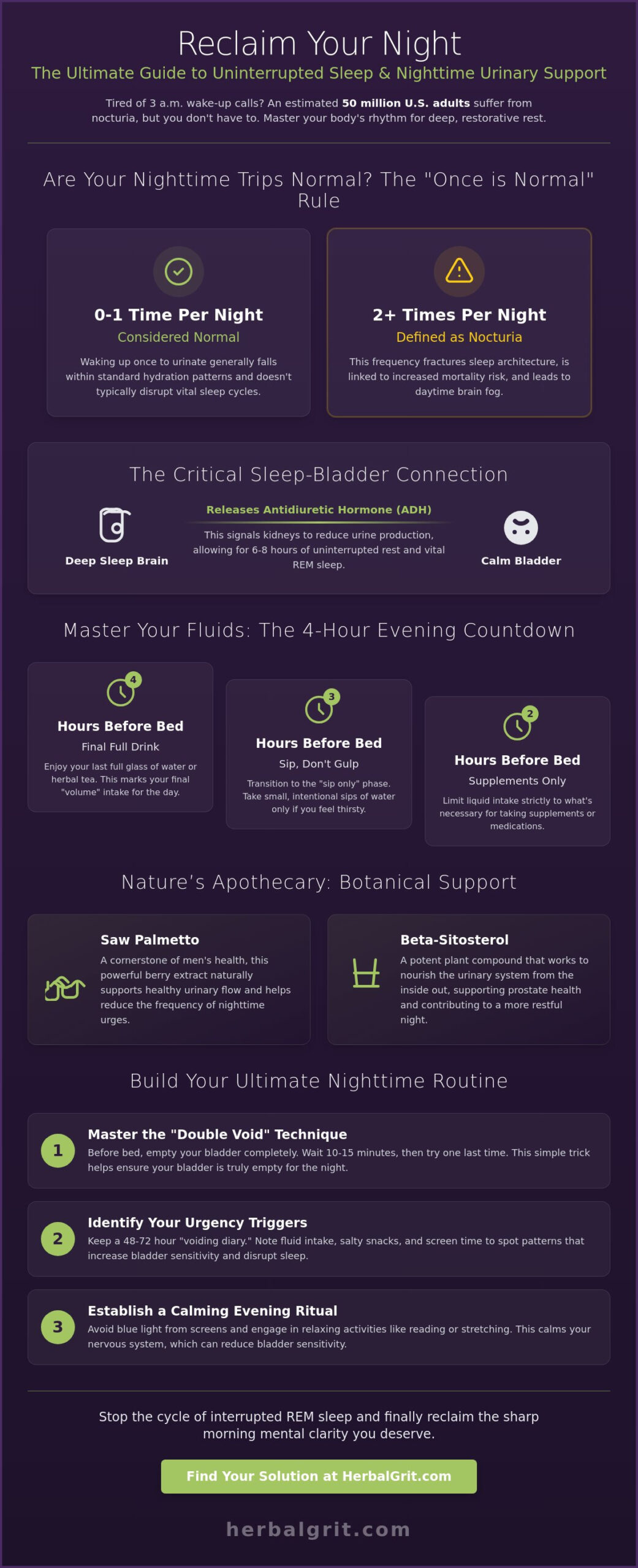
- Discover the “Once is Normal” rule to help you distinguish between standard hydration and the need for proactive nighttime urinary support.
- Learn why the timing of your fluids is more critical than the total amount and how to implement a strict 4-hour cutoff before bed.
- Understand the biological role of the prostate as the body’s urinary gatekeeper and how its health impacts your sleep quality.
- Explore nature’s most effective botanical remedies, including Saw Palmetto, to naturally support healthy flow and reduce frequency.
- Master the “Double Void” technique and other essential rituals to build a consistent nighttime routine that protects your REM cycles.
What is Nighttime Urinary Support and Why Does It Matter?
Nighttime urinary support is more than a reaction to a full bladder; it’s a proactive wellness strategy designed to preserve your body’s restorative cycles. For many, the journey begins by understanding the “Once is Normal” rule. The International Continence Society notes that waking up once per night to urinate falls within normal limits, but once that frequency hits two or more times, it becomes a condition known as Nocturia. Defining this simply, nocturia is the physiological need to void during sleep cycles. While it’s easy to dismiss these interruptions as a sign of “just getting older,” the data suggests otherwise. A May 2026 meta-analysis published in the World Journal of Men’s Health found that frequent nighttime urination is closely associated with increased mortality risk and metabolic stress.
The cost of ignoring these signals is steep. Every time you leave your bed, you’re not just losing minutes of rest; you’re fracturing your sleep architecture. This leads to cumulative cognitive decline, daytime brain fog, and a weakened immune system. Real nighttime urinary support involves a blend of disciplined lifestyle shifts and botanical aid, such as ProstaVive, which helps nourish the system from the inside out. By treating your bladder health as a pillar of your overall vitality, you reclaim the resilience needed for a productive life.
The Sleep-Bladder Connection
Your brain and bladder work in a delicate dance governed by the Antidiuretic Hormone (ADH). During deep sleep, your body naturally increases ADH production to concentrate your urine, allowing you to sleep for 6 to 8 hours without interruption. When this rhythm breaks, you lose access to vital REM stages where emotional processing and memory consolidation happen. “Just pushing through” isn’t a sustainable path. Without consistent, deep rest, your nervous system remains in a state of high alert, which can actually increase bladder sensitivity and create a self-feeding cycle of urgency.
Identifying Your Personal Urgency Triggers
To find a solution, you must first distinguish between polyuria, which is an overproduction of urine volume, and frequency, which is the constant urge to go even when the bladder isn’t full. Recent NHANES data from 2026 shows a significant post-pandemic rise in these symptoms among U.S. adults. Many find their triggers in late-night salty snacks or the blue light from tablets, which can suppress melatonin and affect bladder signaling. I recommend keeping a “voiding diary” for 48 to 72 hours. Tracking exactly what you drink and when you feel the urge helps you spot patterns that botanical remedies alone might not fix. This steady, observant approach is the “grit” required to master your internal wellness.
The ‘Fluid-First’ Protocol: A How-To Guide for Evening Hydration
Mastering nighttime urinary support isn’t about drinking less water throughout the day. It’s about shifting the rhythm of your intake to match your body’s natural processing speed. Many people make the mistake of “backloading” their hydration, drinking most of their water in the evening after a busy workday. This creates a surge of volume that your kidneys must process exactly when you’re trying to rest. By prioritizing hydration in the morning and afternoon, you allow your system to reach an equilibrium before your head hits the pillow. It’s a simple shift that respects the raw power of your biology.
The “Sip vs. Gulp” method is a cornerstone of this protocol. When you gulp large amounts of water, you trigger a rapid pressure increase in the bladder, which often leads to an immediate sense of urgency. Sipping slowly allows the water to be absorbed by your cells and tissues rather than being funneled straight to the bladder. While managing your fluids, it’s also helpful to stay aware of Common causes of urination at night, such as underlying irritation or prostate changes, which we’ll explore further in the next section.
- 4 Hours Before Bed: Enjoy your last full glass of water or herbal tea. This is your final “volume” intake for the day.
- 3 Hours Before Bed: Transition to the “sip only” phase. If you feel thirsty, take small, intentional sips of room-temperature water.
- 2 Hours Before Bed: Limit intake to what’s necessary for supplements or medications. Avoid large bowls of soup or water-heavy fruits like melon.
- 1 Hour Before Bed: Enter the “dry zone.” Focus on relaxation rituals that don’t involve liquids to let your bladder settle.
Managing Bladder Irritants
Caffeine is a potent diuretic that stays in your system longer than you might think. Following the 10-hour rule means that 2 p.m. cup of coffee can still be stimulating your bladder at midnight. Alcohol presents a similar paradox; while it might help you fall asleep faster, it suppresses the antidiuretic hormone (ADH), causing your kidneys to produce more urine. Even hidden irritants like artificial sweeteners in “sugar-free” evening snacks or spicy dinner ingredients can inflame the bladder lining, making it feel full even when it isn’t. For those whose sleep remains elusive even after mastering their fluid timing, a restorative sleep support ritual can help bridge the gap to a full night’s rest.
The Role of Electrolytes and Salt
Sometimes, the urge to pee isn’t about too much water, but a lack of minerals to hold that water in place. A tiny pinch of high-quality sea salt in your afternoon water can help your body retain moisture at a cellular level. This prevents the “flushing” effect that leads to frequent trips. Maintaining a steady potassium balance through whole foods also helps prevent the nocturnal leg cramps that often wake people up just as much as their bladder does. By hydrating early and balancing your minerals, you give your body the “grit” it needs to stay asleep through the night.
The Biological Root Causes: Prostate, Bladder, and Beyond
Understanding the physical structures behind your sleep interruptions is the next step in achieving reliable nighttime urinary support. While fluid timing is essential, the biological mechanics of your body often hold the secret to why those 3 a.m. wake-up calls persist. For men, the prostate acts as a central gatekeeper for urinary flow, sitting directly at the base of the bladder. An enlarged prostate creates a “residual volume” problem where the bladder never fully empties, leaving you with a “half-full tank” before you even start your sleep cycle. This constant pressure makes the bladder feel full much sooner than it should. To understand the anatomy of this process better, you can explore our guide on Prostate Function 101.
Muscle tone also plays a silent, vital role in your sleep quality. The pelvic floor is a hammock of muscles that supports the bladder and control mechanisms for both men and women. If these muscles lose their resilience, the bladder may signal a sense of urgency even when it isn’t physically stressed. Incorporating Lifestyle strategies for bladder control, such as gentle strengthening exercises and weight management, provides the structural grit needed to hold off midnight interruptions. Supporting these physical structures with a high-quality botanical like ProstaVive helps maintain the natural balance your system requires for a full night of rest.
The Prostate-Urinary Link
Distinguishing between a prostate issue and a simple bladder habit is key to effective nighttime urinary support. Prostate-related urgency often shows up as a weak stream, a feeling of incomplete emptying, or “dribbling” after you think you’re finished. In contrast, bladder-related issues might feel more like a sudden, sharp spasm or a high-frequency urge with very little volume. You can support healthy prostate size naturally by focusing on lycopene-rich foods and specific botanical extracts that encourage a calm, balanced inflammatory response within the pelvic region.
Peripheral Edema and Leg Elevation
One of the most overlooked causes of frequent urination is peripheral edema, or fluid that collects in your legs during the day. When you lie flat at night, gravity no longer keeps that fluid in your ankles. It travels back into your bloodstream and eventually your kidneys, which process it into urine. To combat this, try the 30-minute elevation trick. Lie down with your feet above your heart for 30 minutes in the late afternoon. This allows you to “drain the tank” while you’re still awake. Compression socks are also a surprising ally, as they prevent that fluid from pooling in the first place, reducing the workload on your kidneys once you’re under the covers.
Nature’s Apothecary: Herbal Remedies for Nighttime Support
While mastering fluid timing and understanding your biology provides a strong foundation, nature offers a profound library of botanicals to help fortify your progress. True nighttime urinary support bridges the gap between the raw power of the earth and the modern need for consistent, restorative sleep. Instead of relying on synthetic fixes, many are returning to “grit” and traditional wisdom to soothe the system from within. These remedies don’t just mask symptoms; they work with your body’s innate rhythms to encourage a calm bladder and a steady flow.
Saw Palmetto remains the gold standard for men seeking to manage urinary frequency. It’s often paired with Beta-Sitosterol, a plant sterol that helps the bladder empty more completely. A study published in February 2024 highlighted that saw palmetto extracts enriched with beta-sitosterol significantly improved lower urinary tract symptoms compared to standard extracts. When your bladder empties fully during your final trip before bed, you’re far less likely to be woken by a premature sense of urgency. The combination of pumpkin seed oil and soy isoflavones creates a powerful synergy that helps maintain healthy pelvic muscle tone and reduces the frequency of nighttime trips. For those looking to refine their regimen, choosing pure, high-quality botanical extracts is the most effective way to see lasting results.
Calming the Overactive Bladder
Pumpkin seed extract has served as a traditional remedy for bladder strength for generations. It provides the essential fatty acids and minerals needed to maintain the integrity of the bladder wall. Cranberry also plays a vital role by ensuring the urinary tract remains clean and free from the minor irritations that can trigger a false sense of urgency. To ensure you’re getting the most out of these nature-positive solutions, it’s helpful to understand the nuances of Prostate Health Supplements and how ingredient purity impacts your overall wellness.
Soothing the Nervous System
Your bladder isn’t just a piece of plumbing; it’s a sensory organ deeply connected to your nervous system. When stress hormones like cortisol remain high in the evening, they can trigger a “fight or flight” response in the bladder, making it feel hyper-sensitive. Magnesium acts as a gentle restorative, helping to relax the smooth muscles of the bladder wall so it can hold more volume without signaling distress. For a comprehensive approach, many find success by combining urinary support with sleep aids like those found in YU SLEEP. This dual-track strategy ensures that both your physical urgency and your mental alertness are addressed, paving the way for 6 to 8 hours of uninterrupted rest.
Building Your Ultimate Nighttime Support Routine
Creating a sustainable routine is where your intention meets the reality of your biology. A complete strategy for nighttime urinary support isn’t just a single habit; it’s a “stack” of behaviors that protect your sleep architecture from start to finish. We’ve discussed fluid timing and the biological role of the prostate, but the final layer is the “Grit” routine you perform every evening. This structured approach ensures that you aren’t just hoping for a good night’s rest, but actively preparing your system for it.
One of the most effective tools in this routine is the “Double Void” technique. To do this, urinate once when you begin your bedtime preparations, such as before you brush your teeth. Then, go a second time right before you actually climb into bed, even if you don’t feel a strong urge. This second trip catches the small amount of “residual volume” that often triggers that first frustrating wake-up call 90 minutes into your sleep. When you combine this with a bedroom kept at approximately 65 degrees Fahrenheit (18 degrees Celsius), you create an environment where your body can remain in deep, restorative stages of sleep without being bothered by minor sensory signals from the bladder.
The 30-Day Urinary Reset
Natural support is a marathon, not a sprint. It typically takes about 30 days for your system to fully adjust to new fluid timings and for botanical extracts to reach an equilibrium in your tissues. During this reset, keep a simple log of how many hours you sleep before your first wake-up call. If you don’t see a shift toward 6 to 8 hours of consistent rest by week four, revisit your intake of hidden irritants like late-afternoon caffeine or artificial sweeteners. Consistency is the “grit” that turns these individual changes into a permanent lifestyle shift.
When to Seek Professional Guidance
While most nighttime frequency issues can be managed through lifestyle and botanical support, certain red flags require a visit to a healthcare professional. If you notice blood in your urine, experience significant pain during urination, or face a sudden, total inability to void, seek help immediately. These symptoms go beyond the standard “getting older” narrative and require a closer look. For those looking to complete their routine with a nature-positive solution, you can discover ProstaVive for comprehensive nighttime support. By integrating these physical, behavioral, and herbal strategies, you finally reclaim the quiet, uninterrupted nights your body needs to thrive.
Reclaim Your Nights and Restore Your Vitality
The journey toward consistent, 8-hour sleep cycles is built on the steady application of nature’s wisdom. By mastering the 4-hour fluid cutoff and the double-void technique, you’ve already taken the most important steps toward structural balance. This integrated approach to nighttime urinary support acknowledges that your body’s needs are complex, requiring both physical discipline and gentle botanical nourishment. You don’t have to remain part of the 50 million adults struggling with nocturia according to 2026 prevalence data.
Every choice you make, from elevating your legs in the afternoon to choosing pure ingredients like saw palmetto, builds the resilience your system needs. ProstaVive is designed for men who value vitality and grit, offering a formula grounded in natural botanical research and curated for absolute purity and sustainability. It’s the final piece of the wellness puzzle for those ready to wake up feeling sharp and restored.
Experience Deep, Uninterrupted Rest with ProstaVive Natural Support
You have the tools and the knowledge to change your rhythm. Trust in the power of these restorative rituals and let nature guide you back to the deep, healing sleep you deserve.
Frequently Asked Questions
Is it normal to wake up once a night to pee?
Waking up once per night to urinate is considered within normal limits by the International Continence Society. This single trip doesn’t usually indicate a deeper dysfunction or disrupt your overall sleep architecture. However, if your frequency increases to twice or more, it may be time to look into proactive strategies for nighttime urinary support to protect your restorative REM cycles and morning mental clarity.
How much fluid should I drink before bed for nighttime urinary support?
You should aim for zero large-volume fluid intake in the four hours leading up to your bedtime. While you shouldn’t dehydrate yourself during the day, limit your evening consumption to small, intentional sips of room-temperature water only when necessary. This structured approach prevents your kidneys from processing a heavy volume of liquid exactly when your body is trying to settle into a deep sleep.
Can certain foods irritate my bladder and cause nighttime urgency?
Acidic foods like tomatoes, spicy dishes, and artificial sweeteners are common bladder irritants that can trigger a sudden sense of urgency. These substances can inflame the bladder lining, making it feel full even when it contains very little volume. Eliminating these culprits from your dinner menu helps reduce the fight or flight response in your urinary system, leading to a much calmer night.
What is the best sleeping position for bladder control?
Sleeping on your side is often the most effective position for maintaining bladder control and reducing pressure on the pelvic region. This position prevents the weight of your internal organs from pressing directly onto the bladder, which can happen when you lie flat on your back. Combining side-sleeping with a pillow between your knees can also help align the pelvis and soothe the surrounding muscles.
How long does it take for natural urinary supplements to work?
Most natural botanicals require a consistent 30-day window to reach an equilibrium within your body’s tissues. While some people notice a subtle shift in their nighttime frequency within the first 14 days, the full restorative benefits of ingredients like saw palmetto or pumpkin seed oil usually peak after a month of disciplined use. It’s a marathon of wellness rather than a quick fix.
Can stress or anxiety make me pee more at night?
Stress and anxiety directly impact bladder sensitivity by keeping your nervous system in a state of high alert. High levels of cortisol can interfere with the delicate signals between your brain and bladder, leading to a perceived need to void even when your bladder isn’t physically full. Managing your evening stress through calming rituals is a vital component of comprehensive nighttime urinary support.
Does leg elevation really help reduce nighttime urination?
Elevating your legs for 30 minutes in the late afternoon helps drain fluid that has pooled in your lower extremities during the day. This technique allows your kidneys to process that fluid into urine while you’re still awake and active. By draining the tank before you lie down for the night, you significantly reduce the volume your body has to handle during your sleep cycles.
Is nighttime urination a sign of a prostate problem?
Frequent nighttime trips can be a sign of an enlarged prostate, which puts pressure on the urethra and prevents the bladder from emptying completely. This creates a residual volume problem where you start your night with a bladder that’s already partially full. While it’s a common factor for men over 50, tracking your patterns in a voiding diary can help you distinguish between prostate-related urgency and simple lifestyle triggers.