
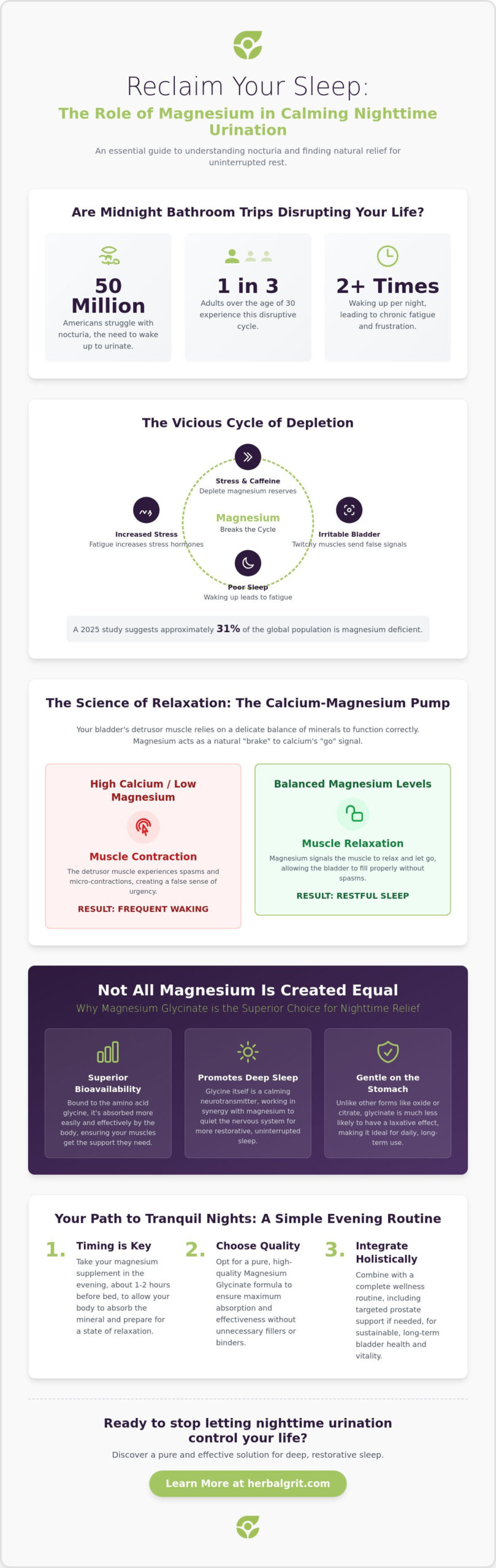
Did you know that nearly 50 million Americans are currently struggling with nocturia, waking up two or more times every night just to use the bathroom? For about 1 in 3 adults over the age of 30, the cycle of broken sleep and midnight trips to the sink has become an exhausting new normal. You likely feel the weight of this chronic fatigue, along with the frustration of a bladder that seems to have a mind of its own. It’s natural to feel anxious about the side effects of long-term medications, leading many to ask: does magnesium help with nighttime urination?
The answer lies in how this vital mineral acts as a gentle neuromuscular regulator rather than a simple bladder stopper. It’s true that an irritable bladder and a stressed nervous system are often the root causes of your midnight wake-ups. In this 2026 guide, you’ll discover how specific, pure forms of magnesium can calm the detrusor muscle and help you reclaim the deep, restorative sleep you deserve. We’ll explore the latest science-backed findings and help you identify exactly which magnesium to buy to support your body’s natural rhythm. It’s time to move toward a more tranquil night and a more vibrant tomorrow.
Key Takeaways
- Learn how the “Calcium-Magnesium pump” naturally soothes an overactive detrusor muscle to prevent the sudden contractions that disrupt your rest.
- Understand why magnesium glycinate is the preferred choice for its superior bioavailability and its unique ability to support deep, uninterrupted sleep.
- Discover the ideal timing for your evening routine to ensure your body has the mineral support it needs before you go to bed.
- Explore how addressing mineral gaps can answer the question, does magnesium help with nighttime urination, especially when combined with targeted prostate support.
- Gain clarity on how to integrate high-quality minerals into a sustainable wellness routine for long-term bladder health.
Understanding Nocturia and the Magnesium Deficiency Link
Nocturia is the clinical term used to describe the need to wake up one or more times during the night to urinate. While it’s often dismissed as a simple part of aging, Understanding Nocturia involves looking deeper into how our internal systems communicate. For many, the root cause isn’t just a full bladder. It’s often a breakdown in the delicate balance of minerals that keep our muscles calm and our nervous system at peace.
Modern diets often fall short of providing the nutrients our bodies require for deep restoration. A study published in December 2025 suggests that approximately 31% of the global population does not meet the recommended dietary intake for magnesium. When your body lacks this vital mineral, your smooth muscles, including those surrounding the bladder, become hyper-reactive. This increased muscle irritability can lead to sudden, urgent contractions that pull you out of a deep sleep. Instead of resting, your body is on high alert, reacting to every small signal from an twitchy bladder wall.
Why We Wake Up: The Nocturia-Magnesium Connection
Magnesium serves as a cornerstone for the parasympathetic nervous system, the “rest and digest” state that allows for deep, uninterrupted sleep. When you’re stressed or consume high amounts of caffeine, your body rapidly excretes magnesium through your urine. This creates a frustrating cycle. Stress leads to mineral loss, which leads to a twitchy bladder, which leads to nighttime waking. Ironically, the act of waking up and the stress of lost sleep further deplete your remaining mineral reserves. When asking, does magnesium help with nighttime urination, it’s vital to see it as a tool to break this exhausting loop and restore your body’s natural rhythm.
Signs Your Body is Craving Magnesium
How do you know if your bathroom trips are mineral-related? Your body often sends subtle signals before the bladder urgency becomes chronic. You might notice muscle cramps in your calves at night, a persistent “crawling” sensation known as restless legs, or even occasional heart palpitations. These are classic indicators that your cells are thirsty for magnesium. Standard blood tests often fail to capture this reality because most magnesium is stored in bones and soft tissues. A serum test might show “normal” levels while your muscles are actually starving for support. If you experience these physical twitches alongside frequent urination, your body is likely signaling a need for targeted replenishment. This is a key reason why many people find that exploring the question, does magnesium help with nighttime urination, leads them toward more restorative, quiet nights.
The Science of Relaxation: How Magnesium Impacts Bladder Control
The bladder is more than just a storage vessel; it’s a complex muscular organ governed by the detrusor muscle. This smooth muscle is designed to stay relaxed while the bladder fills and contract only when it’s time to empty. However, when mineral levels are out of sync, this muscle becomes hyper-responsive. This is where the “Calcium-Magnesium pump” becomes essential for your comfort. Calcium is the element that triggers muscle fibers to contract. Magnesium is the essential partner that signals them to let go. Without sufficient magnesium, the detrusor muscle can remain in a state of semi-tension or experience spontaneous spasms. These micro-contractions create a false sense of urgency, making you feel like you need to go even when your bladder is mostly empty.
Beyond muscle mechanics, magnesium plays a role in how your body manages fluids overnight. It helps regulate the Antidiuretic Hormone (ADH), which tells your kidneys to produce less urine while you sleep. When you consider, does magnesium help with nighttime urination, you’re looking at a solution that addresses both the physical urge and the hormonal signals that keep your kidneys active after dark. By ensuring these systems have the mineral support they need, you help your body maintain its natural, quiet state through the night.
Taming the Overactive Detrusor Muscle
Involuntary bladder spasms are often the result of an electrolyte imbalance where calcium dominates the cellular environment. By restoring magnesium, you provide the “brake” needed to stop these premature contractions. This process effectively raises the threshold for the signals your bladder sends to your brain. Instead of feeling a “full” sensation at low volumes, your bladder can wait until it’s actually ready. Magnesium acts as a natural calcium channel blocker for the bladder, preventing premature signals of urgency. This restorative approach allows the bladder wall to remain calm and expansive throughout the night.
Nervous System Regulation and Sleep Maintenance
A quiet bladder is only half the battle; a quiet mind is equally important. Magnesium is a key co-factor in the production of GABA, a neurotransmitter that promotes relaxation and helps maintain a deep sleep state. If your nervous system is stuck in a “fight or flight” mode, cortisol levels spike. These spikes can actually stimulate the kidneys and irritate the bladder, creating a physical urge to urinate simply because the brain has been startled awake. By supporting a calm nervous system, you reduce the likelihood of these cortisol-driven interruptions. For those seeking deeper rest, exploring natural solutions for sleep optimization can be a vital step in breaking the cycle of nighttime waking. When the brain stays in a restorative state, the body is much less likely to signal a trip to the bathroom.
Magnesium Glycinate vs. Other Forms: What Actually Works?
Choosing the right mineral supplement is a journey of understanding your body’s unique needs. While many people wonder, does magnesium help with nighttime urination, the answer often depends on the specific molecular bond of the supplement you select. Not all forms are designed to reach the bladder or the brain effectively. Some varieties are poorly absorbed by the gut, while others are specifically formulated to support energy or digestion rather than tranquility. To reclaim your sleep, you must focus on bioavailability and the specific calming effects that different magnesium chelates offer.
The Superiority of Magnesium Bisglycinate
Magnesium Glycinate, also known as bisglycinate, is widely considered the gold standard for those seeking better sleep and bladder control. In this form, the magnesium is bonded to glycine, a soothing amino acid that acts as a calming neurotransmitter in the brain. This combination provides a double benefit: the magnesium relaxes the detrusor muscle while the glycine prepares your nervous system for deep rest. A March 2026 report on a consumer study for a leading magnesium glycinate brand found that 91% of participants reported an improvement in sleep quality after just 28 days of consistent use.
This form is also highly stable and gentle on the digestive tract. Because it’s chelated, meaning it’s “wrapped” in amino acids, it bypasses the typical digestive triggers that cause loose stools. When shopping for a supplement, always look for the word “chelated” on the label. This ensures that the mineral is ready for maximum absorption so it can actually reach the tissues where it’s needed most. It’s a reliable way to ensure your efforts to answer the question, does magnesium help with nighttime urination, result in tangible, peaceful outcomes.
Forms to Avoid Before Bed
While magnesium is generally beneficial, certain forms can actually disrupt your sleep if taken in the evening. Magnesium Citrate is highly effective for those struggling with constipation because it draws water into the bowels. However, this osmotic effect can lead to mid-night digestive urgency, which is the opposite of the tranquil environment you’re trying to create. Similarly, Magnesium Oxide, which is frequently found in inexpensive drugstore supplements, has a very low absorption rate. Most of the mineral stays in the gut, often causing irritation without providing the systemic relaxation required to calm an overactive bladder.
Secondary Options for Daytime Support
If you’re looking for support during the day, other forms might be appropriate. Magnesium Malate is often paired with malic acid to support muscle energy and is excellent for morning use. Magnesium L-Threonate is another innovative option currently being studied at UCLA in June 2026 for its ability to cross the blood-brain barrier and support cognitive function. While these are valuable for vitality, they lack the specific sedative qualities of glycinate that make it the ideal choice for managing nighttime bathroom trips.
How to Use Magnesium for Better Nighttime Bladder Management
Implementing a mineral routine requires more than just picking the right bottle. It’s about creating a rhythm that aligns with your body’s natural restorative cycles. For most adults in the United States, the Recommended Dietary Allowance (RDA) for magnesium is approximately 420 mg per day for men and 320 mg per day for women. However, many people find that split doses work best to maintain steady levels without overwhelming the digestive system. When considering does magnesium help with nighttime urination, the answer is often found in the synergy of dosage and timing. Taking your supplement 30 to 60 minutes before you plan to sleep is the ideal window. This allows the magnesium to reach peak levels in your bloodstream exactly when your detrusor muscle needs to relax and your brain needs to enter a restful state.
Optimizing Your Magnesium Protocol
If you’re new to supplementation, start with a lower dose, perhaps 100 to 150 mg, and gradually increase it over several days. This helps you assess your tolerance and avoid any sudden digestive shifts. A common method for finding your ideal level is the “bowel tolerance” approach. You increase the dose slowly until your stools become slightly loose, then back off to the previous comfortable amount. It’s also important to be patient. While some people feel a difference in their sleep quality on the first night, magnesium works best when it has 2 to 4 weeks to build up in your cellular reserves. Consistency is what allows the mineral to saturate the tissues of the bladder and the nervous system.
To enhance the effect, consider synergistic nutrients. Vitamin B6 is particularly helpful as it acts as a chaperone, assisting magnesium into the cells where it can do its work. Maintaining healthy levels of Vitamin D3 and Potassium also supports the overall electrical balance of your muscles. This ensures that the relaxation signals sent to your bladder are clear and strong throughout the night.
The “Dry Night” Routine
Magnesium is a powerful ally, but it works most effectively when paired with supportive lifestyle habits. Try to limit your fluid intake at least 2 hours before bedtime. This gives your kidneys time to process existing fluids while the magnesium begins to calm your bladder. Another helpful technique is elevating your legs for 30 minutes in the late afternoon or early evening. This encourages fluid that has pooled in your lower limbs to return to the heart and be processed by the kidneys before you lie down for the night. When you combine these physical adjustments, the question of does magnesium help with nighttime urination becomes a reality you can feel.
Prioritizing these quiet nights is about more than just convenience. Deep, uninterrupted sleep is the foundation of long-term wellness and is essential for those learning how to stay mentally sharp as you age. When your brain isn’t constantly interrupted by the urge to wake up, it can perform the vital cleaning processes that protect your memory and focus. If you’re ready to deepen your restorative cycles, exploring a targeted natural sleep support can help you bridge the gap between restless nights and true vitality. By combining mineral support with these intentional habits, you create a sanctuary for your body to heal and rest.
Integrating Magnesium into a Complete Vitality Routine
Magnesium is a vital ally for anyone seeking a quieter night, yet it’s often just one piece of a larger wellness puzzle. This is especially true for men over 50, where the physical structure of the body begins to shift in ways that minerals alone cannot always address. While we’ve explored how magnesium calms the muscles, we must also consider the mechanical factors that influence your rest. True vitality comes from a holistic approach. It requires pairing the raw strength of minerals with the focused support of botanical extracts. This is the essence of botanical endurance; it’s a way to sustain your health through the steady synergy of nature’s most potent elements.
When you ask, does magnesium help with nighttime urination, you’re looking for a way to restore balance to an overactive system. However, if your mineral levels are optimal but your sleep is still interrupted, it’s time to look at the surrounding tissues. For many, the challenge isn’t just a twitchy bladder muscle. It’s often the physical pressure from adjacent organs that triggers the urge to wake up. By integrating magnesium into a broader routine, you provide your body with a comprehensive foundation for long-term health and tranquility.
Addressing the Prostate-Bladder Connection
For many men, an enlarged prostate creates mechanical pressure that magnesium cannot fix on its own. When the prostate gland grows, it can compress the urethra, making it difficult for the bladder to empty completely. This residual volume means your bladder reaches its “full” signal much faster, leading to frequent trips to the bathroom. It’s helpful to monitor your progress by looking for signs your prostate supplement is working to ensure you’re addressing the root cause. For those needing focused help, ProstaVive offers a potent natural solution for comprehensive prostate support and urinary wellness.
Mastering the Art of Deep Rest
Deep sleep is essential because it’s the time when your brain signals the kidneys to slow down urine production. If you’re stuck in a cycle of light, fragmented sleep, these hormonal signals are often weak or absent. While magnesium prepares the body for rest, some individuals require a more specialized botanical blend to stay asleep. Formulas like YU SLEEP are designed to deepen these restorative cycles, ensuring the brain stays in a state that prioritizes recovery over bathroom trips. When you combine mineral support with these targeted solutions, you answer the question of does magnesium help with nighttime urination by creating an environment where deep, uninterrupted rest becomes your new reality.
Reclaiming Your Nights with Natural Support
Restoring the rhythm of your sleep begins with understanding the delicate balance between your nervous system and your physical body. You’ve learned that magnesium isn’t just a supplement; it’s a vital signal for your detrusor muscle to release tension. By choosing highly bioavailable forms like magnesium glycinate and timing your intake for the evening, you create the conditions for deep, restorative rest. When you ask, does magnesium help with nighttime urination, the answer is a resounding yes, provided you approach it as part of a thoughtful, holistic routine.
While minerals provide the foundation, persistent urgency often requires a more specialized touch. For men seeking to address both mechanical pressure and muscle irritability, botanical science offers a powerful path forward. It’s about finding solutions grounded in ecological integrity and purity. You can Support Your Urinary Health Naturally with ProstaVive, a formula trusted for high-performance male health. This blend is rooted in nature-positive botanical science and designed for those who value potent, traditional alternatives. You deserve to wake up feeling refreshed and resilient. Take the first step toward a more tranquil night today.
Frequently Asked Questions
Can magnesium stop me from peeing at night immediately?
Magnesium is not an instant pharmaceutical “off switch” but a mineral that supports long-term muscle and nervous system regulation. While some individuals notice a calmer state on the very first night, it typically requires consistent use to change the reactivity of the detrusor muscle. Think of it as a gentle restoration of your body’s mineral reserves rather than an immediate intervention.
What is the best time of day to take magnesium for nocturia?
The most effective time to take your supplement is approximately 30 to 60 minutes before you plan to sleep. This timing allows the mineral to enter your bloodstream and begin its work on the nervous system exactly as you prepare for rest. It’s a simple way to answer the question, does magnesium help with nighttime urination, by aligning the mineral support with your body’s natural wind-down phase.
Which type of magnesium is best for an overactive bladder?
Magnesium Glycinate is the superior choice for bladder health and sleep quality. It’s bonded to glycine, an amino acid that provides additional calming effects on the brain and nervous system. Unlike cheaper forms, it’s highly bioavailable and much less likely to cause the digestive upset that can lead to even more nighttime awakenings.
Can too much magnesium cause urinary problems?
Excessive magnesium intake primarily affects the digestive tract rather than the bladder directly. While it won’t typically cause urinary issues, taking too much can lead to loose stools or diarrhea. This osmotic effect draws water into the bowels, which can be highly disruptive to your rest. It’s always best to stay within the recommended daily allowance for your specific age and gender.
Does magnesium help with prostate-related nighttime urination?
Magnesium can help relax the bladder muscle, but it won’t address the mechanical pressure caused by an enlarged prostate. For men over 50, nighttime urgency often involves a combination of muscle irritability and prostate-related blockage. While asking, does magnesium help with nighttime urination, is a vital start, you may also need targeted botanical support to manage the physical pressure on the urethra.
Are there any side effects of taking magnesium for sleep?
Most people tolerate magnesium very well, though the most common side effect is digestive sensitivity. If you experience loose stools, it’s often a sign that your dose is too high or that you’re using a form like magnesium oxide. Starting with a lower dose and choosing a chelated form like glycinate usually minimizes these issues and supports a tranquil night.
Can I take magnesium if I am already on blood pressure medication?
You should consult your healthcare provider before starting magnesium if you’re taking blood pressure medication. Because magnesium naturally helps relax blood vessels, it can have a synergistic effect with your prescription. A professional can help you determine the right balance to ensure your levels stay within a safe and healthy range while you support your bladder.
How long does it take for magnesium to work for bladder control?
You can expect to see the most significant benefits for bladder control after 2 to 4 weeks of consistent daily use. It takes time for the mineral to reach optimal levels within your cells and for the detrusor muscle to lose its hyper-reactive state. Staying steady with your routine is the key to achieving long-term, uninterrupted sleep.