
What if the secret to lasting vitality isn’t found in a third cup of coffee, but in a botanical root that also helps you sleep? It sounds like a contradiction, yet it’s the core reason why so many are rediscovering ashwagandha for energy in 2026. You probably know the “tired but wired” sensation all too well. It’s that frustrating state where you’re dragging through a mid-afternoon fog, only to find your mind racing the moment your head hits the pillow. This happens because chronic stress is effectively stealing your stamina before you can even use it.
We believe your path to wellness should feel steady and supported, not like a rollercoaster of caffeine spikes and crashes. In this guide, you’ll discover how this ancient adaptogen works as a bridge between nature’s raw power and your modern need for focus. We will explore the recent April 2026 safety regulations from the Indian Ministry of Ayush that emphasize pure root extracts to ensure product integrity. By the end, you’ll understand how to stop the cycle of fatigue and cultivate a sense of resilient, all-day calm that keeps you centered and naturally energized.
Key Takeaways
- Discover why using ashwagandha for energy is about mastering your stress response instead of relying on the fleeting spikes of stimulants.
- Explore how this ancient root supports cellular vitality by helping your body transform glucose into sustained, usable power.
- Uncover the bi-phasic nature of adaptogens, which allows you to experience deep evening rest and sharp morning focus simultaneously.
- Learn the specific protocol for building botanical strength, including the necessary loading period for peak efficacy.
What is Ashwagandha for Energy? Defining the Adaptogenic Shift
To understand why so many people are turning to What is Ashwagandha for vitality, we must first look at its roots. This small shrub, known scientifically as Withania somnifera, has served as a cornerstone of Ayurvedic tradition for over 3,000 years. Its name translates from Sanskrit to “smell of the horse.” While that might sound unappealing at first, it’s actually a poetic reference to the plant’s unique ability to impart the strength and rugged stamina of a stallion. It suggests a level of physical resilience that isn’t just about moving fast, but about having the endurance to stay the course.
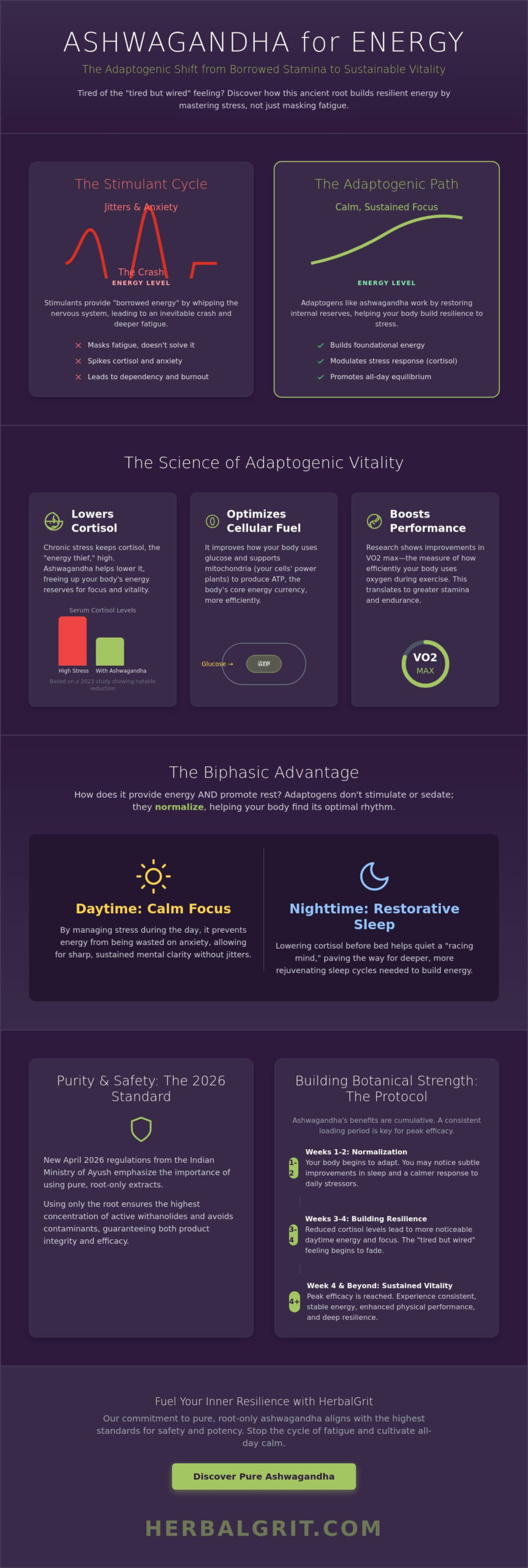
Unlike caffeine, which acts as a chemical whip to your nervous system, using ashwagandha for energy works by restoring your internal reserves. Stimulants provide “borrowed energy” that you must eventually pay back with interest in the form of a crash. Adaptogens take a different path. They act as a bridge between your body’s current state of fatigue and its natural potential for endurance. This helps you maintain a steady equilibrium regardless of the external stressors you face throughout your day.
The Biological Definition of an Adaptogen
The three pillars of an adaptogen are safety, versatility, and balance. To earn this title, a botanical must be non-toxic and safe for long term use. It must produce a non-specific response, meaning it helps the body resist a wide range of stressors rather than just one. Finally, it must have a normalizing effect on your physiology. Ashwagandha specifically targets the HPA axis to modulate your energy levels, preventing the spikes and dips that lead to total exhaustion. These restorative benefits are driven by withanolides. These are the primary active compounds that help your cells stay resilient even when life feels overwhelming.
Why 2026 is the Year of Adaptogenic Vitality
In 2026, the shift toward holistic health is more than just a trend; it’s a response to a world that feels increasingly fast-paced. We’ve seen a decline in the effectiveness of traditional stimulants as burnout culture reaches a breaking point for many. People are seeking metabolic support that feels grounded and sustainable. By focusing on how your body processes fuel at a cellular level, you can move away from the “tired but wired” cycle. You can find more depth on this in our Metabolic Support: The 2026 Guide, which explores the philosophy of revitalizing your foundational energy through botanical purity.
The Science of Vitality: How Ashwagandha Fuels Your Body
The “tired but wired” phenomenon is often a result of a biological system in conflict. Your body wants to rest, but your stress hormones are screaming for action. Using ashwagandha for energy is a restorative process that addresses this conflict at its source. Unlike caffeine, which merely masks fatigue by blocking adenosine receptors, ashwagandha works by optimizing how your cells actually produce and manage fuel. This isn’t about a temporary surge; it’s about rebuilding the foundational strength of your internal systems.
Cortisol: The Energy Thief
When you’re under constant pressure, your body remains in a perpetual state of “fight or flight.” This survival mechanism is designed to divert resources away from restorative health and toward immediate survival. Cortisol, the primary stress hormone, acts as an energy thief by keeping your system on high alert. A significant 2023 study demonstrated that daily ashwagandha supplementation can lead to a notable reduction in serum cortisol levels. By lowering these levels, the herb allows your body to “unlock” energy reserves that were previously spent on anxiety, making them available for productive focus. This shift is one of the many research-backed health benefits that explain why users feel a sense of calm endurance rather than a jittery spike.
Beyond stress management, this botanical root improves how your body handles glucose. It sensitizes insulin receptors, which helps your cells take in blood sugar more efficiently to create cellular fuel. It also supports mitochondrial health, the microscopic power plants in your cells responsible for producing ATP. When your mitochondria function optimally, you experience less systemic inflammation and a higher level of perceived energy throughout the day. It’s a quiet, steady power that builds over time.
Athletic Performance and Oxygen Uptake
The benefits of ashwagandha for energy extend into the physical arena. Research frequently points to improvements in VO2 max, which measures how efficiently your body utilizes oxygen during physical exertion. Higher oxygen uptake means your muscles can work harder for longer without reaching the point of exhaustion. Additionally, the herb supports faster muscle recovery by reducing exercise-induced oxidative stress. Physical grit is built through botanical resilience; when your body repairs itself more efficiently, your baseline energy for the following day remains high. When your cortisol is balanced and your body is prepared for recovery, you can finally achieve the deep, restorative rest found in YU SLEEP, ensuring you wake up ready to face the world again.
Myth-Busting: If It Helps Sleep, How Does It Provide Energy?
It’s natural to feel skeptical when you hear that a plant known for promoting rest is also a primary solution for vitality. The botanical name, Withania somnifera, literally translates to “sleep-inducing.” This creates what many call the Somnifera Paradox. If you’re looking into ashwagandha for energy, you might worry that it will leave you feeling drowsy or lethargic during your workday. However, the truth is found in the plant’s bi-phasic nature. It doesn’t force your body into a single state. Instead, it provides the intelligence your nervous system needs to transition between activity and rest with ease.
The Somnifera Paradox Explained
This botanical doesn’t act as a heavy sedative like melatonin or valerian root. Those substances often force a sleep state regardless of your body’s readiness. Ashwagandha works by improving GABAAergic signaling. This process helps quiet the “mental noise” and background anxiety that often lead to cognitive fatigue. When your nervous system isn’t constantly battling internal static, it can perform with much higher efficiency. It’s the difference between feeling sleepy and feeling a profound sense of tranquility. A tranquil mind is a focused mind. By reviewing the scientific evidence on ashwagandha, we can see that its primary role is as a stabilizer, not a knockout pill.
Myth vs. Reality: The Stimulant Comparison
One of the biggest myths is that adaptogens should feel like a caffeine rush. If you expect a sudden jolt of electricity, you might think the herb isn’t working. In reality, ashwagandha for energy provides a “leveling” effect. It fills in the gaps where your stamina usually fails. Instead of the jagged peaks and valleys of an energy drink, you experience a smooth plateau of capability. This prevents the dreaded mid-afternoon slump that sends most people reaching for a sugary snack or another espresso.
This restorative approach creates a foundation where your daytime focus and nighttime rest finally work in harmony. When your body knows it can rest deeply at night, it feels safe to exert energy during the day. For those who want to enhance this steady flow of power, you might consider pairing your routine with Synaptigen for mental clarity. This combination supports both your physical endurance and your cognitive sharpness, ensuring that your energy is as clear as it is consistent. Resilience isn’t about pushing through exhaustion. It’s about having the internal balance to never reach that point of depletion in the first place.
How to Use Ashwagandha for Maximum Daily Energy
Integrating ashwagandha for energy into your life requires a shift in perspective. You’re not looking for a quick jolt; you’re cultivating a long-term reservoir of stamina. Because this botanical works by balancing the endocrine system, it requires a “loading” period. Most people find that the full benefits for both physical endurance and mental focus emerge after 2 to 4 weeks of consistent daily use. This steady approach ensures that your body has the time to recalibrate its stress response and rebuild its depleted stores of vitality.
Timing and Consistency
To maximize your results, a split-dose protocol is often the most effective strategy. Step 1 involves taking 300mg of root extract in the morning. This helps blunt the natural morning cortisol spike that can lead to early-day anxiety. Step 2 requires a second dose of 300mg in the early afternoon, ideally around 1 PM or 2 PM. This second serving acts as a preventative measure against the 3 PM crash. Consistency is the anchor of this routine. Don’t ping-pong your dosage based on how you feel in the moment. Adaptogens work best when they maintain a steady presence in your system, providing a reliable floor for your energy levels regardless of the day’s challenges.
Choosing the Right Extract
The landscape for ashwagandha changed significantly in April 2026. The Indian Ministry of Ayush and the FSSAI issued new mandates that prohibit the use of leaves in supplements, permitting only root and root extracts. This is a vital distinction for your safety and results. When you’re browsing, prioritize root-only extracts like KSM-66, which are already compliant with these new standards. High-quality extracts should clearly state their withanolide percentage, usually between 5% and 10%, and offer proof of third-party testing for purity. You can find a deeper dive into these specifications in our Ashwagandha Root Supplement Guide.
True energy isn’t just physical; it’s the fuel for your cognitive performance. When your body is no longer trapped in a stress-induced drain, your mind can finally engage with clarity. This is why many users report that their memory and attention span improve alongside their physical stamina. If you’re ready to break the cycle of exhaustion and claim your restorative rest, starting a consistent root-based routine is the most effective first step toward a more resilient you. By supporting your body’s natural rhythms, you’re not just surviving the day; you’re mastering it with grounded, sustainable power.
The HerbalGrit Perspective: Fueling Your Inner Resilience
True vitality is a quiet, steady flame. It’s not the erratic flare of a stimulant that leaves you burnt out. Throughout this guide, we’ve explored how ashwagandha for energy works by mending the gaps in your stress response and restoring your internal reserves. At HerbalGrit, we view energy as a long-term investment in your future self. It’s a byproduct of a body that’s balanced, resilient, and deeply nourished by the raw power of nature. When you stop “borrowing” energy from your future and start cultivating it from within, the “tired but wired” cycle finally begins to dissolve.
Our “Grit” philosophy is built on the intersection of botanical purity and personal discipline. It’s the belief that natural health requires both the gentle support of plants and the steadfastness of a daily wellness routine. We position ourselves as a bridge between the ancient wisdom of the apothecary and your modern need for rugged endurance. When you choose high-quality root extracts, you’re choosing a path of intentionality and trust. This isn’t about chasing a trend; it’s about honoring the inherent strength of the environment and allowing that strength to take root in your own life. We focus on restorative solutions that make your health journey feel like a return to nature rather than a clinical chore.
Beyond the Single Herb: The Energy Stack
Mental stamina is the often-overlooked side of vitality. You can’t feel truly energized if your mind is clouded by brain fog or forgetfulness. Cognitive fatigue can be just as draining as physical exhaustion, leaving you feeling depleted even after a full night’s rest. For those looking to support their cognitive side alongside their physical grit, The Brain Song offers a specialized approach to memory and focus. By stacking these solutions with metabolic support, you create a foundation for cellular energy that lasts from dawn until dusk. This holistic approach ensures every part of your system works in harmony, turning the “tired but wired” myth into a distant memory.
Your Next Steps to Natural Vitality
Your journey toward a more resilient life begins with a single, conscious choice. We encourage you to start by sourcing a high-potency ashwagandha root extract that meets the 2026 purity standards we’ve discussed. You can explore our curated selection of vitality products at the HerbalGrit shop, where each offering is chosen for its ecological integrity and traditional roots. By integrating ashwagandha for energy into a disciplined routine, you’re not just seeking a quick fix; you’re building a foundation of strength. We invite you to join our community and sign up for our newsletter to receive the latest 2026 wellness updates and botanical insights. Together, we can cultivate the enduring power of nature within ourselves.
Cultivating Your Sustainable Vitality
True resilience isn’t about pushing through exhaustion. It’s about building a body that doesn’t reach the point of depletion. This guide explored how ashwagandha for energy works by balancing your internal stress response and optimizing cellular fuel. By adhering to the 2026 Potency Standards and choosing third-party lab verified extracts, you ensure that you’re nurturing the bridge between nature and modern performance with absolute purity. This botanical root offers a way to move past the “tired but wired” cycle and into a state of grounded, daily endurance.
Your path to wellness is a journey of intentionality. When you support your nervous system’s ability to rest, you’re also fueling its ability to perform. If you’re ready to enhance this natural flow and sharpen your cognitive edge, unlock your ultimate memory and energy potential with The Brain Song. It’s time to stop relying on temporary fixes and start investing in your long-term vitality. Trust in the quiet strength of nature to guide you toward a more centered and capable version of yourself.
Frequently Asked Questions
Does ashwagandha for energy work immediately?
No, you won’t feel a sudden jolt like you would with a cup of espresso. Ashwagandha is an adaptogen that works through accumulation rather than a temporary spike. While some people feel a sense of calm within a few days, the true restoration of your stamina usually takes consistent daily use. It’s a steady process of rebuilding your internal reserves rather than a quick fix.
Can I take ashwagandha instead of coffee?
You can certainly use it as a tool to reduce your caffeine reliance. While coffee provides “borrowed energy” by blocking fatigue signals, ashwagandha for energy works by lowering the cortisol that drains your natural power. Many users find that after two weeks of a consistent routine, they no longer need multiple cups of coffee to stay alert. It offers a path to vitality that doesn’t end in a crash.
Is it better to take ashwagandha in the morning or at night for energy?
A split dosage is the most effective way to maintain a steady flow of power. Taking a dose in the morning helps blunt the sharp cortisol spike that often causes early-day anxiety. A second dose in the early afternoon, around 1 PM or 2 PM, acts as a preventative measure against the common mid-afternoon slump. This balanced rhythm keeps your nervous system centered and capable throughout the day.
Can ashwagandha cause fatigue or lethargy?
It shouldn’t cause daytime drowsiness if you’re using a high-quality root extract at the correct dosage. If you feel overly lethargic, your serving size might be too large for your system’s current needs. It’s also crucial to ensure your supplement is compliant with the April 2026 Indian regulations that prohibit leaf extracts. Pure root extracts are designed to promote tranquility and focus without forcing a state of sleepiness.
What is the best dosage of ashwagandha for reducing fatigue?
Current 2026 clinical standards typically recommend a daily range of 300mg to 600mg of a concentrated root extract. This is most effective when divided into two smaller servings. Starting at the lower end of this range allows your body to gently recalibrate its stress response. This consistent intake provides the necessary foundation for reducing chronic fatigue and building the rugged endurance needed for modern life.
Are there any people who should avoid ashwagandha for energy?
Certain individuals should approach this botanical with caution. This includes those who are pregnant, breastfeeding, or managing autoimmune disorders. Because the herb can influence thyroid hormones and blood sugar levels, people on medications for those conditions should speak with a professional first. We believe in a nurturing approach to wellness that prioritizes safety and intentionality above all else.
How long should I take ashwagandha before I feel more energetic?
Most people experience a noticeable shift in their resilience within 2 to 4 weeks of consistent use. This window is necessary for the active compounds to effectively modulate the HPA axis and lower systemic stress. Think of it as a long-term investment in your vitality. Your body needs this time to transition from a state of constant survival to one of sustained, natural performance.
Can I stack ashwagandha with other energy supplements?
Stacking is a wonderful way to create a more comprehensive wellness routine. It pairs well with non-stimulant nutrients like B-vitamins or magnesium for metabolic support. You can also combine it with memory-focused botanicals to enhance your mental stamina. Just be sure to avoid heavy stimulants that might conflict with the herb’s grounding effects. A thoughtful stack supports both your physical grit and your cognitive clarity.