
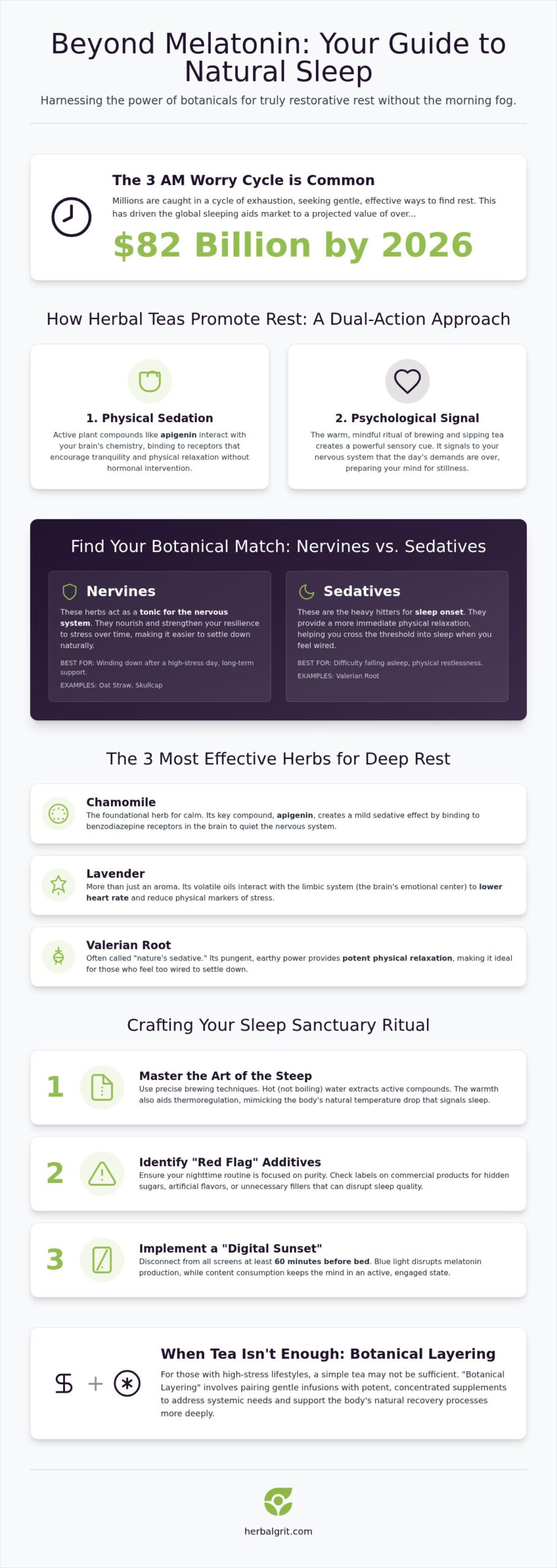
Imagine it’s 3 AM and your mind is a relentless carousel of tomorrow’s worries. You want rest, but the fear of dependency on heavy pills or the morning brain fog from synthetic aids keeps you stuck in a cycle of exhaustion. You aren’t alone. As the global sleeping aids market reaches over $82 billion in 2026, more people are seeking grounded, gentle ways to close their eyes. Finding effective melatonin alternatives for sleep doesn’t have to be a clinical search. It starts with the simple, raw power of nature found in a well-steeped cup.
We understand that you’re looking for a reliable ritual, not just a temporary fix. You deserve to fall asleep within twenty minutes and wake up feeling restorative and mentally sharp. This guide shows you how to leverage traditional botanical infusions alongside modern sleep science to achieve deep rest. We’ll explore the finest herbal teas available today and how to silence racing thoughts through a disciplined wellness routine. It’s time to bridge the gap between ancient apothecary wisdom and your modern need for tranquility.
Key Takeaways
- Understand the dual-action power of nervine botanicals that provide both physical sedation and a calming psychological signal to your nervous system.
- Master the art of the Sleep Sanctuary ritual by combining precise herbal brewing techniques with a disciplined “Digital Sunset” sixty minutes before bed.
- Explore the science of chamomile and valerian root to see how raw plant compounds like apigenin naturally support deep, restorative rest.
- Discover how botanical layering-pairing gentle teas with potent melatonin alternatives for sleep-can address the systemic needs of a high-stress lifestyle.
- Learn to identify red flag additives in commercial products to ensure your nighttime routine remains focused on purity and ecological integrity.
What Is Natural Sleep Support Herbal Tea and How Does It Work?
By 2026, a significant shift has occurred in how we approach the night. Many people are moving away from synthetic aids, seeking purity over chemical shortcuts that often leave them feeling foggy the next morning. Natural sleep support herbal tea serves as a bridge to this restorative rest. These infusions aren’t just beverages; they are precise blends of nervine and sedative botanicals designed to quiet the mind and prepare the body for stillness. Unlike traditional black or green tea, herbal teas (tisanes) are caffeine-free and derived from various roots, flowers, and leaves. They offer a gentle, non-hormonal approach for those searching for effective melatonin alternatives for sleep.
The efficacy of these botanicals relies on a dual-action process that addresses both the physical and the psychological. Physically, the plant compounds interact with our internal chemistry to encourage relaxation. Psychologically, the act of brewing and sipping creates a powerful ritual signal. This ritual tells your nervous system that the day’s demands have ended. It’s a transition from the rugged endurance of daily life to the softness of sleep. While a mild infusion is often enough for a quiet evening, those with high-stress lifestyles may find that tea works best when paired with a more systemic solution like YU SLEEP, which provides the concentrated potency that a simple steep might lack.
The Science of the Steep: Bioavailability and Warmth
Steeping is more than just waiting; it’s a careful chemical extraction. When you pour hot water over dried herbs, you’re releasing active alkaloids like apigenin. This specific compound is known for binding to receptors in the brain that promote tranquility. Beyond the chemistry, the warmth of the liquid plays a vital role in thermoregulation. Drinking a warm beverage causes a slight rise in core temperature, followed by a rapid cooling phase. This drop in temperature mimics the body’s natural circadian rhythm, signaling that it’s time for deep rest. Aromatic terpenes released in the steam also provide immediate sensory cues that cross the blood-brain barrier through the olfactory system, further deepening the relaxation response.
Nervines vs. Sedatives: Finding Your Botanical Match
Understanding which herb to choose depends on your specific sleep struggle. Botanicals generally fall into two categories:
- Nervines: These herbs, such as oat straw or skullcap, act as a tonic for the nervous system. They don’t necessarily knock you out immediately. Instead, they nourish and strengthen your resilience to stress over time, making it easier to settle at the end of a long day.
- Sedatives: These are the heavy hitters for sleep onset. Herbs like valerian root provide a more immediate physical relaxation, helping you cross the threshold into sleep when your body feels too wired to settle on its own.
If you find yourself awake at 3 AM with racing thoughts, you likely need a blend that addresses both categories. Combining the long-term support of nervines with the immediate relief of sedatives creates a balanced path toward consistent, restorative rest without the fear of dependency. This holistic approach ensures that you aren’t just masking exhaustion, but truly supporting your body’s natural ability to recover.
The 5 Most Effective Herbs for Deep Nighttime Rest
Selecting the right plant is like choosing a tool for a specific task. In the search for effective melatonin alternatives for sleep, these five botanicals offer a targeted approach to tranquility. They don’t just mask the symptoms of a busy mind; they interact with your biology to encourage a natural transition into rest. By understanding the specific receptor sites these herbs target, you can move beyond general relaxation and toward a precise, restorative nighttime ritual.
Chamomile remains the foundational herb for many, and for good reason. The medicinal properties of chamomile are centered around a flavonoid called apigenin. This compound binds to benzodiazepine receptors in the brain, creating a mild sedative effect that helps quiet the nervous system. Lavender, while often used topically, provides a unique benefit when steeped. Its volatile oils interact with the limbic system, the brain’s emotional center, to lower heart rate and reduce the physical markers of stress before your head even hits the pillow.
Valerian Root: The Heavy Hitter of Herbal Sedation
Valerian is often called nature’s sedative. It has a pungent, earthy aroma that reflects its raw, grounded power. This herb is particularly effective for those who struggle with sleep onset, helping to bridge the gap between a high-energy day and a quiet night. Valerian acts as a GABA transaminase inhibitor, preventing the breakdown of GABA in the brain and allowing for a deeper state of relaxation. To avoid a “valerian hangover” or morning grogginess, it’s best to start with a modest dose and ensure you have a full eight-hour window for rest. Its potency makes it a standout choice for those seeking a disciplined wellness routine.
Lemon Balm and Passionflower: The Anxiety-Slayers
These two herbs work with a gentle synergy to address the “tired but wired” syndrome. Lemon balm focuses on reducing cortisol levels, while passionflower increases the brain’s levels of gamma-aminobutyric acid (GABA) to slow down racing thoughts. Together, they help lower a racing nighttime heart rate, making them ideal for high-stress lifestyles. When brewing, always cover your cup with a lid or saucer. This simple step traps the delicate essential oils that would otherwise escape with the steam, ensuring you receive the full botanical strength of the leaves. For those who find that tea alone isn’t enough to silence the 3 AM carousel of thoughts, potently curated sleep solutions can provide the systemic support necessary for truly restorative rest.
When Tea Is Not Enough: Introducing Botanical Layering
Sometimes the softness of a single cup isn’t enough to counteract the rugged demands of a high-stress day. While herbal infusions are an excellent starting point, they are, by definition, mild. A simple steep extracts only a fraction of a plant’s potential. For those dealing with persistent racing thoughts or the fear of dependency, we look toward botanical layering. This approach treats your nighttime routine as a disciplined wellness strategy. By using tea for the psychological ritual and a concentrated supplement for the systemic fix, you create a comprehensive path to rest.
Choosing non-hormonal melatonin alternatives for sleep is crucial in 2026. Many people are realizing that synthetic hormones can disrupt the body’s natural production, leading to a cycle of reliance. Instead, we lean on the raw power of nature. Evidence from the American Academy of Family Physicians regarding Valerian for Sleep highlights how specific botanical extracts provide measurable support without the baggage of synthetic drugs. Integrating a professional-grade solution like YU SLEEP ensures your body receives the potent, proprietary formula it needs to finally surrender to stillness.
Potency matters. A tea bag contains roughly one to two grams of dried herb, whereas a standardized extract provides a precise, high-performance dose of active compounds. This layering ensures that while your mind enjoys the sensory comfort of the tea, your biology is supported by the steadfastness of a concentrated formula. It’s the difference between a gentle suggestion and a clear, physiological command to rest.
YU SLEEP vs. Traditional Tea: A Comparison of Potency
Simple infusions are wonderful for general relaxation, but they lack the standardized dosages required for chronic sleep struggles. Concentrated extracts in YU SLEEP outperform basic teas because they deliver consistent levels of active alkaloids every single night. You can read more about how this compares to other market options in our Roman Sleep Support vs YU SLEEP guide. This level of curation is what distinguishes a boutique apothecary approach from generic, mass-produced solutions.
Addressing the 3 AM Wake-Up Call
A common frustration with nighttime tea is the inevitable mid-night trip to the bathroom. To prevent this, time your tea intake approximately 90 minutes before you plan to close your eyes. This allows your body to process the fluids while still benefiting from the botanical signaling. If you find yourself frequently alert in the early hours, it may be due to deeper physiological triggers. Explore the common Causes of Waking Up at 3 AM to see how botanical layering can help stabilize your sleep architecture throughout the entire night.
Creating Your 2026 Sleep Sanctuary Ritual
Rest is not a passive state; it is a disciplined practice. To achieve the deep, restorative rest your body requires, you must build a sanctuary that protects your nervous system from the friction of modern life. A successful nighttime ritual begins long before your head touches the pillow. By 2026, we’ve learned that environmental cues are just as important as the botanicals we consume. This structured approach ensures that your transition into sleep is steady and unwavering.
- Step 1: The Digital Sunset. Dim your lights and close all screens at least 60 minutes before bed. This prevents blue light from interfering with your internal clock and allows your mind to begin its descent into stillness.
- Step 2: The Precise Brew. Prepare your tea using the specific temperature and timing requirements for your chosen herbs. This is the moment where you engage with the raw power of nature.
- Step 3: Mindful Sips. Use the time spent drinking your tea as a brief meditation. Focus on the warmth and the aroma to naturally lower your heart rate and signal safety to your brain.
- Step 4: Supplement Integration. For those requiring systemic maintenance, incorporate YU SLEEP alongside your tea. This ensures you have the potent support needed to stay asleep throughout the entire night.
- Step 5: Environment Optimization. Ensure your room is cool and quiet. Using white noise can help mask external disruptions that might trigger a 3 AM wake-up call.
The Chemistry of a Perfect Brew
The strength of your herbal infusion depends entirely on your technique. Many people make the mistake of using rolling boiling water for every herb, but this can burn delicate leaves like Lemon Balm, destroying their volatile oils. For flowers and leaves, aim for water just off the boil, around 190°F. Always use the “Cover the Cup” rule; placing a lid or saucer over your mug keeps the therapeutic steam from escaping. While flowers like Chamomile only need five minutes to release their apigenin, tougher roots like Valerian require a longer steep of 10 to 15 minutes to fully extract their sedative properties. This attention to detail is what separates a generic cup of tea from a high-performance botanical solution.
Combining Tea with Cognitive Longevity
Restorative rest is the foundation of the Herbal Grit philosophy because it is essential for brain health. During deep sleep, your brain clears out metabolic waste and consolidates memories. This process is vital for maintaining your edge. You can learn more about these connections in our guide on How to Stay Mentally Sharp as You Age. By choosing effective melatonin alternatives for sleep, you are protecting your cognitive longevity without the grogginess associated with synthetic aids. If you are ready to stop the cycle of inconsistent rest and reclaim your mental clarity, secure your supply of YU SLEEP today and experience the difference of a professional-grade botanical formula.
The Herbal Grit Approach: Purity, Potency, and Peace
Achieving deep rest requires a unique harmony between the softness of botanical elements and the steadfastness of a disciplined wellness routine. At Herbalgrit.com, we view ourselves as a bridge between the raw power of nature and your need for high-performance health support. While many generic brands focus on flavor variety or aggressive marketing, we prioritize the rugged endurance needed to maintain a consistent sleep architecture night after night. By choosing effective melatonin alternatives for sleep, you’re investing in a solution that respects your body’s natural rhythms rather than overriding them with synthetic hormones.
Purity is our foundational mantra. We believe in the inherent strength of the environment, which is why we emphasize clean sourcing and the avoidance of Red Flag additives like maltodextrin or artificial colors. These ingredients often hide in mass-market sleep aids, acting as unnecessary friction for your recovery. When you choose a botanical path, you’re choosing ecological integrity and intentionality. It’s about more than just closing your eyes; it’s about waking up with the mental sharpness and restorative energy that only comes from deep, uncontaminated rest. This is the essence of holistic health: providing your body with the raw ingredients it needs to heal itself.
Avoiding Supplement Scams in the Sleep Industry
The market is often flooded with products that promise the world but deliver very little. In 2026, third-party testing and transparent labeling are non-negotiable standards for any reputable brand. You must be able to identify high-quality botanical extracts versus cheap fillers that offer no therapeutic value. To help you navigate these choices, we’ve curated a list of Red Flags for Supplement Scams 2026. This checklist ensures you’re putting only the most potent and pure ingredients into your body, protecting you from the predatory tactics of generic e-commerce giants. True wellness requires transparency, and we’re committed to providing that clarity.
Your Next Steps to Restorative Rest
Transformation doesn’t happen overnight, but it does begin with a single intentional choice. Start small. Perhaps it’s replacing your late-night scrolling with one cup of precisely brewed tea and one high-quality botanical aid. Over time, this consistent strategy builds a foundation of health that supports every other aspect of your life, from memory recall to physical vitality. The journey to better sleep is a journey toward a better version of yourself. If you’re ready to silence the racing thoughts and reclaim your nights with a trusted partner, it’s time to Unlock Deep Rest with YU SLEEP. Embrace the softness of the herbs and the grit of the ritual to finally achieve the peace you deserve.
Reclaim Your Nights and Your Mental Edge
You’ve discovered how a disciplined ritual and the right botanical infusions can silence the carousel of 3 AM thoughts. By understanding the science of the steep and the synergy of nervine herbs, you’ve taken the first step toward a more intentional night. Moving away from synthetic hormones is essential for long-term health. Finding effective melatonin alternatives for sleep allows your body to recover naturally, ensuring you wake up with the mental sharpness needed for a high-performance life.
True tranquility is found at the intersection of raw nature and modern expertise. When tea alone isn’t enough to counteract a high-stress lifestyle, botanical layering provides the systemic support your biology craves. YU SLEEP stands as the #1 sleep offer of 2026, offering a nature-positive formula that complements your nighttime ritual with grounded, expert-backed guidance. It’s time to bridge the gap between ancient apothecary wisdom and your need for deep, restorative rest. Experience the Raw Power of Rest with YU SLEEP and reclaim the peaceful nights you deserve. You have the tools; now it’s time to rest.
Common Questions About Botanical Sleep Support
Does natural sleep support herbal tea work immediately?
Most herbal infusions begin to influence your nervous system within thirty to sixty minutes of consumption. While sedative herbs like valerian provide relatively quick physical relaxation, the full benefits are often cumulative. Drinking your tea as part of a consistent nightly ritual helps train your brain to recognize the transition from the day’s friction to the softness of rest. For chronic struggles, it may take a few nights of disciplined use to see a significant shift.
Can I drink sleep tea every night without becoming dependent?
Yes, traditional herbal tisanes are non-habit forming and safe for daily use. Unlike synthetic pharmaceuticals, these botanicals work in harmony with your body’s natural chemistry to encourage relaxation rather than forcing a sedative state. Maintaining a nightly routine actually strengthens the psychological signal your brain receives. This steady approach helps build a resilient wellness foundation without the fear of dependency or the morning brain fog associated with heavy pills.
Will drinking tea before bed make me wake up to use the bathroom?
Drinking fluids late in the evening can lead to mid-night disruptions if the timing isn’t precise. To avoid this, we recommend finishing your cup approximately ninety minutes before you plan to close your eyes. This window allows your body to process the liquid while still absorbing the active plant compounds. By the time you reach your bed, the physical signaling for rest will be active without the need for a 3 AM wake-up call.
What is the best herb for racing thoughts at night?
Passionflower and Lemon Balm are the most effective choices for silencing a restless mind. These herbs help increase GABA levels and lower cortisol, which effectively slows down the mental carousel of tomorrow’s worries. They are excellent melatonin alternatives for sleep because they address the psychological root of the “tired but wired” syndrome without introducing external hormones into your system. This allows for a more authentic and restorative transition into stillness.
Is herbal tea safer than melatonin for long-term use?
Many wellness experts prefer botanicals for long-term support because they don’t interfere with your brain’s endogenous hormone production. Melatonin is a hormone, and supplemental use can sometimes lead to a “lazy” natural production cycle over time. Finding effective melatonin alternatives for sleep through herbal infusions offers a non-hormonal path to tranquility. This approach supports your body’s innate ability to manage its own circadian rhythm while providing the gentle sedation needed for deep rest.
Can I combine different herbal teas for better sleep?
Blending different herbs is often more effective than using a single plant alone. Combining a sedative like Valerian with a nervine like Oat Straw or an anxiety-slayer like Chamomile provides a multi-layered approach to rest. This allows you to address physical tension and psychological stress simultaneously. A well-curated blend acts as a bridge between raw nature and your modern need for health support, creating a more comprehensive nighttime solution for high-stress lifestyles.
How long should I steep herbal tea for maximum sleep benefits?
Steeping times depend on the specific part of the plant you are using. Delicate flowers like Chamomile or Lavender generally require five to seven minutes to release their active compounds. Tougher roots like Valerian or Ashwagandha need a longer steep of ten to fifteen minutes to fully extract their sedative properties. Always cover your mug during the steep to trap the volatile oils and aromatic terpenes that carry the plant’s calming properties.
Are there any side effects to drinking valerian root tea?
Valerian is a safe but potently raw herb that should be treated with respect. Some individuals report a “valerian hangover” or particularly vivid dreams if they take a high dose or don’t allow for a full eight-hour window of rest. It’s best to start with a smaller amount to see how your body responds to its grounded, sedative power. This allows you to find the perfect balance for your specific needs without feeling groggy the next morning.