What if the secret to a restful night isn’t a better mattress, but a deeper focus on your internal vitality? For many men, the frustration of a hesitant stream or the constant urge to wake up at 2 AM feels like an unavoidable tax on aging. You aren’t alone in feeling that your bladder never truly empties, or in worrying about the subtle signs of an unhealthy prostate that seem to emerge as the years pass. It’s a common struggle, but it doesn’t have to be your permanent reality.
We’re here to help you move beyond simple management and toward true pelvic harmony. This 2026 guide reveals how to improve urine flow through evidence-based behavioral habits, intentional dietary shifts, and potent botanical solutions. You’ll discover how to regain a consistent, strong flow and the confidence that comes with proactive prostate care. We will walk you through a curated journey of natural wellness, showing you how to support your body’s rugged endurance with the gentle power of traditional ingredients. By bridging the gap between raw nature and modern health needs, you can find the steady, uninterrupted rhythm your body deserves.
Key Takeaways
- Learn mechanical techniques like double voiding and bladder training to ensure your bladder is truly empty and reduce nocturnal interruptions.
- Identify the subtle signs of an unhealthy prostate and discover how removing specific dietary “bandits” can calm persistent pelvic tension.
- Discover how strengthening the pelvic floor through male-specific Kegels creates the physical resilience needed for a stronger, more consistent flow.
- Explore how traditional botanical solutions like Saw Palmetto bridge the gap between nature and modern wellness to support long-term urinary strength.
Understanding Male Urinary Health: Why Flow Changes with Age
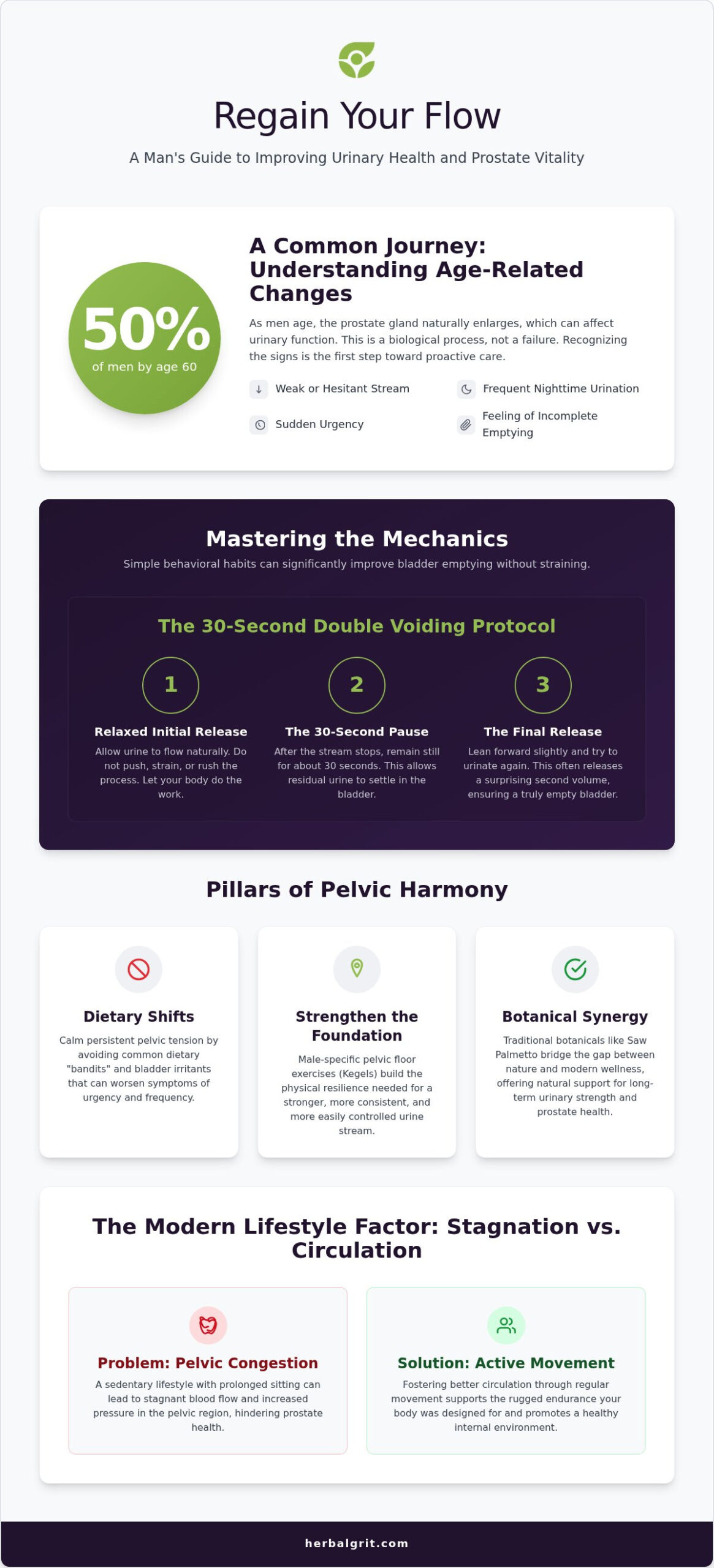
The prostate gland sits at the crossroads of the male reproductive and urinary systems. For most men, its growth is a slow, quiet process that begins as early as their 30s. By age 60, approximately 50% of men will experience an enlarged prostate. This growth isn’t a sign of failure, but rather a biological evolution that requires a new level of internal awareness. When the gland expands, it can begin to squeeze the urethra, leading to the first signs of an unhealthy prostate that many men tend to overlook.
Approaching this shift from a modern apothecary perspective means looking beyond the physical gland. We see urinary health as a reflection of your overall environment. It requires a blend of traditional botanical wisdom and the steadfastness of a daily wellness routine. Instead of waiting for a crisis, proactive longevity in 2026 is about nurturing pelvic health through intentional shifts that honor the body’s natural resilience. It is a journey of maintaining the balance between the raw power of nature and the discipline of modern health support.
BPH vs. Occasional Hesitancy
Most men eventually encounter Benign Prostatic Hyperplasia (BPH), a non-cancerous enlargement that exerts mechanical pressure on the urinary tract. This pressure creates two distinct types of challenges. Obstructive symptoms, such as a weak stream or hesitancy, occur when the pathway is physically narrowed. Irritative symptoms involve urgency and frequent urination at night in men over 50. While occasional hesitancy might follow a stressful day, persistent changes are often signs of an unhealthy prostate that suggest the gland needs more targeted, restorative support.
The Role of Pelvic Congestion in Male Flow
Modern life often demands hours of sitting, which can lead to stagnant blood flow and increased pressure in the lower abdomen. This pelvic congestion is a modern lifestyle byproduct that hinders the restorative flow of nutrients to the prostate gland. When metabolic health wavers, inflammation often follows, further complicating urinary strength and pelvic comfort.
To restore a sense of tranquility and flow, we must address these triggers before they become chronic hurdles. A sedentary lifestyle doesn’t just affect your heart; it creates a heavy, stagnant environment in the pelvic floor. By fostering better circulation and metabolic health, you support the rugged endurance your body was designed for. True vitality comes from understanding that the body is a living ecosystem that thrives on movement and purity.
Mastering the Mechanics: Behavioral Habits for Better Bladder Emptying
Urination is a rhythm, not a chore. Many men attempt to override the signs of an unhealthy prostate by physically forcing a stream, yet this often achieves the opposite of the intended effect. When you strain, you inadvertently tighten the very pelvic floor muscles that must relax for the urinary sphincter to open. This creates a mechanical conflict that can leave the bladder partially full, leading to that nagging sensation of incomplete emptying. A structured approach to managing an enlarged prostate involves re-learning these basic mechanics to work with your body rather than against it.
Posture also plays a vital role in pelvic harmony. Modern toilets often place the body in an alignment that can kink the urinary pathway. By leaning forward slightly and ensuring your feet are firmly planted, you use gravity to your advantage. This simple shift helps the bladder neck open more fully, allowing for a more consistent flow without the need for dangerous abdominal pressure.
The 30-Second Double Voiding Protocol
Double voiding is a gentle, disciplined technique designed to ensure the bladder is truly empty before you leave the bathroom. It’s particularly helpful for those who feel the urge to return just minutes after finishing. Follow these three steps to restore confidence in your flow:
- Relaxed Initial Release: Stand or sit comfortably and allow the urine to flow naturally. Do not rush or push to finish faster.
- The 30-Second Pause: Once the stream stops, remain where you are. Stand still or shift your weight slightly for about 30 seconds. This allows any residual urine to settle at the base of the bladder.
- The Final Release: Lean forward slightly and try to urinate again. You’ll often find a significant second volume is released, which would have otherwise caused an early return of urgency.
Scheduled Voiding and Bladder Retraining
Bladder retraining is about re-teaching your body the difference between a true need to go and a premature urge. If you find yourself visiting the bathroom every hour, your bladder may have lost some of its natural elasticity. By using a timed approach, you can gradually increase the intervals between visits. Start by setting a schedule, perhaps every two hours, and try to stick to it even if the urge arrives early. Over time, this strengthens the bladder’s capacity and reduces the frequency of sudden, frantic trips.
Managing your evening ritual is equally important. To combat nocturia, try to limit fluid intake two hours before bed, while ensuring you stay hydrated during daylight hours. While behavioral shifts are essential, they often work best when paired with a wellness routine that addresses the root signs of an unhealthy prostate through natural nourishment. For those seeking to reinforce these habits with a botanical foundation, exploring the curated power of ProstaVive can provide the internal support your resilience requires.
Dietary Shifts and Irritants: Fueling a Calmer Pelvic Environment
Your pelvic floor is a sensitive ecosystem that responds directly to the internal climate you create through nutrition. While we’ve already explored behavioral habits for better bladder emptying, those efforts can be undermined by biochemical irritants. Highly concentrated urine, which occurs when you are dehydrated, acts as a potent chemical irritant to the bladder lining; this triggers false urgency signals that mimic the signs of an unhealthy prostate. Maintaining a tranquil pelvic environment starts with identifying which “bandits” are disrupting your peace.
Many men mistakenly reduce water intake to avoid frequent trips to the bathroom. This strategy often backfires. Dehydration leads to acidic urine that further inflames the bladder and exacerbates the very signs of an unhealthy prostate you’re trying to manage. Aim for a steady, rhythmic intake of water throughout the daylight hours. This keeps the urine diluted and the pelvic environment calm, allowing your body’s natural healing processes to function without constant irritation.
Managing Bladder Irritants Without Sacrificing Lifestyle
Caffeine and alcohol are the primary disruptors of urinary tranquility. Caffeine acts as both a diuretic and a bladder stimulant, while alcohol interferes with the brain’s signals to the kidneys. To protect your sleep and flow, implement a strict caffeine cutoff at noon. This ensures the stimulant is mostly cleared from your system before you begin your evening wind-down.
Spicy foods containing capsaicin and highly acidic items like citrus or tomatoes can also trigger urgency signals in the brain. These triggers often lead to sudden, sharp urges that feel like a loss of control. Swapping your afternoon coffee for herbal infusions like marshmallow root or corn silk can soothe the urinary tract while providing the hydration necessary for a healthy, consistent stream.
Prostate-Friendly Nutrients for Daily Resilience
Nourishing the gland itself is a cornerstone of long-term vitality. Lycopene, found in cooked tomatoes, and Zinc, abundant in pumpkin seeds, are essential for maintaining glandular integrity and cellular health. These nutrients act as a botanical shield, supporting the prostate’s natural function and resilience. When the gland is properly nourished, it is less likely to become a source of pelvic tension.
Fiber is an often-overlooked hero in pelvic health. Chronic constipation creates rectal pressure that physically crowds the bladder, making it harder to maintain a steady stream and leading to feelings of incomplete emptying. Incorporating plenty of leafy greens and whole grains ensures your digestive system supports your urinary flow. Additionally, the use of pumpkin seed oil for prostate health has been a traditional apothecary staple for generations, prized for its ability to support smooth muscle relaxation within the urinary tract. By choosing ingredients that promote purity and balance, you build a foundation for rugged endurance that lasts a lifetime.
Strengthening the Foundation: Pelvic Floor and Physical Resilience
Building a resilient body requires more than just mechanical habits or dietary shifts; it demands a strong, flexible foundation. The pelvic floor is a hammock of muscles that supports the bladder and regulates the urinary sphincter. When these muscles become weak or excessively tight, they contribute to the very signs of an unhealthy prostate that disrupt your daily peace. Restoring this foundation is about developing a deep, internal awareness of how your body holds tension and how it generates strength.
Physical resilience also extends to your core and daily movement patterns. A strong core provides the intra-abdominal support necessary for the bladder to function without strain. Simple, consistent movement like walking acts as a natural pump for the pelvic region, encouraging healthy circulation and preventing the congestion we discussed earlier. This isn’t about high-intensity training, but about the rugged endurance found in steady, rhythmic activity that honors the body’s natural design.
The Male Pelvic Floor Routine
The first step in any pelvic routine is locating the pubococcygeus (PC) muscle. You can identify this muscle by briefly attempting to stop the flow of urine mid-stream. Once you’ve felt that internal lift, you can perform these exercises anywhere without anyone noticing. A balanced daily routine includes two types of engagement:
- Slow Contractions: Lift and hold the PC muscle for five seconds, then release completely for five seconds. Repeat this 10 times to build endurance.
- Quick-Flicks: Rapidly contract and release the muscle 10 times in a row to improve the sphincter’s ability to respond to sudden pressure.
Consistency is more important than intensity. Integrating these five-minute sessions into your morning commute or while sitting at your desk ensures your pelvic foundation remains steadfast and supportive.
Cortisol and the Tight Pelvis Syndrome
Stress is a physical event that often manifests as a “clenched” pelvis. When you’re in a state of fight-or-flight, your body naturally tightens the pelvic bowl, which can lead to hesitant flow and increased urgency. This chronic tension is one of the subtle signs of an unhealthy prostate that stems from an overactive nervous system. Diaphragmatic breathing, where you breathe deeply into your belly rather than your chest, helps signal the pelvic floor to relax and expand.
Managing these internal stressors is a vital part of your wellness routine. By pairing physical exercises with techniques that lower cortisol, you create an environment where your body can truly heal. For those looking to deepen their commitment to long-term vitality, understanding how to craft a routine for peak physiological support is a powerful next step. To further reinforce your body’s natural defenses and ensure your flow remains strong and consistent, explore the restorative benefits of ProstaVive as your curated botanical companion.
Botanical Synergy: Natural Support for Prostate and Urinary Flow
Restoring a strong, consistent flow often requires looking beyond external habits to the internal chemical environment of the body. While mechanics and diet provide the structure, botanical support offers the deep, restorative nourishment that traditional apothecary wisdom has long championed. Botanical synergy is the harmonious interaction of plant-based compounds that creates a result greater than the sum of its parts. By combining specific nutrients, you address the signs of an unhealthy prostate from multiple biological angles rather than relying on a single, isolated ingredient.
Saw Palmetto and Beta-Sitosterol are the foundations of this natural approach. Saw Palmetto has been prized for generations for its ability to support smooth muscle relaxation and healthy hormone metabolism within the gland. When paired with Beta-Sitosterol, a plant sterol that supports urinary tract function, the result is a significant improvement in flow strength and bladder comfort. This combination reflects the rugged endurance of nature, providing the steadfastness your body needs to maintain long-term pelvic harmony.
Purity is the cornerstone of effective botanical care. In a market often saturated with synthetic fillers, choosing supplements with ecological integrity is essential. Toxic additives and artificial binders can disrupt the very tranquility you are trying to cultivate. High-quality formulas focus on raw, potent ingredients that bridge the gap between ancient herbal knowledge and the modern need for health support. This intentional curation ensures that every nutrient serves a purpose in your vitality routine.
ProstaVive: The Powerhouse Solution for Male Flow
For men seeking a comprehensive, high-performance approach, ProstaVive stands as a curated botanical formula designed for peak urinary wellness. It isn’t just a collection of herbs; it’s a proprietary powerhouse formula that targets the root causes of flow disruption. By focusing on purity and sustainability, it provides the natural support necessary to reclaim a life of uninterrupted sleep and consistent strength. It serves as the logical next step for those who value authentic botanical products and disciplined wellness.
Integrating Botanical Support into Your Routine
Adding a supplement like ProstaVive to your day works best when it’s part of a holistic journey. Combine it with the double voiding techniques and the anti-inflammatory diet we’ve discussed to create a multi-layered defense against the signs of an unhealthy prostate. Natural health is a steady process that requires consistent nurturing.
Patience is vital when working with the raw power of nature. Unlike pharmaceuticals that offer a quick, synthetic fix, botanical solutions build resilience over time. By staying committed to your routine, you allow these plant-based compounds to slowly restore balance to your pelvic ecosystem. This unhurried rhythm mirrors the calm nature of the products themselves, leading to a state of long-term health and rugged vitality.
Cultivating a Lifetime of Pelvic Harmony
Your journey toward better flow is a path of restoration and internal balance. By mastering the mechanics of bladder emptying and refining your daily nutrition, you take active command of your pelvic environment. It’s about recognizing the subtle signs of an unhealthy prostate early and responding with the steadfastness of a disciplined wellness routine. You now have the tools to combine physical resilience with the restorative power of nature to reclaim the rugged endurance your body was designed for.
To further enhance this journey, consider a solution grounded in nature-positive integrity. Support your flow and vitality with ProstaVive, the natural choice for men’s prostate health. This proprietary botanical formula is specifically designed for peak male physiological support, bridging the gap between traditional apothecary wisdom and your modern health goals. It is a curated way to ensure your body receives the purity and support it deserves.
Reclaiming your sleep and your confidence is within reach. With patience and the right natural allies, you can foster a sense of tranquility that lasts a lifetime. Stay committed to your rhythm, and trust in the inherent strength of your body’s natural systems.
Frequently Asked Questions
Can pelvic floor exercises really help men improve their urine flow?
Yes, pelvic floor exercises are highly effective for strengthening the muscles that control the urinary sphincter. By performing targeted contractions, you improve the physical foundation of your pelvic bowl. This helps prevent leakage and ensures a more forceful, controlled release. Consistency is key; most men find that a daily five-minute routine provides the necessary resilience to support long-term urinary strength and confidence.
What are the best foods to eat for a healthy prostate and better flow?
Focus on a diet rich in lycopene and zinc to maintain glandular integrity. Cooked tomatoes, pumpkin seeds, and fatty fish provide the raw nutrients your body needs to manage the signs of an unhealthy prostate. Additionally, high-fiber foods like leafy greens prevent constipation, which reduces physical pressure on the bladder. Choosing whole, unprocessed ingredients fosters an internal environment of tranquility and supports your body’s natural restorative processes.
How long does it take to see results from natural urinary flow techniques?
Most men begin to notice improvements within four to eight weeks of consistent practice. Behavioral shifts like double voiding can offer immediate relief from urgency, while dietary changes and pelvic strengthening require more time to yield physical results. Natural health is a journey of steady progress rather than a quick fix. By maintaining your routine with patience, you allow your body to build the rugged endurance necessary for lasting vitality.
Is it normal for urine flow to slow down as men get older?
While a slowing stream is a common biological shift as the prostate evolves, it shouldn’t be accepted as an inevitable decline. This change often occurs because the gland gradually expands, putting mechanical pressure on the urethra. Recognizing these signs of an unhealthy prostate allows you to take proactive steps through natural solutions. Addressing flow changes early helps maintain pelvic harmony and prevents more significant interruptions to your daily rhythm.
Does drinking more water actually help improve a weak urine stream?
Proper hydration is essential because it prevents urine from becoming overly concentrated and acidic. When urine is too dark, it acts as a chemical irritant to the bladder lining, triggering false urgency and making a weak stream feel more frustrating. Drinking a steady amount of water throughout the day keeps the urinary tract flushed and calm. Just remember to taper your intake in the evening to protect your sleep.
What is the double voiding technique and how do I do it?
Double voiding is a simple mechanical habit used to ensure the bladder is completely empty. After you finish urinating the first time, remain still for about 30 seconds to allow residual urine to settle. Lean forward slightly and attempt to urinate again. This second release clears the volume that often causes men to return to the bathroom just minutes later, helping you achieve a more restful and uninterrupted schedule.
Can stress or anxiety cause a weak urine flow in men?
High levels of stress trigger the fight-or-flight response, which can cause the pelvic floor muscles to clench involuntarily. This chronic tension makes it difficult for the urinary sphincter to relax fully, leading to a hesitant or weak flow. Practicing diaphragmatic breathing can help signal your body to release this “pelvic armor.” Addressing these signs of an unhealthy prostate through relaxation is just as important as physical exercise for maintaining a healthy stream.
Are there any specific supplements that are scientifically proven to help with flow?
Botanical ingredients like Saw Palmetto and Beta-Sitosterol are widely recognized for their role in supporting male urinary health. These traditional apothecary staples work by promoting smooth muscle relaxation and supporting healthy hormone metabolism. For those seeking a comprehensive approach, ProstaVive offers a proprietary powerhouse formula that combines these elements for peak physiological support. Botanical synergy ensures that your body receives a balanced, high-quality blend of nutrients to sustain long-term vitality.