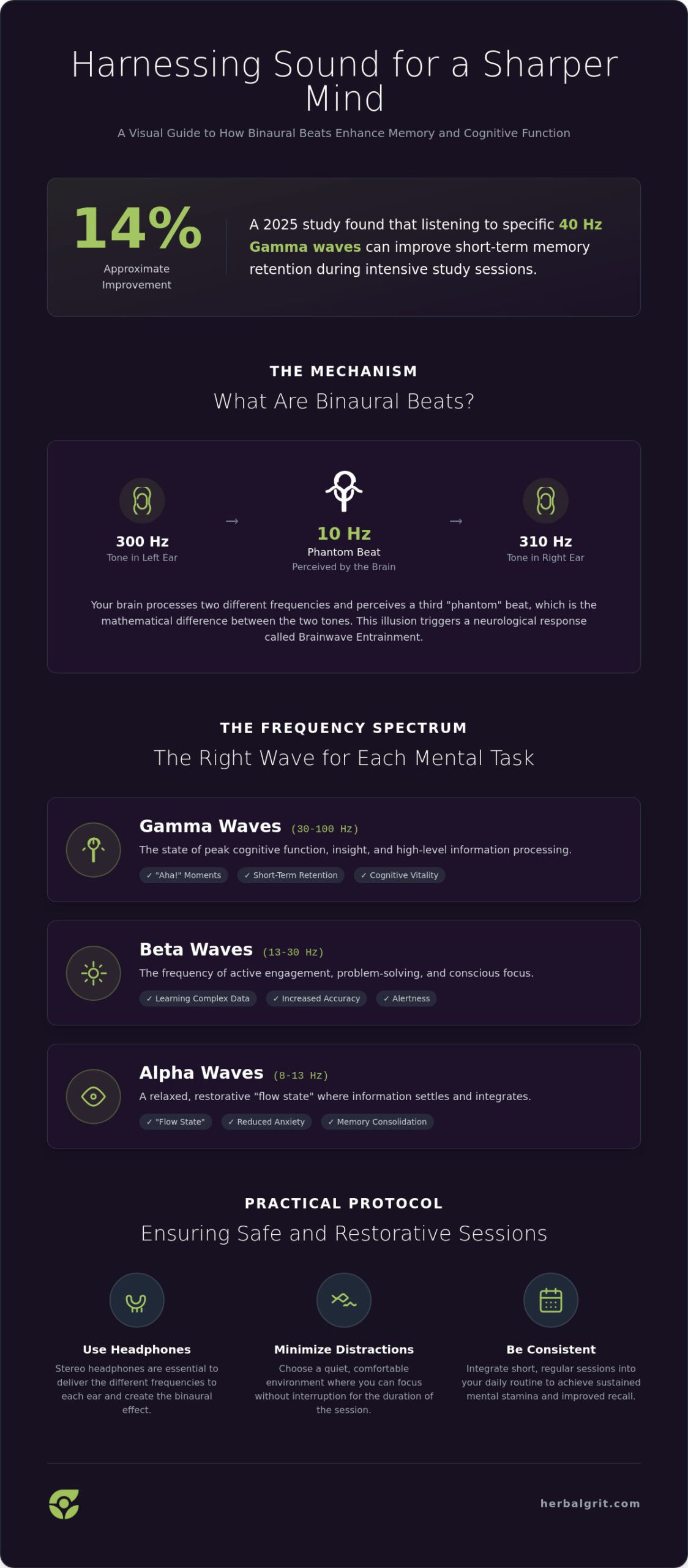
A 2025 study found that listening to specific gamma waves at 40 Hz can improve your short-term memory retention by approximately 14% during intensive study sessions. It’s a startling figure that highlights why so many people are turning to binaural beats for memory as a non-invasive way to sharpen their mental edge. You’ve likely felt that frustrating fog when a name or a date sits just out of reach, or the anxiety that builds when your focus slips during a long work day. We understand that you want a sharper mind without relying on harsh, synthetic stimulants or invasive measures.
You’re right to be cautious about modern cognitive enhancers, but the bridge between nature and neuroscience offers a gentler, more grounded path. Discover how specific sound frequencies can synchronize your brainwaves to enhance memory retention and cognitive clarity naturally. This guide explores the science of frequency-based recall, the latest 2026 research on auditory stimulation, and how to integrate these restorative sounds into your daily wellness routine for sustained mental stamina and improved recall speed.
Key Takeaways
- Understand the neurological mechanism that allows sound to act as a “tuning fork” for your brain’s recall centers.
- Identify the specific frequency ranges, like Gamma and Alpha, that facilitate deep focus and high-level information processing.
- Master a practical routine for binaural beats for memory to ensure your sessions are both safe and restorative for your ears.
- Learn why auditory stimulation works best when paired with botanical support to nourish your brain’s natural growth factors.
- Discover how a 12-minute precision-engineered audio track provides a streamlined alternative to generic, unverified soundscapes.
What Are Binaural Beats and How Do They Affect Memory?
Think of your brain as a finely tuned instrument that occasionally slips out of key. When we talk about binaural beats for memory, we aren’t just discussing pleasant background noise. We are describing a precise form of auditory architecture. At its core, this is an auditory illusion created when you hear two slightly different frequencies in each ear. Your brain perceives a third, “phantom” frequency that represents the mathematical difference between those two tones.
To truly grasp What are binaural beats, it helps to view them as a gentle guide for your neural pathways. Unlike standard lo-fi music or simple nature sounds, these frequencies trigger a “Frequency Following Response” (FFR). This is your brain’s natural instinct to align its internal electrical activity with the external rhythm it hears. It shifts your mind from a state of scattered static into a focused, resonant harmony that is much more conducive to learning and retention.
Our approach is rooted in this restorative philosophy. We see sound as a botanical for the ears; it’s a natural, non-invasive way to support your cognitive health. By using frequency as a catalyst, we can help the brain return to its most efficient state without the need for synthetic intervention or invasive enhancers.
The Mechanism of Brainwave Entrainment
Your brain doesn’t just listen to these sounds; it calculates them. When a tone of 300 Hz enters the left ear and 310 Hz enters the right, your brainstem identifies the 10 Hz difference. This creates a bridge between your left and right hemispheres, encouraging them to work in unison. Entrainment is the brain’s natural capacity to reorganize its neural firing patterns to match an external rhythmic stimulus, a process central to our 2026 understanding of neuroplasticity. By moving away from chaotic thought patterns, you create a stable foundation where information can be stored and retrieved with greater ease.
Why Memory Requires Specific Frequencies
Recall isn’t a magic trick. It’s a physiological event. For your brain to encode new data, it needs a specific “rhythm” of electrical pulses. High stress often creates high-frequency “noise” that blocks this encoding process. This is why you often forget names or dates when you’re feeling anxious or overwhelmed. Using binaural beats for memory helps lower this internal friction. When your brain is in the right frequency state, it can more effectively build the neural connections required for long-term storage. By treating memory as a biological process that needs the right environmental “weather,” we use sound to cultivate a more receptive mental landscape.
The Frequency Spectrum: Gamma, Beta, and Alpha for Recall
The brain operates on a spectrum of electrical pulses, much like the changing seasons in a forest. To use binaural beats for memory effectively, you must understand which “seasonal” frequency matches your current mental task. It isn’t a one-size-fits-all solution. Different waves serve different stages of the recall process, from the initial spark of an idea to the deep storage of a lifelong lesson.
Beta waves (13-30 Hz) represent the frequencies of active engagement. Think of them as the bright, midday sun. They are essential when you’re first learning complex data or analyzing a difficult problem. Formal research on beta-frequency beats has shown that auditory stimulation at 15 Hz can significantly increase response accuracy during working memory tasks. This frequency keeps the mind alert and prevents the “drifting” that leads to occasional forgetfulness.
As you move into a more relaxed state, Alpha waves (8-13 Hz) take over. This is the “flow state,” where information begins to settle and integrate. While Beta is for the active intake of data, Alpha is for the transition. It bridges the gap between conscious thought and the quiet places where long-term memories are formed. Using Alpha frequencies creates a restorative environment that reduces study-related anxiety, making it easier for your mind to hold onto what it has learned.
Gamma Waves and Information Processing
Gamma waves (30-100 Hz) represent the highest level of cognitive activity. They are often linked to the “aha!” moment when disparate pieces of information suddenly click into a cohesive whole. In 2026, researchers have increasingly focused on 40 Hz Gamma stimulation as a way to maintain cognitive vitality and improve short-term retention. This high-frequency binding is a cornerstone of how to stay mentally sharp as you age, as it encourages the brain to remain flexible, interconnected, and resilient against the fog of time.
Alpha and Beta: Balancing Focus and Retention
Effective memory isn’t just about intense focus. It requires a rhythmic balance. Beta waves provide the analytical power needed to grasp new concepts, but without transitioning into an Alpha state, that information often remains in short-term “scratchpad” memory and is quickly lost. A multi-wave approach is superior because it mirrors the natural cycle of the human mind: intense observation followed by restorative integration. While sound provides the structural rhythm for these waves, your neurons also need physical nourishment to build lasting connections. You might consider a gentle botanical support like Synaptigen to ensure your brain has the cellular harmony required for this frequency-based recall.
A Practical Protocol for Using Binaural Beats for Memory
To experience the full restorative power of binaural beats for memory, you must treat the process with the same intentionality as a traditional botanical ritual. The physical requirements are simple but non-negotiable. First, you must use stereo headphones. Because the “beat” is an illusion created by the brain calculating the difference between two distinct tones, your ears must receive those tones separately. Without headphones, the frequencies mix in the air before reaching your mind, and the entrainment effect is lost.
Volume is another critical factor. Many people mistakenly believe that louder sound leads to faster results, but the opposite is true. We recommend a low to moderate volume, just enough to hear the tones clearly without them becoming a distraction. High volume can lead to auditory fatigue, which creates stress and counteracts the very clarity you are trying to achieve. Aim for sessions between 12 and 30 minutes. This duration is the “sweet spot” for cognitive entrainment, allowing your brainwaves to synchronize without overstimulation.
Timing your sessions can also enhance your results. Morning sessions are ideal for activating Beta or Gamma waves to sharpen your focus for the day ahead. Evening sessions, focused on Alpha frequencies, are perfect for memory consolidation, helping your mind organize and store the information you gathered during the day. This rhythmic approach ensures your cognitive health remains balanced and steady.
Setting the Environment for Cognitive Success
Your physical space acts as the soil in which your focus grows. A quiet, distraction-free environment is essential for auditory learning. When you pair these frequencies with “deep work” sessions, you create a powerful synergy that protects your mental stamina. If you are looking for more ways to refine your approach, you can explore these techniques to improve learning and memory to build a comprehensive wellness routine.
Consistency and the “Cumulative Effect”
The brain thrives on regularity. Listening to binaural beats once a month is like watering a plant once a season; it isn’t enough to sustain growth. Daily practice yields far better results than occasional “marathon” sessions because it reinforces the neural pathways associated with the cognitive benefits of different frequencies. Over time, you’ll notice subtle improvements in how quickly you recall names or grasp new concepts. To help you begin, here is a simple 7-day starter schedule:
- Days 1-3: 15 minutes of Alpha waves in the late afternoon to reduce mental fog.
- Days 4-5: 20 minutes of Beta waves during a morning work or study session.
- Days 6-7: 12 minutes of Gamma waves followed by a short period of quiet reflection.
By following this structured flow, you move from a state of discovery to one of disciplined, long-term health.
Beyond Sound: Pairing Audio with Physiological Brain Support
Viewing cognitive health through our “Apothecary Perspective” reveals a simple truth: sound acts as the catalyst, but nutrition remains the fuel. While binaural beats for memory provide the rhythmic structure your brain needs to synchronize, your neurons require physical building blocks to create lasting changes. Without the right biological support, even the most precise frequencies can only do so much. A brain clouded by poor metabolic health or systemic inflammation will struggle to maintain the “Frequency Following Response” we discussed earlier. This is why we consider metabolic support a foundational layer for anyone seeking true mental clarity.
Central to this process is a protein called Brain-Derived Neurotrophic Factor (BDNF). Think of BDNF as “fertilizer” for your brain cells. It encourages the growth of new neurons and strengthens the synapses that hold your memories. When you combine auditory entrainment with a lifestyle that promotes high BDNF levels, you aren’t just listening to sounds; you are actively rebuilding your cognitive architecture. This synergy between frequency and physiology is what transforms a temporary state of focus into a permanent improvement in recall.
Nutritional Synergies for Auditory Entrainment
Certain botanical ingredients can enhance your brain’s receptivity to these sound waves. For instance, Omega-3 fatty acids and powerful antioxidants protect the fatty sheaths around your nerves, ensuring that electrical signals travel quickly and clearly. We have found that Synaptigen is a cutting-edge brain health formula that provides exactly this kind of cellular harmony. By nourishing the brain at a foundational level, you make it easier for binaural beats for memory to “take root” and produce measurable results.
Managing Cortisol to Protect Memory
Chronic stress is perhaps the greatest enemy of the hippocampus, the part of your brain responsible for forming new memories. High levels of cortisol act like a corrosive agent, slowly degrading your ability to retain information. This is where the calming authority of frequency therapy becomes invaluable. By lowering cortisol levels through Alpha or Theta entrainment, you create a safe biological window where your brain can finally rest and repair itself. This restorative state allows your herbal supplements for focus and memory to work with much greater efficiency. If you want to maximize this effect, you should try Synaptigen for cognitive harmony to ensure your mind has the steady, botanical resilience it deserves.
Activating Recall with The Brain Song: A Specialized Solution
While you can find countless free tracks online, not all audio is created with the same intentionality. Generic binaural beats for memory found on public platforms often suffer from compressed audio quality and abrupt ad interruptions. This isn’t just a nuisance; it’s a disruption to the entrainment process. Every time an ad breaks your focus, your brain loses its steady synchronization, forcing you to start the “Frequency Following Response” all over again. For those serious about cognitive performance, these interruptions are more than an inconvenience. They are a barrier to restorative progress.
The Brain Song represents the professional-grade evolution of this technology. It’s a specialized 12-minute neuroscience-based audio offer designed to fit seamlessly into a modern, disciplined wellness routine. Instead of needing to set aside an hour for mental exercise, you can achieve deep neural harmony in a fraction of the time. This precision-engineered approach ensures that the frequencies are layered with the purity required for cellular-level resonance, providing a bridge between the raw power of sound and your need for daily focus.
Adopting this specialized solution is the logical next step for anyone who has felt the frustration of occasional forgetfulness. By using high-fidelity, ad-free audio, you ensure that your brain’s journey into a state of recall is uninterrupted and steady. It’s a boutique approach to mental clarity that values your time as much as your health.
Why Engineered Audio Surpasses Generic Beats
Professional audio layering involves more than just mixing two tones. It requires clean signal processing to target specific neural pathways without the “noise” that causes auditory fatigue. The Brain Song uses high-fidelity tracks to provide a reliable, rhythmic foundation for your brain to follow. This level of curation is what distinguishes a specialized tool from the sea of unverified soundscapes found elsewhere. When the signal is clean, the brain doesn’t have to work as hard to find the rhythm, allowing you to slip into a state of focus with much less effort.
Getting Started with Your Memory Transformation
True cognitive resilience comes from a holistic approach. It’s the combination of sound, proper nutrition, and steady consistency that builds long-term mental stamina. By pairing frequency-based recall with botanical support, you give your mind the rugged endurance it needs to stay sharp throughout the day. Memory isn’t a fixed trait that simply fades with time; it’s a living skill you can nurture with the right tools and a gentle, persistent routine. You have the power to protect your mental clarity through intentional choices and restorative practices.
Experience The Brain Song for peak mental recall and begin your journey toward a clearer, more vibrant mind today.
Cultivating a Resilient and Vibrant Mind
Your cognitive journey doesn’t have to be a struggle against the fog. By understanding how binaural beats for memory work, you’ve taken the first step toward a more synchronized mental state. We’ve explored how specific frequencies like Gamma and Alpha act as a restorative catalyst, while proper nutrition and metabolic health provide the necessary fuel for lasting recall. It’s about finding a balance between the softness of restorative sound and the steadfastness of a disciplined wellness routine.
When you’re ready to move beyond generic, ad-interrupted tracks, professional engineering offers a clearer path. You can now access ad-free, high-fidelity recall support designed for 12-minute daily mental activation. This professional neuroscience-based audio engineering ensures your focus remains uninterrupted and deep. You have the inherent strength to nurture your mind; stay patient and trust the process of natural restoration.
Activate your brainwaves with The Brain Song
Frequently Asked Questions
Do binaural beats for memory actually work?
Yes, peer-reviewed research indicates that specific sound frequencies can improve short-term memory retention. A 2025 study found that listening to 40 Hz gamma waves can increase recall accuracy by approximately 14% during intensive study sessions. These sounds act as a gentle tuning fork for your neurons, helping the brain find its natural rhythm for encoding data. While they aren’t a medical cure, they serve as a powerful restorative tool for a natural cognitive edge.
What frequency is best for studying and memorization?
Gamma waves near 40 Hz and Beta frequencies around 15 Hz are the most effective for active learning and analytical tasks. Gamma waves support high-level information processing and the “binding” of complex ideas, while Beta waves help maintain accuracy and sustained concentration. Integrating these with Alpha frequencies (8 to 13 Hz) after a session helps transition your mind into a flow state, ensuring that the information you study settles deeply into your long-term memory.
Do I need special headphones to listen to binaural beats?
You must use stereo headphones to experience the true entrainment effect of this technology. Because the binaural illusion requires each ear to receive a slightly different frequency, standard speakers or mono headsets cannot create the necessary phantom beat. High-quality, comfortable headphones ensure that the signal remains pure and free from environmental noise, allowing your brainstem to calculate the difference between tones without external interference or auditory clutter.
Can I listen to binaural beats while sleeping to improve memory?
Listening to Alpha or Theta frequencies during rest can support memory consolidation, which is the process where your brain organizes the day’s information. While your body recovers, these gentle rhythms encourage a tranquil mental environment that clears the static of daily stress. This restorative practice helps your mind store important details securely within your neural pathways, making it a calming addition to a nighttime wellness routine for long-term health.
How long should I listen to binaural beats for focus?
A duration of 12 to 30 minutes is generally considered the optimal sweet spot for achieving stable brainwave synchronization. This window provides enough time for your neural firing patterns to align with the external rhythm without causing overstimulation or auditory fatigue. Short, consistent daily sessions are much more effective than occasional hours-long marathons, as they mirror the natural cycles of focus and restorative rest that your brain naturally requires to function at its peak.
Are there any side effects of listening to brainwave entrainment audio?
Binaural beats are generally considered safe for most people, though listening at excessive volumes may lead to mild headaches or transient anxiety. It’s best to maintain a low to moderate volume to ensure the experience remains restorative and gentle. Individuals with a history of seizure disorders or other serious neurological conditions should consult a healthcare provider before beginning any new auditory routine to ensure it aligns safely with their specific health needs.
Can binaural beats help with age-related memory loss?
Using binaural beats for memory can be a foundational part of a cognitive longevity routine by encouraging neural flexibility and reducing stress. While they don’t treat clinical conditions, they help you stay mentally sharp by clearing the “brain fog” that often leads to occasional forgetfulness. When you pair these frequencies with botanical support and steady metabolic health, you provide your mind with the rugged endurance needed to maintain clarity as you age.
What is the difference between white noise and binaural beats?
White noise is a steady, consistent sound used to mask environmental distractions, whereas binaural beats are active tools designed to change your internal brainwave state. While white noise creates a blanket of tranquility to help you ignore external sounds, binaural beats trigger a specific “Frequency Following Response.” They act as a precision-engineered catalyst to shift your mind into specific states of focus, deep recall, or restorative rest rather than just providing a passive background.