Did you know that nearly one in three adults over the age of 30 now lives with the disruptive cycle of waking up at least twice a night? This condition, known as nocturia, impacts approximately 40% of the adult population, and it often feels like a silent thief of your daily vitality. If you are searching for how to reduce nighttime urination, you understand that the struggle isn’t just about the bathroom trip; it’s about the heavy fog of fatigue and the lingering anxiety that comes with broken sleep.
It’s frustrating to settle for generic advice when your body feels out of sync with its natural rhythms. We believe that true wellness is a bridge between the raw power of nature and the modern need for targeted support. This guide provides a holistic framework to help you reclaim your rest by addressing the physiological triggers of frequent wake-ups. You’ll explore a triad approach that balances fluid dynamics, bladder integrity, and the synchronization of your brain’s sleep signals, offering a gentle yet disciplined path toward six to eight hours of uninterrupted, restorative sleep.
Key Takeaways
- Identify the difference between nocturnal polyuria and bladder urgency to target the specific physiological triggers behind your broken rest.
- Master the “Fluid Taper” technique and evening salt management to discover how to reduce nighttime urination through simple, intentional lifestyle shifts.
- Support prostate health and bladder integrity to address the irritation and incomplete emptying that often lead to unnecessary nighttime waking.
- Synchronize your brain’s sleep signals by managing light exposure to ensure you remain in a deep, restorative state even during light sleep cycles.
- Build a personalized 24-hour protocol that balances daytime hydration with evening cut-offs to reclaim a full 6-8 hours of uninterrupted sleep.
Understanding Nocturia: Why Your Body Wakes You Up
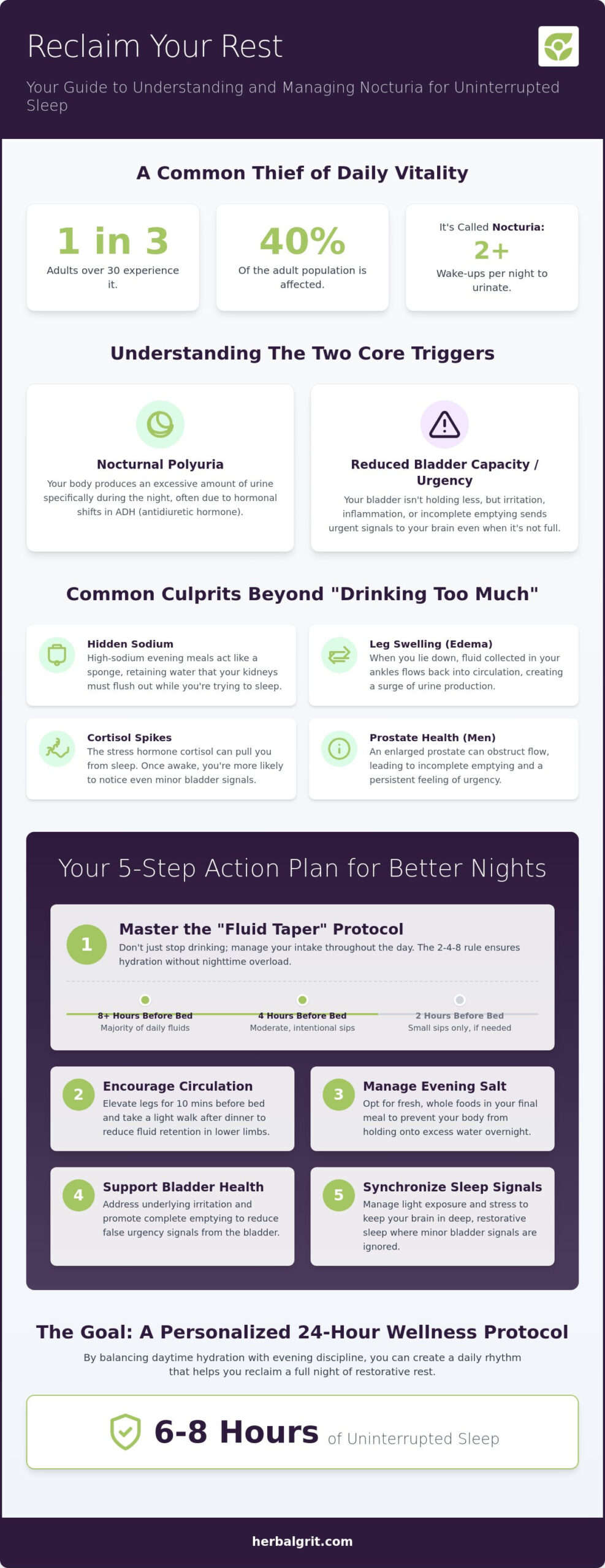
Waking up once to use the bathroom is common, but when those trips become a recurring nightly ritual, your body is signaling a disruption in its restorative rhythm. Clinically, this is known as nocturia. It’s defined as waking two or more times a night to urinate, a condition that affects one in three adults over the age of 30 as of 2026. While many dismiss it as a sign of aging, Understanding Nocturia requires looking past the bathroom door. It’s a symptom, not a disease, often rooted in how your body manages fluids and hormones during the dark hours.
There’s a significant difference between daytime frequency and nighttime urgency. You might experience global polyuria, where your body produces too much urine throughout the 24-hour cycle, or nocturnal polyuria, where the overproduction only happens while you sleep. Research in 2026 highlights a “sleep-wake feedback loop.” If your sleep is shallow, your brain is more likely to process minor bladder signals that it would normally ignore during deep sleep. Finding out how to reduce nighttime urination involves breaking this loop by addressing both the bladder’s physical capacity and the brain’s ability to stay submerged in rest.
The Circadian Rhythm of the Bladder
Your body relies on a delicate hormonal balance to keep you asleep. The primary player is the antidiuretic hormone (ADH), which tells your kidneys to concentrate urine and slow down production at night. As we age, or when we are under chronic stress, ADH levels can dip. This leads to a bladder that fills too quickly. When your circadian rhythm is fractured, the bladder doesn’t get the “quiet” signal it needs. For those struggling with sleep maintenance, YU SLEEP can provide the botanical support needed to keep your brain in those deeper, bladder-quieting cycles.
Common Triggers Beyond Just ‘Drinking Too Much’
It’s rarely just about that last glass of water. Hidden sodium in your evening meal acts like a sponge, holding onto water that your kidneys must eventually process. Another common culprit is peripheral edema, or leg swelling. When you lie down, gravity no longer keeps fluid in your ankles; it flows back toward your heart and kidneys, creating a surge of urine. Sometimes, the “3 AM wake-up” isn’t the bladder’s fault at all. A spike in cortisol can pull you out of sleep first, and once you’re awake, you simply notice your bladder. For men, this urgency is frequently linked to the prostate’s health, where a formula like ProstaVive can help support the natural flow and reduce that feeling of incomplete emptying.
5 Behavioral Steps to Reduce Nighttime Urination
Most people receive the generic advice to simply stop drinking water after sunset. This often backfires, as it leads to dehydration and highly concentrated urine that irritates the bladder lining, causing even more urgency. A more balanced, disciplined approach focuses on the timing and quality of your intake throughout the entire day. Learning how to reduce nighttime urination requires a structured daily rhythm rather than a sudden evening drought.
Your dinner choice also plays a silent role in your sleep quality. High levels of sodium act like a magnet for water, trapping it in your tissues. When you finally lie down, your body works overtime to flush that excess salt and water, resulting in multiple trips to the bathroom. Choosing fresh, whole foods for your evening meal reduces this internal pressure and keeps your kidneys from working the night shift.
The Fluid Tapering Protocol
The 2-4-8 rule is a foundational practice for restorative sleep. Aim to consume the majority of your daily fluids at least 8 hours before your head hits the pillow. In the 4 hours preceding sleep, switch to moderate, intentional intake. During the final 2 hours, limit yourself to small sips only. Be mindful of hidden fluids in evening meals; water-heavy fruits like melon or late-night bowls of soup can contribute significant volume to your bladder while you sleep. This tapering method ensures you stay hydrated without overwhelming your system during the night.
Evening Movement and Circulation
Fluid retention in the lower limbs, often called edema, is a primary driver of nocturnal polyuria. If your ankles are swollen by evening, that fluid will inevitably head for your kidneys once you’re horizontal. Spend 10 minutes before bed with your legs elevated above your heart to help your body process this fluid while you’re still awake. Light walking after dinner also encourages lymphatic drainage. For those with significant swelling, wearing compression socks during the day can prevent the buildup from occurring in the first place, making it much easier to manage how to reduce nighttime urination.
Finally, optimize your “final void” by practicing double voiding. Empty your bladder, complete your bedtime routine, and then try to go one last time right before getting into bed. Keeping your bedroom temperature cool also helps. If you’re too warm, you may experience subtle dehydration, which makes your urine more acidic and irritating to the bladder wall. If you find that even with these behavioral changes, your mind remains too alert to stay asleep, supporting your natural rhythms with specialized botanical sleep support can help you stay in a deep, uninterrupted state.
The Prostate Connection: Addressing Male Urinary Urgency
For many men, the journey to understanding how to reduce nighttime urination leads directly to the prostate. As a man ages, the prostate gland often begins to enlarge, a condition known as Benign Prostatic Hyperplasia (BPH). This growth is a natural shift in the body’s landscape, but it creates a physical bottleneck. Because the prostate surrounds the urethra, its expansion can compress the passage that carries urine out of the body. This compression leads to “incomplete emptying,” where the bladder retains a small reservoir of liquid even after you think you’ve finished. It’s like trying to drain a sink with a partially clogged pipe; the vessel never truly clears.
This residual fluid is the primary reason nighttime urgency peaks. Your bladder reaches its capacity threshold much faster because it never truly started from a state of emptiness. Additionally, the constant pressure from an enlarged prostate can irritate the bladder’s sensitive lining. This irritation sends urgent, false signals to the brain, making you feel like your bladder is at its limit when it may only be partially full. It’s a frustrating cycle of phantom urgency that pulls you out of deep, restorative sleep and leaves you feeling depleted by morning.
Signs Your Prostate is Impacting Your Sleep
Recognizing the physical markers of prostate-related nocturia is the first step toward reclaiming your night. A weak or hesitant stream, frequent “dribbling” after you finish, and the persistent sensation of “never being done” are classic indicators. If you find yourself standing at the toilet waiting for the flow to begin, your prostate is likely the culprit behind your broken sleep. These symptoms aren’t just inconveniences; they are a call for proactive care. Monitoring these changes is vital for long-term health, and you can learn more by reviewing the Signs your prostate supplement is working to track your progress effectively.
Botanical Support for Urinary Flow
Nature offers a curated selection of raw ingredients designed to support the male anatomy without the harshness of synthetic interventions. Phytosterols and specific antioxidants found in traditional botanical solutions work to soothe the inflammatory response and support the structural integrity of the prostate. These nutrients help maintain a healthy size and resilience, allowing for a stronger, more consistent stream. By reducing the physical pressure on the urethra, you allow the bladder to empty fully before bed, which is a critical component of how to reduce nighttime urination. For those seeking a dedicated, nature-positive approach, ProstaVive for natural prostate support provides a balanced blend of these high-performance ingredients, helping you bridge the gap between physical discomfort and a tranquil, uninterrupted night.
Sleep Maintenance: Training Your Brain to Stay Asleep
While previous sections focused on physical fluid dynamics and prostate health, the brain’s role in sleep maintenance is often the missing piece in learning how to reduce nighttime urination. Many people assume they wake up because their bladder is full. In reality, they often wake up due to poor sleep depth, and once they are conscious, they simply notice their bladder. This is known as the Threshold Theory. In a deep, restorative state, your brain naturally suppresses the urge to urinate. In light sleep, your “arousal threshold” is low, meaning a minor signal from your bladder that would normally be ignored can pull you into full wakefulness.
The modern environment is often at odds with this natural suppression. Blue light from digital technology disrupts the production of melatonin, the hormone responsible for signaling your body that it’s time for rest. Without adequate melatonin, you spend more time in Stage 1 and Stage 2 sleep, where you are highly sensitive to internal and external stimuli. Additionally, many adults experience a “3 AM Cortisol Spike.” When stress levels are high, your body may release cortisol too early in the night, snapping you out of deep sleep. Once you’re awake, the kidneys resume their daytime pace of production, quickly filling the bladder and making it impossible to return to sleep without a trip to the bathroom.
Sleep apnea also plays a surprising role in nocturia. When breathing is momentarily interrupted, the heart experiences a surge of pressure. This stress causes the heart to release a specific peptide that tells the kidneys to produce more urine. If you find yourself waking up with a very full bladder despite limiting fluids, it’s worth investigating your breathing patterns. Addressing these neurological and respiratory triggers is a vital step for anyone seeking how to reduce nighttime urination.
Deep Sleep as a Bladder Defense
Reaching Stage 3 sleep, also known as slow-wave sleep, is your best defense against nighttime trips. During this phase, the body is in its most tranquil state, and the nervous system is quiet. Racing thoughts and evening anxiety can keep your brain in a “high alert” mode that mimics bladder urgency. By quieting the mind, you can stay submerged in deep rest longer. For those comparing options, the Roman Sleep Support vs YU SLEEP comparison highlights how different botanical approaches can target these specific sleep cycles to help you stay asleep.
2026 Sleep Hygiene for the Modern Adult
Implementing a “Digital Sunset” is a non-negotiable part of 2026 sleep hygiene. Switch off screens at least 60 minutes before bed to allow your natural melatonin to rise. Magnesium and specific botanical aids can also assist in maintaining a steady, unhurried sleep rhythm. If you’re looking for a gentle, nature-positive way to enhance your sleep quality without the grogginess of synthetic hormones, consider YU SLEEP for non-melatonin rest. Reclaiming your night starts with creating a sanctuary for your brain to thrive. To fully transform your rest, you can experience deep sleep maintenance with YU SLEEP today.
Creating Your 24-Hour Urinary Wellness Protocol
To truly master how to reduce nighttime urination, you must view your day as a singular, connected cycle. Your actions at 8:00 AM directly influence your bladder’s behavior at 3:00 AM. This protocol isn’t about restriction; it’s about aligning your habits with your body’s natural circadian rhythms. By creating a steady, predictable flow for your system, you provide the grounded stability your body needs to remain in a restorative state throughout the night.
- Morning (8:00 AM – 12:00 PM): Front-load your hydration. Aim to consume at least 60% of your daily water intake during these hours. Incorporate light movement, such as a morning walk, to stimulate circulation and prevent fluid from pooling in your lower extremities.
- Afternoon (12:00 PM – 4:00 PM): Establish a firm caffeine cut-off by 2:00 PM. Caffeine is a known bladder irritant that can linger in your system for hours. This is also the time to be mindful of hidden salts in lunch options, which can lead to evening fluid retention.
- Evening (4:00 PM – Bedtime): Begin the “Fluid Taper” discussed in earlier sections. Transition to small, intentional sips rather than large glasses of water. Elevate your legs for 15 minutes before dinner to encourage your kidneys to process excess fluid while you’re still awake.
- Night: Transform your bedroom into a cool, dark sanctuary. If you’re managing male vitality concerns, a botanical solution like ProstaVive can be taken with your final small sip of water to support prostate health while you sleep.
The Importance of Consistency
Reclaiming your sleep is a journey of resilience, not a quick fix. One night of “good behavior” won’t reset a bladder that has been conditioned to wake up every two hours. It often takes two to three weeks of disciplined adherence to this protocol before your body’s internal clock begins to shift. Tracking your progress in a simple sleep diary can help you identify which triggers are most impactful for you. Bladder retraining is the emerging 2026 wellness trend that focuses on scheduled voiding to gradually expand the bladder’s functional capacity and reduce false urgency signals. Over time, these small, steady changes build the foundation for 6-8 hours of uninterrupted rest.
When to Seek Professional Guidance
While lifestyle shifts are the first line of defense in how to reduce nighttime urination, it’s vital to listen to your body’s deeper signals. If you experience sudden pain, visible blood in your urine, or a total inability to void, these are red flags that require immediate attention. When speaking with a practitioner, ask specific questions about your prostate health and your hormone levels, particularly ADH and cortisol. Trust in your body’s natural ability to heal when given the right environment and botanical support. For those who need extra help staying submerged in deep sleep, incorporating YU SLEEP can provide the restorative bridge needed to quiet the mind and body until morning.
Step Into a New Rhythm of Rest
Reclaiming your sleep is about more than just drinking less water; it’s about realigning your body’s internal clock and supporting your physical structure. By mastering the fluid taper and addressing the underlying prostate signals that snap you awake, you’ve discovered how to reduce nighttime urination through a steady, disciplined routine. This holistic framework bridges the gap between modern discomfort and the restorative power of nature. You now have the tools to manage fluid dynamics and quiet the brain’s arousal threshold, ensuring your nights are defined by tranquility rather than bathroom trips.
For men over 50 seeking a targeted approach, supporting the prostate is often the final piece of the puzzle. You can reclaim your nights with ProstaVive natural prostate support. This natural botanical formula is specifically curated to support both bladder and prostate health, helping you maintain a steady flow and stay submerged in deep sleep. Trust in your body’s resilience and the wisdom of botanical solutions. With a consistent 24-hour protocol, 6 to 8 hours of uninterrupted peace is well within your reach.
Frequently Asked Questions
Is it normal to pee once a night after age 50?
Waking up once during the night to urinate is considered normal for most adults over the age of 50. However, if you find yourself waking two or more times, you meet the clinical definition of nocturia, which currently affects one in three adults over age 30. While a single trip is often manageable, frequent disruptions can prevent you from reaching the deep, restorative sleep stages necessary for long term cognitive health and daily vitality.
Can certain vitamins cause frequent nighttime urination?
High doses of specific vitamins, particularly Vitamin C and Vitamin B12, can act as mild diuretics if you take them too late in the day. These water-soluble nutrients can sometimes irritate the bladder lining or increase kidney filtration rates shortly after consumption. To protect your rest, try moving your supplement routine to the morning or early afternoon. This allows your body plenty of time to process the nutrients well before you head to bed.
Does drinking apple cider vinegar help with nocturia?
There is currently no scientific evidence that apple cider vinegar reduces nighttime urination. In fact, its high acidity can irritate the bladder wall for some individuals, potentially worsening the sensation of urgency. If you’re looking for how to reduce nighttime urination, focusing on botanical support that targets prostate health or sleep depth is generally more effective than relying on acidic home remedies that may cause digestive or bladder discomfort.
How much water should I drink before bed?
You should limit your intake to small, intentional sips in the two hours immediately preceding sleep. Following the 2-4-8 rule ensures you stay hydrated during the day while tapering off as the evening progresses. Gulping water late at night overwhelms the kidneys and fills the bladder quickly. This makes it nearly impossible to stay submerged in a deep sleep state for a full six to eight hours.
Why do I pee more at night than during the day?
This often happens due to fluid redistribution when you lie down. During the day, gravity causes fluid to pool in your lower legs, a condition known as edema. Once you’re horizontal, that fluid returns to your bloodstream and is filtered by your kidneys. This process, combined with a natural dip in antidiuretic hormone (ADH) as we age, can cause your nighttime urine volume to exceed your daytime output.
Can stress or anxiety cause the urge to pee at night?
Stress and anxiety trigger the release of cortisol, which can snap you out of deep sleep and lower your bladder’s arousal threshold. When your nervous system is in a “fight or flight” state, your brain becomes hyper-aware of minor bladder signals that it would normally ignore. Managing evening stress is a critical component of any strategy for how to reduce nighttime urination and improve overall sleep maintenance.
What is the best sleeping position to reduce bladder pressure?
Sleeping on your side is generally considered the best position to minimize direct pressure on the bladder. Placing a pillow between your knees can further align the pelvis and reduce tension in the lower abdomen. While back sleeping is common, it can sometimes exacerbate airway issues like sleep apnea. As we discussed earlier, these breathing disruptions can lead to increased urine production during the dark hours.
Are there specific foods that irritate the bladder at night?
Spicy foods, chocolate, and artificial sweeteners are common bladder irritants that can cause urgency and discomfort. Acidic fruits like tomatoes or citrus can also lower the pH of your urine, making it more irritating to the bladder lining. Choosing a neutral, low-sodium dinner helps keep your bladder calm. It reduces the physical signals that might snap you out of a deep, restorative sleep cycle.