Did you know that approximately 50% of adults over the age of 50 experience nocturia, and for many men, this means waking up twice or more every single night? It’s a heavy burden to carry, especially when that broken sleep leads to chronic daytime fatigue and a fading sense of your natural, rugged endurance. If you’ve been struggling with frequent urination at night in men over 50, you aren’t alone, and you don’t have to accept it as an inevitable part of aging.
We understand the frustration of losing your vitality to a cycle of urgency and the quiet anxiety that comes with questioning your long-term prostate health. This article will help you discover why your sleep is being interrupted and how to reclaim your nights through botanical support and intentional lifestyle shifts. We’ll look at the latest 2026 clinical guidelines and explore natural ways to restore the balance your body craves, guiding you toward 7 to 8 hours of deep, uninterrupted rest and renewed confidence.
Key Takeaways
- Understand the physiological shift that occurs at age 50 and how to distinguish between true urine overproduction and simple frequency.
- Learn how an enlarging prostate contributes to frequent urination at night in men over 50 by physically obstructing natural flow.
- Identify the “False Alarm” effect where light sleep cycles trick your body into feeling a premature need to wake and urinate.
- Implement the 2026 Nighttime Vitality Protocol, featuring a specific hydration shift and a simple dietary adjustment to minimize midnight interruptions.
- Explore the restorative power of botanical harmony and how specific raw ingredients can provide steadfast support for your long-term prostate health.
Understanding Nocturia: Why 50 is the Tipping Point for Men
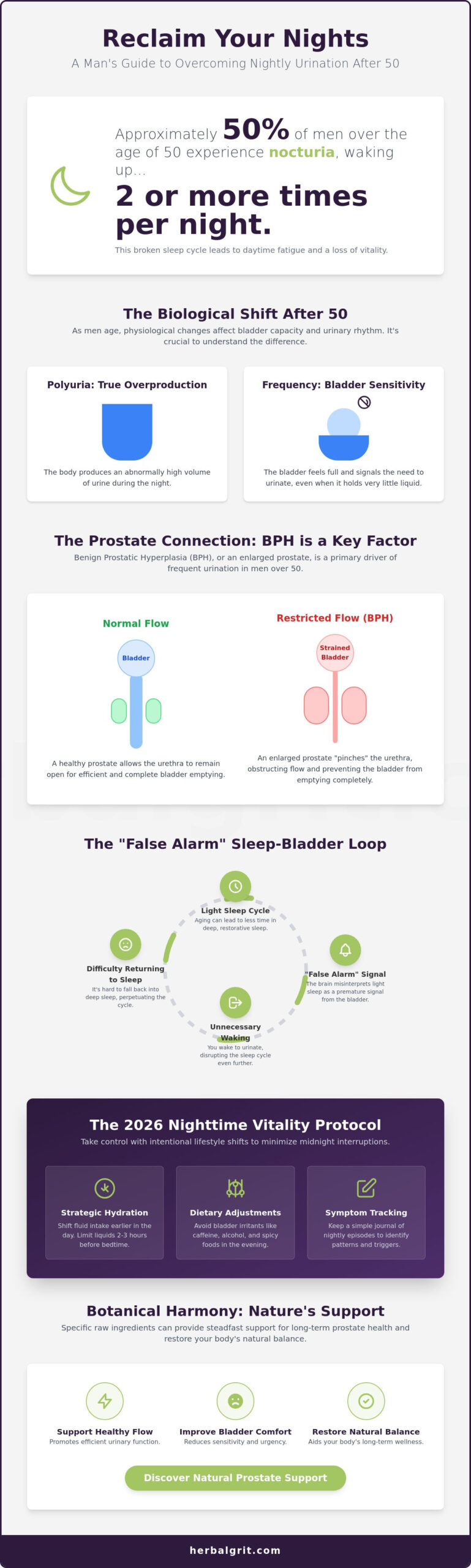
Reaching the half-century mark is a milestone of wisdom, but it often introduces a new dialogue with your body. For many, this dialogue occurs in the quiet hours of the morning when sleep should be at its most restorative. Understanding Nocturia reveals that this isn’t just a random occurrence; it’s a specific physiological condition that disrupts your natural cycle. It’s crucial to distinguish between polyuria, which is the overproduction of high urine volume during the night, and frequency, where the bladder feels full even when it holds very little. Identifying which one you are experiencing is the first step toward reclaiming your tranquility.
The idea that broken sleep is an inevitable “New Normal” is a myth that prevents men from reclaiming their vitality. Frequent urination at night in men over 50 typically stems from a physical interaction between a bladder that is losing its supple elasticity and a prostate that is beginning its natural expansion. As the prostate grows, it can create a physical pinch on the urethra, much like a kink in a garden hose. This restriction forces the bladder to work harder to empty, eventually leading to a sensitive, overactive response that pulls you from your bed multiple times.
The Biological Shift After 50
As we age, the delicate balance of hormones that governs our internal systems begins to fluctuate. These changes can alter how the kidneys process fluids and how the bladder signals the brain during rest. Over time, the smooth muscle tissues of the bladder may become less resilient, reducing its total capacity and its ability to stretch. Understanding the root of frequent urination at night in men over 50 requires looking at this aging bladder capacity versus the prostate’s gradual expansion. Nocturia is essentially a disruption of the body’s circadian urinary rhythm.
When to Seek Professional Guidance
Knowing when a symptom crosses the line from a nuisance to a concern is part of a disciplined wellness routine. If you are waking multiple times every night, it is helpful to track these episodes in a simple journal. Monitoring your PSA levels alongside your symptoms provides a clear map of your internal landscape and supports long-term prostate health. This is vital because the chronic fatigue caused by broken sleep can impact your heart health and overall resilience. A proactive approach allows you to address these signals with the calm authority and intentionality your health deserves.
The Prostate Connection: Is BPH the Hidden Culprit?
For many men, the primary culprit behind interrupted rest is a small gland that plays a massive role in urinary health. The prostate surrounds the urethra, and as it grows, it can create a physical bottleneck. This condition, known as an enlarged prostate or Benign Prostatic Hyperplasia (BPH), is the leading driver of frequent urination at night in men over 50. It’s not just a sign of getting older; it’s a mechanical shift in how your body manages fluid. When the prostate expands, it pinches the tube that carries urine out of the body, making every trip to the bathroom less efficient than the last.
When the prostate narrows this path, the bladder is often unable to empty completely. This residual urine is what creates that nagging, “always full” sensation that persists even minutes after you’ve left the bathroom. It’s a physiological loop. You wake up, go to the bathroom, but because the bladder didn’t fully drain, the signal to go returns just as you are finally entering deep sleep. These interruptions do more than just tire you out; they steal the restorative REM cycles your brain needs to maintain cognitive sharpness and emotional resilience. This cycle is why frequent urination at night in men over 50 is so detrimental to your long-term sense of vitality.
The Mechanics of an Enlarged Prostate
Visualize your urinary tract as a high-pressure system. When the prostate pinches the urethra, the bladder muscle must work overtime to push liquid through the narrowed opening. Over months and years, this constant strain can cause the bladder wall to thicken and eventually weaken, making it more sensitive to even small amounts of fluid. To understand the broader consequences of this shift on your daily life, you can explore The Hidden Impact of BPH on Quality of Life. If you’re looking for a way to support your body’s natural balance, you might consider a curated botanical blend designed specifically for prostate harmony.
Dietary Triggers for Prostate Inflammation
Nature provides clues on how to manage this growth through what we consume. Certain foods, particularly those high in refined sugars and industrial seed oils, can trigger inflammation that temporarily swells the prostate tissues, worsening nighttime urgency. There is also a strong link between insulin resistance and accelerated prostate growth, suggesting that metabolic health is inseparable from urinary health. For those seeking a holistic path to calm the system, following a specific dietary protocol can help you align your nutrition with your body’s needs for tranquility and strength.
The Sleep-Bladder Loop: Why You Can’t Fall Back Asleep
Waking in the middle of the night is more than a physical inconvenience. It’s a fracture in your body’s restorative architecture. When frequent urination at night in men over 50 becomes a nightly ritual, it breaks the most restorative stages of sleep, particularly the deep, slow-wave sleep required for physical repair. Your brain and body are denied the time they need to flush out metabolic waste and consolidate memories. This creates a cycle of exhaustion that impacts every facet of your daytime endurance.
The “False Alarm” effect is a common trap in this cycle. Often, you aren’t waking up because your bladder is full. Instead, you are drifting into a light sleep stage due to stress or environmental noise. Once you are in that shallow state, your brain becomes hyper-aware of even a small amount of urine, convincing you that a bathroom trip is urgent. This psychological trick makes you believe the bladder is the primary problem, when the real issue is sleep maintenance. Once you stand up, your body experiences a cortisol spike. This stress hormone surge makes it nearly impossible to drift back into a peaceful state, leaving you staring at the ceiling for hours.
Chronic sleep interruption carries a heavy metabolic cost. For men over 50, the lack of deep rest can lead to increased insulin resistance and higher systemic inflammation. This inflammation, as we discussed previously, can further irritate the prostate and bladder. It is a self-reinforcing loop that requires a dual approach: calming the urinary system while simultaneously protecting the integrity of the sleep cycle.
Circadian Rhythms and Urinary Output
Our bodies rely on Anti-Diuretic Hormone (ADH) to signal the kidneys to slow down urine production during the night. As men age, ADH levels naturally decline, leading to higher nighttime urine volume. You can help retrain your body to concentrate urine by establishing a more disciplined circadian rhythm. For those struggling with maintenance, exploring the Roman Sleep Support vs YU SLEEP comparison can provide clarity on which botanical approach best supports deep rest and hormonal balance.
Managing the “3 AM Mind Racing” Syndrome
The journey to the bathroom often triggers a cascade of stressful thoughts about work, health, or family. To break this, focus on lowering your heart rate the moment you return to bed through slow, rhythmic breathing. Avoid checking your phone or turning on bright overhead lights. Exposure to blue light during a bathroom trip kills melatonin production and resets your internal clock, making it much harder for your brain to signal that it’s time to return to sleep.
The 2026 Nighttime Vitality Protocol: 5 Steps to Fewer Trips
Reclaiming your sleep requires a disciplined shift in how you manage your body’s fluid and physical state. Frequent urination at night in men over 50 is often a result of fluid accumulating in the wrong places or being processed at the wrong times. By following a structured protocol, you can harmonize your internal rhythms and reduce the burden on your bladder during the night. These steps are designed to be integrated into your lifestyle with intentionality and ease.
- The Fluid Taper: Shift 80% of your total daily hydration to the hours before 4 PM. This ensures your kidneys have ample time to process fluids while you are still active, rather than working overtime while you try to rest.
- The Salt Hack: Take a tiny pinch of high-quality sea salt before bed. Pure salt helps the body retain water inside your cells where it belongs, rather than letting it filter into the bladder as waste during the night.
- Leg Elevation: If you notice swelling in your ankles, elevate your legs for 20 to 30 minutes before bed. This helps move “peripheral edema” or trapped fluid back into your bloodstream to be processed before you go to sleep.
- Pelvic Floor Awareness: Practice simple engagement and release of the pelvic muscles. Strengthening these tissues provides better mechanical control over the bladder and reduces the sudden “urge” signals that can wake you up.
- Optimize the Sleep Sanctuary: Keep your room cool and dark to prevent shallow sleep. As we discussed earlier, shallow sleep can lead to “False Alarm” awakenings where you think you need to urinate simply because you are already awake.
Strategic Hydration for Men
The type of fluid you consume is just as important as the timing. Carbonated drinks and artificial sweeteners act as bladder irritants, which can trigger urgency even when the bladder isn’t full. Focus on water enriched with natural electrolytes to ensure deep cellular hydration. Many men find that incorporating pumpkin seed oil for prostate health as a nightly ritual provides the steadfast support needed for a calmer urinary system. If you’re ready to take a comprehensive approach to your wellness, you can restore your prostate vitality naturally with targeted botanical support.
Movement and Circulation
Sedentary desk work often leads to prostate congestion and fluid buildup in the lower body. A brisk 15-minute walk in the evening helps “clear” this fluid and improves systemic circulation before you settle in for the night. Before getting into bed, perform a 2-minute stretching routine focused on the hips and lower back. This gentle movement helps relax the pelvic floor and releases tension that might otherwise keep the bladder in a state of hyper-sensitivity throughout the night.
Botanical Harmony: The Role of Targeted Prostate Support
While lifestyle adjustments and sleep hygiene form a vital foundation, true tranquility often requires a deeper, internal alignment. Nature provides a rich library of raw ingredients that have been used for generations to support the male body. For those struggling with frequent urination at night in men over 50, botanical solutions offer a way to bridge the gap between modern discomfort and ancestral vitality. By choosing traditional elements like Saw Palmetto and Beta-Sitosterol, you can support a smoother urinary flow and ease the physical pressure that often triggers nighttime urgency.
These botanical agents don’t work in isolation. A synergistic approach is far more effective than relying on a single ingredient. When antioxidant-rich formulas are introduced, they help protect the delicate tissues of the prostate from oxidative stress and environmental toxins. This shift moves you away from simply managing symptoms and toward nurturing your long-term resilience. It is about creating an internal environment where the prostate can exist in harmony with the bladder, allowing for the deep, restorative rest you’ve been missing.
The ProstaVive Difference
Addressing the root causes of prostate congestion requires a specialized level of curation. ProstaVive is designed as a powerhouse for those ready to move beyond temporary fixes. It focuses on the inherent strength of the environment, using high-quality ingredients to soothe the system and restore natural balance. As you begin this journey, it’s essential to observe the subtle shifts in your body. Tracking your progress helps you stay connected to your wellness routine, and you can learn more about what to look for in our guide on Signs Your Prostate Supplement Is Working. For those ready to invite this botanical support into their daily lives, the ProstaVive natural support page provides a clear path forward.
Long-Term Maintenance and Resilience
Consistency acts as the bridge between the raw power of nature and lasting health. Botanical support is not an overnight fix; it requires the steadfastness of a disciplined routine. Most men find that it takes between 4 and 8 weeks for the full restorative effects to manifest within the body. This timeframe allows the nutrients to build up and create a stable foundation for urinary health. By remaining patient and intentional with your choices, you can overcome the challenges of frequent urination at night in men over 50. It’s time to reclaim your sleep, your confidence, and the rugged endurance that defines your best self.
Reclaim Your Nights and Restore Your Vitality
The journey to uninterrupted sleep begins with recognizing that frequent urination at night in men over 50 is a signal from your body, not a permanent sentence. You now understand how the interaction between an expanding prostate and a sensitive sleep cycle creates a loop of urgency. By adopting the 2026 Vitality Protocol and aligning your hydration with your circadian rhythm, you can begin to calm the bladder and protect your deep rest.
True resilience comes from a routine that bridges nature’s raw power with modern health support. If you are ready to nurture your vitality, a targeted botanical solution offers the steadfastness your body craves. ProstaVive is formulated with high-potency botanicals specifically for men over 50 facing nocturia. Each batch is third-party tested for purity and potency to ensure you receive only the highest quality ingredients for your wellness journey.
Support Your Prostate and Reclaim Your Sleep with ProstaVive
Restoring your tranquility is within reach. Stay intentional with your wellness routine, trust in the restorative strength of the environment, and look forward to waking up feeling truly refreshed.
Frequently Asked Questions
Is it normal for a 55-year-old man to pee twice a night?
Waking up twice a night is a common experience for men in their fifties, but it shouldn’t be dismissed as an inevitable part of aging. Research from 2026 indicates that 30% of men aged 50 to 54 experience nocturia two or more times per night. While this frequency is statistically common, the resulting disruption to your sleep architecture can impact your daytime resilience and long-term vitality. Addressing these interruptions early helps you maintain your rugged endurance and overall well-being.
How can I tell if my frequent urination is BPH or something else?
Identifying the root cause requires observing your urinary flow and the physical sensations in your pelvic area. Frequent urination at night in men over 50 is often driven by Benign Prostatic Hyperplasia (BPH), which affects approximately 60% of men by the age of 60. You might notice a weak or hesitant stream, a feeling that your bladder isn’t fully empty, or a sudden urgency that is difficult to ignore. Monitoring these specific patterns provides a clear map for choosing the right botanical support.
Does drinking less water really help with nighttime urination?
Reducing your total water intake can actually backfire by making your urine more concentrated and irritating to the bladder lining. Instead of dehydrating yourself, shift your hydration schedule so you consume 80% of your fluids before 4 PM. This fluid taper allows your kidneys to process the volume while you are active rather than while you rest. Proper hydration keeps your tissues supple and supports the natural restorative processes of your body.
Can certain foods irritate the bladder and cause more frequent trips?
Certain dietary choices act as irritants that trigger sudden bladder contractions and increase the sensation of urgency. Spicy foods, acidic citrus, and artificial sweeteners are known to heighten bladder sensitivity for many men. Alcohol and caffeine are particularly disruptive because they act as both diuretics and nervous system stimulants. Choosing a diet rich in whole, anti-inflammatory ingredients helps maintain a calm internal environment and supports long-term prostate tranquility.
What is the best sleeping position for prostate health?
Sleeping on your side is generally the most supportive position for maintaining healthy circulation and reducing mechanical pressure on the pelvic area. Some men find that slightly elevating their upper body or placing a pillow between their knees helps align the spine and reduces the “pinch” on the bladder. Avoiding sleeping flat on your back can also be beneficial if shallow breathing or snoring is contributing to your shallow sleep cycles.
How long does it take for natural prostate supplements to show results?
Natural botanical solutions typically require a window of 4 to 8 weeks to manifest their full restorative effects within the body. Unlike aggressive synthetic options, botanical support works by gently nurturing the tissues and restoring balance through consistent use. This steady approach ensures that you are building a foundation of resilience rather than just masking symptoms. Staying disciplined with your daily routine is the bridge to reclaiming your nights.
Can stress and anxiety make me feel like I have to pee more at night?
Emotional stress and anxiety can directly impact your urinary frequency by keeping your nervous system in a state of high alert. When you are stressed, your body produces more cortisol, which can trigger “False Alarm” signals that make you hyper-aware of even small amounts of urine. This heightened sensitivity often pulls you from sleep prematurely. Practicing grounding rituals and breathing exercises before bed helps lower your heart rate and encourages a deeper sleep state.
Are there specific vitamins that help reduce nighttime urination?
Nutrients like Vitamin D and antioxidant-rich Vitamin C play a supportive role in maintaining bladder muscle tone and reducing oxidative stress. Frequent urination at night in men over 50 can sometimes be exacerbated by nutritional gaps that impact how the bladder and prostate function together. Incorporating a synergistic blend of high-quality vitamins and minerals ensures your body has the raw materials it needs to maintain a healthy, uninterrupted urinary rhythm.