
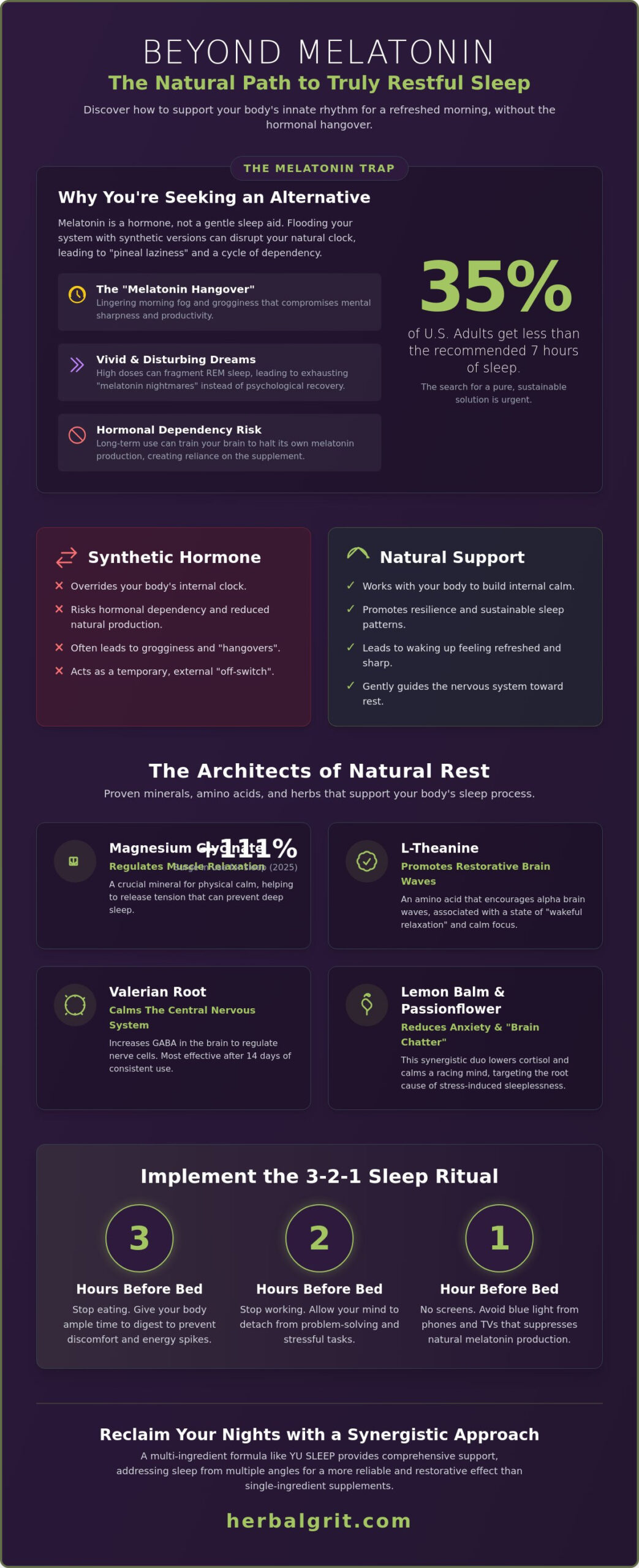
Why are you still reaching for a synthetic hormone to do a job your body was designed to handle naturally? If you’ve felt the heavy fog of a “melatonin hangover” or been startled awake by vivid, disturbing dreams, you know that more isn’t always better. You’re likely searching for alternatives to melatonin for sleep that don’t leave you feeling groggy or dependent. With 35% of U.S. adults now getting less than the recommended seven hours of rest, the quest for a pure, sustainable solution has never been more urgent.
We understand the desire to wake up feeling refreshed and sharp rather than battling morning brain fog. Nature offers a bridge to restoration through minerals and herbs that support your body’s own rhythm. In 2025, magnesium use for sleep surged by 111% as people moved away from hormonal supplements. This guide reveals seven proven compounds and rituals to help you fall asleep faster and stay asleep longer. You’ll discover how to optimize GABA levels and mineral balance to create a nightly routine that feels both resilient and gentle.
Key Takeaways
- Understand the vital difference between synthetic hormones and herbal remedies that naturally build your body’s internal calm over time.
- Discover how specific minerals and amino acids like Magnesium Glycinate and L-Theanine regulate muscle relaxation and promote restorative brain wave patterns.
- Identify the most effective alternatives to melatonin for sleep to reclaim your mornings and avoid the heavy fog of hormonal dependency.
- Implement a practical sleep ritual using the 3-2-1 rule and optimal environment settings to ensure deep physiological recovery every night.
- Learn why a synergistic, multi-ingredient approach like YU SLEEP offers more comprehensive support than isolated, single-herb supplements.
The Melatonin Trap: Why You’re Looking for a Natural Alternative
Melatonin isn’t a sleeping pill; it’s a chemical messenger. While many treat it like a light switch, it actually functions as a master hormone that tells your body when the sun has gone down. This is a fundamental distinction that often gets lost. Most alternatives to melatonin for sleep act as gentle supports for the nervous system or muscular relaxation, whereas melatonin is an exogenous hormone that can override your internal clock. By May 2026, an increasing number of people are reporting a “Melatonin Hangover,” characterized by a dense morning fog that lingers long after the alarm sounds. Unlike traditional hypnotic drugs that induce heavy sedation, melatonin simply signals the start of a biological cycle. When you flood your system with synthetic versions, you risk confusing your pineal gland.
This creates a biological feedback loop that we call “pineal laziness.” Your brain is highly efficient. If it detects a constant stream of external hormones, it naturally reduces its own production to maintain balance. Over time, you aren’t just taking a supplement; you’re training your brain to stop doing its job. The philosophy at Herbalgrit.com focuses on “Herbal Grit,” which means supporting your internal systems with pure, sustainable nutrients rather than overriding them with hormonal shortcuts. We believe in providing the raw materials your body needs to reclaim its own restorative rhythm.
Common Side Effects of Long-Term Melatonin Use
Prolonged use often triggers morning cortisol spikes at the wrong time, leading to a fragmented REM cycle. Many users experience “Melatonin Nightmares,” which are vivid and often exhausting dreams that prevent true psychological recovery. Research from 2025 indicated that high doses, often 5mg or more, are frequently counterproductive. These concentrations are sometimes ten times higher than what the human body naturally produces, leading to restlessness rather than deep rest.
Who Should Avoid Melatonin Entirely?
Individuals with autoimmune sensitivities or existing hormonal imbalances should be cautious, as adding synthetic hormones can complicate their recovery process. Peak performers who require mental sharpness by 7:00 AM often find the lingering lethargy of melatonin too costly for their productivity. In these instances, exploring alternatives to melatonin for sleep is a strategic move for long-term health. Hormonal dependency is the physiological state where your brain halts its own production of sleep signals because it has grown accustomed to external supplementation.
The Apothecary’s Top 4 Herbal Sleep Remedies
Nature provides a rich palette of botanicals that work with your body’s chemistry rather than against it. These alternatives to melatonin for sleep don’t force sedation; they gently guide your nervous system into a state of readiness for rest. By using carefully selected herbs, you can address the specific root causes of your wakefulness, whether that’s muscle tension or a mind that won’t stop racing. This approach shifts the focus from an artificial “off-switch” to a nurturing, restorative process.
Valerian Root: The Grounding Force
Often called “Nature’s Valium,” Valerian root is a foundational herb for any traditional apothecary. It works by increasing the amount of gamma-aminobutyric acid (GABA) in the brain, which helps regulate nerve cells and calms the central nervous system. Unlike melatonin, which can be used sporadically, Valerian requires the grit of a disciplined routine. Research indicates it works most effectively after 14 days of consistent nightly use. When selecting an extract, look for premium labels that specify valerenic acid content. Many generic options use cheap fillers that lack the essential volatile oils needed for physiological recovery.
Lemon Balm and Passionflower: The Anxiety Killers
For high-stress professionals, the primary barrier to sleep is often elevated cortisol. Lemon balm and passionflower create a powerful synergy that targets this exact issue. Passionflower has been shown in studies to be effective at reducing the “brain chatter” that leads to fragmented rest. While Johns Hopkins on natural sleep aids highlights the benefits of lifestyle adjustments, concentrated herbal extracts provide a more potent bridge for those in the middle of a stressful season. These botanicals work together to lower the baseline of your nervous system. Approaching your evening with a sense of calm authority in your ritual leads to better physiological rest, as your body recognizes the signals of safety.
Lavender offers more than just a pleasant aroma; its primary compound, linalool, interacts with the parasympathetic nervous system to slow the heart rate. A 2024 study indicated that using pure lavender extract can improve deep sleep quality by 20% in adults struggling with restlessness. It’s a gentle restorative that rounds out the sharper edges of a long day without the risk of dependency. If you find that single herbs aren’t quite enough to break through your sleeplessness, a balanced, synergistic formula like YU SLEEP combines these traditional botanicals into one unhurried nightly ritual designed for deep, restorative rest.
Minerals and Amino Acids: The Quiet Architects of Rest
While botanical remedies offer a nurturing embrace, minerals and amino acids provide the structural support your nervous system requires. These alternatives to melatonin for sleep function as the quiet architects of your nightly recovery. They don’t override your brain’s natural signals; instead, they refine the environment in which those signals operate. By May 2026, data suggests that optimizing mineral levels is one of the most effective ways to bypass the morning grogginess associated with synthetic hormones. In 2025, 19% of U.S. adults turned to magnesium for sleep, marking a 111% increase from the previous year. This surge reflects a growing awareness that minerals are essential for deep, restorative rest.
Magnesium: Why Most People Are Deficient and Sleep-Deprived
Magnesium is responsible for over 300 biochemical reactions, yet many adults remain chronically deficient. This mineral is the gold standard for muscle relaxation because it regulates the NMDA receptor, which can cause restless thoughts when overstimulated. While many generic brands use magnesium oxide, it’s often poorly absorbed and can lead to digestive upset. Magnesium glycinate is the superior choice for rest. It’s bound to the amino acid glycine, which helps lower your core body temperature. This temperature drop is a critical signal for your body to enter deep REM cycles. You can find magnesium in pumpkin seeds or leafy greens, but targeted supplementation ensures you meet 2026 wellness standards for physiological recovery.
L-Theanine and the Art of the ‘Quiet Mind’
L-Theanine, a unique amino acid found in green tea, balances the grit of your daily responsibilities with the herbal need for peace. It doesn’t make you feel sedated. Instead, it promotes Alpha brain waves. This is a state of wakeful relaxation where your mind feels calm and focused. It’s the perfect tool for an effortless transition to sleep without the fear of hormonal dependency. Many people find success by combining these amino acids with herbal tea rituals to signal the end of the workday.
Using these natural sleep aids does more than just stop the tossing and turning. It protects your long-term cognitive health. Deep, restorative rest is the primary time your brain consolidates new information and flushes out metabolic waste. By choosing mineral support over hormonal intervention, you are actively investing in Memory Enhancement and sharper mental performance the following day. This approach ensures you wake up feeling both resilient and clear-headed.
Creating Your 2026 Nightly Sleep Ritual: A Practical Guide
Restorative sleep isn’t just about what you ingest; it’s about the environment you curate. While herbal alternatives to melatonin for sleep provide the biological foundation, your nightly ritual acts as the signal that it’s safe to let go. In 2026, we see a shift toward “Sleepmaxxing,” where 45% of Americans are now integrating technology and nature-based habits to optimize their recovery. This isn’t about rigid rules. It’s about finding the unhurried rhythm that allows your body to transition from the grit of daily labor to the softness of restorative rest.
One of the most effective frameworks is the 3-2-1 Rule. You should stop eating three hours before bed to prevent digestive spikes from disrupting your heart rate. End your workday two hours before sleep to allow your cognitive load to lighten. Finally, eliminate screens one hour before your head hits the pillow. This discipline is essential because your internal temperature needs to drop for deep sleep to occur. Setting your thermostat to exactly 65°F (18°C) provides the physiological “grit” necessary for your body to initiate the cooling process required for REM cycles.
Step 1: The Digital Sunset
Blue light is a modern disruptor that tricks your brain into thinking it’s still noon. This inhibits the natural release of your own sleep hormones, making alternatives to melatonin for sleep less effective. You don’t have to live in the dark. Simply swap harsh overhead LEDs for amber or red tones in the evening. If you must use a device, activate “Night Mode” or wear blue-light blocking glasses. Replacing the habit of scrolling with a nurturing activity like journaling or reading a physical book allows your nervous system to downshift naturally.
Step 2: Sensory Immersion
Your sense of smell has a direct line to the emotional centers of your brain. Using a Eucalyptus Spray in a warm evening shower can clear your respiratory pathways and create a psychological “anchor” for rest. When your brain associates the scent of eucalyptus or lavender with sleep, the transition becomes almost automatic. Complement this with a soundscape; while white noise is common, many find that pink noise, which mimics the unhurried sounds of nature like rainfall, better supports deep sleep architecture. For those seeking a complete, high-quality solution to anchor this ritual, discover how YU SLEEP simplifies your nightly recovery.
YU SLEEP: The Synergistic Approach to Natural Rest
Finding the right alternatives to melatonin for sleep often feels like solving a complex puzzle. While individual minerals or herbs provide a solid start, the true breakthrough comes when you combine these elements into a single, unhurried ritual. YU SLEEP is designed to address the complexity of modern sleeplessness by layering the biological supports we’ve discussed—minerals, amino acids, and botanicals—into one unhurried formula. This synergistic approach ensures you aren’t just targeting one receptor, but supporting your entire nervous system for both rapid onset and sustained rest throughout the night.
The purity promise of YU SLEEP is rooted in a commitment to nature’s grit. It contains no synthetic hormones, no addictive fillers, and no hidden chemicals that might lead to the morning lethargy we’ve previously noted. By avoiding the hormonal light switch of melatonin, you protect your pineal gland’s natural function and avoid the cycle of dependency. This formula is for the person who wants to wake up feeling sharp and resilient, ready to face the day with a clear mind and a steady spirit. It’s the bridge between the raw power of nature and your modern need for consistent, high-quality recovery.
Why YU SLEEP is the #1 Choice for 2026
The March 2026 release of the YU SLEEP formula represents a significant milestone in natural wellness technology. This VSL-driven approach is designed to maximize the performance and “EPC”—essential physiological comfort—for your body’s recovery potential. Real-world results from early 2026 show that users are successfully breaking the cycle of melatonin dependency and reclaiming their natural circadian rhythms. If you’re ready to move beyond fragmented REM cycles and vivid nightmares, try YU SLEEP for 100% natural rest and experience the unhurried peace of a truly restorative night.
The Herbalgrit.com Guarantee
Our commitment to sustainable sourcing and premium quality is the foundation of everything we do at Herbalgrit.com. We believe in transparent labeling, ensuring you know exactly what goes into your restorative routine. Every ingredient in YU SLEEP is carefully selected for its purity and potency, reflecting the persona of a modern apothecary. We invite you to join our community of wise, eco-conscious guides who are prioritizing their health through disciplined wellness routines. By choosing alternatives to melatonin for sleep that respect your body’s internal wisdom, you aren’t just sleeping better; you’re living with more intentionality and grit.
Reclaiming Your Natural Rhythm
Realizing that sleep is a restorative process rather than a hormonal off-switch is the first step toward lasting wellness. You now have the knowledge to move away from synthetic signals and toward an unhurried, sustainable approach. By prioritizing mineral support and sensory rituals, you create a foundation for recovery that respects your body’s internal wisdom. These habits are the grit that supports the softness of your herbal remedies.
Choosing effective alternatives to melatonin for sleep means you can finally wake up without the heavy fog of a morning hangover. You’ve seen how magnesium glycinate regulates muscle tension and how herbs like valerian root build GABA levels over time. These aren’t just temporary fixes; they’re the building blocks of a disciplined nightly ritual that protects your long-term cognitive health.
If you’re ready to bridge the gap between nature’s power and your modern need for rest, the March 2026 YU SLEEP formula offers a science-backed, hormone-free solution. It’s designed to maximize your body’s recovery potential while maintaining the highest standards of purity. Experience Deep, Natural Rest with YU SLEEP – The Melatonin-Free Solution. Trust in the resilience of your own body and the gentle strength of carefully selected botanicals.
Frequently Asked Questions
Is it safe to switch from melatonin to herbal alternatives overnight?
You can transition to alternatives to melatonin for sleep immediately, though a gradual taper is often more comfortable for those currently taking doses above 5mg. Since melatonin is a hormone, your brain may require 3 to 7 days to resume its own peak natural production. Using botanical supports during this window helps bridge the gap and prevents the return of sleeplessness without the morning fog.
Can I combine magnesium with valerian root for better results?
Combining magnesium with valerian root is highly effective because they target different relaxation pathways. Magnesium glycinate supports physical muscle relaxation by regulating the NMDA receptor, while valerian root works on GABA receptors to quiet the mind. This multi-layered approach is a hallmark of modern wellness routines that prioritize synergistic recovery over single-herb solutions.
How long does it take for natural sleep aids to start working?
The timeline for results varies based on the specific compound you choose. While L-theanine and magnesium can provide relaxation within 30 to 60 minutes, herbal roots like valerian often require 14 days of consistent use to reach full efficacy. Patience is a form of grit that leads to more resilient, long-term physiological recovery.
Will these alternatives to melatonin cause vivid dreams?
These natural alternatives are far less likely to cause the vivid or disturbing dreams often associated with synthetic hormones. Most users report that shifting to mineral and herbal supports leads to calmer, more restorative REM cycles. You’ll wake up feeling refreshed rather than exhausted by the intense, fragmented dreams common with high-dose melatonin use.
What is the best alternative to melatonin for children?
For children, gentle sensory rituals like lavender aromatherapy or magnesium-rich foods are excellent alternatives to melatonin for sleep. In May 2026, many parents are choosing these non-hormonal paths to protect their children’s natural endocrine development. We recommend consulting a healthcare provider for specific pediatric guidance to ensure the most nurturing approach for your child.
Are there any side effects to taking L-theanine every night?
L-theanine is generally recognized as safe for nightly use and is not habit-forming. It doesn’t cause daytime drowsiness because it promotes Alpha brain waves rather than heavy sedation. This makes it a primary choice for high-performance individuals who must stay sharp and alert during their daily responsibilities.
How much magnesium should I take for sleep in 2026?
Standard wellness guidelines in 2026 suggest between 200mg and 400mg of magnesium glycinate for optimal sleep support. For example, many premium formulations provide 250mg per serving to balance efficacy with digestive comfort. Always check the elemental magnesium weight on your supplement label to ensure you’re meeting these targeted standards for rest.
Can I drink herbal tea while taking a sleep supplement like YU SLEEP?
Drinking herbal tea is a perfect complement to a concentrated sleep supplement like YU SLEEP. Chamomile or passionflower tea can deepen your “Digital Sunset” ritual and provide additional sensory signals for rest. This combination reinforces the olfactory-sleep link, making your transition to deep rest feel unhurried and entirely natural.